Understanding 7i Pricing and Supplier Selection
This guide explains how to evaluate “7i” pricing and choose reliable suppliers by focusing on specification clarity, lead times, quality assurance, and cost drivers. It provides objective background on what “7i” typically refers to in procurement and how buyers compare quotes across vendors—helping you make evidence-based decisions rather than assumptions.
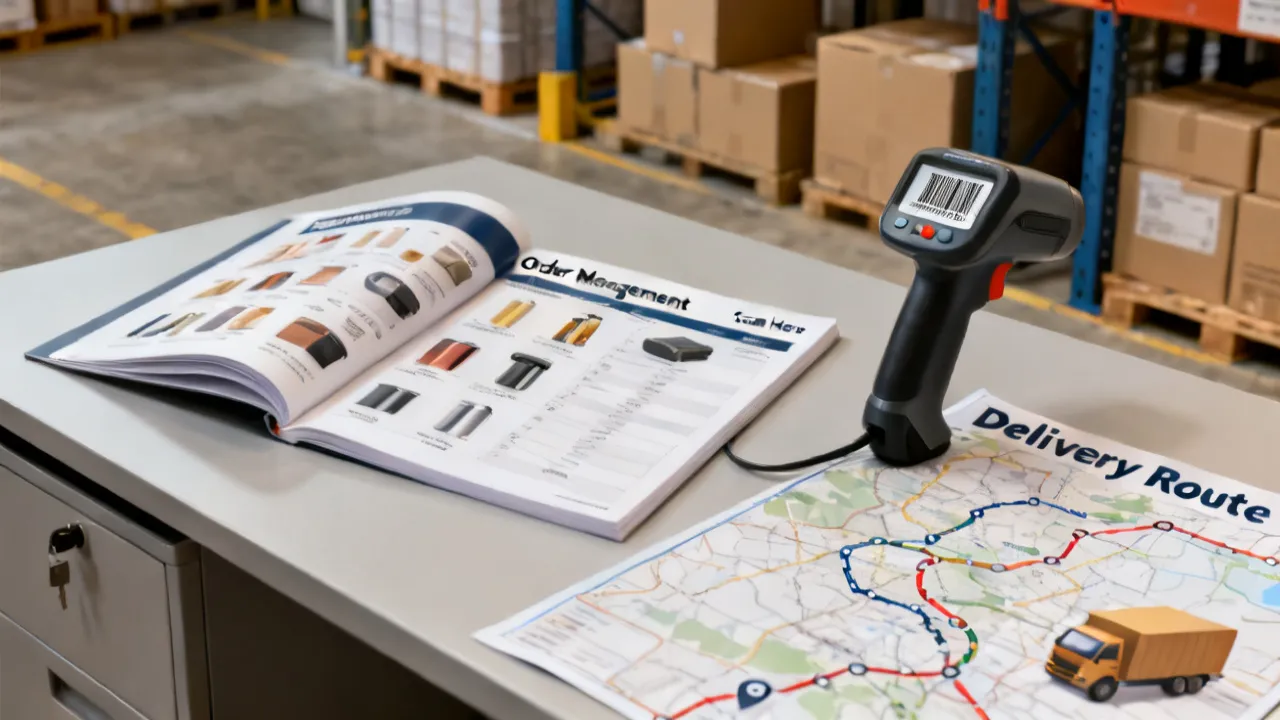
1) Key decision points for 7i pricing and supplier selection
When buyers evaluate 7i pricing, the fastest path to a sound decision is to treat every quote as a technical proposal—not just a number. In practice, the very important question is: what exactly is included in the price (specifications, tolerances, documentation, packaging, testing, and delivery terms)? Alongside price, supplier capability—especially quality controls, traceability, and responsiveness—often determines the real cost of ownership.
To compare offers effectively, focus on three layers: (1) scope and conformance (are you quoting the same product or service?), (2) commercial structure (incoterms, payment schedule, warranty, and change-control rules), and (3) execution risk (capacity, lead-time stability, and post-sale support). These factors help you avoid “apples-to-oranges” comparisons that can distort the apparent 7i cost.
Because procurement decisions often have downstream consequences (production schedule slips, rework, compliance gaps, or customer dissatisfaction), it is useful to separate “decision points” into the categories below. Doing so makes it easier for cross-functional teams—procurement, engineering, quality, and logistics—to align on what must be true before a supplier is selected.
- Specification decision point: You must confirm what “7i” actually refers to in the supplier’s quote package. If “7i” is a label covering multiple internal revisions or tolerance classes, you must identify which one you are buying.
- Scope decision point: You must confirm which processes are included (inspection type, documentation type, packaging type, shipping mode). If these are not explicitly included, they often become negotiation items later—when delays and change approvals are expensive.
- Acceptance decision point: You must confirm how conformance will be proven at receiving (accept/reject criteria, sampling plan, test method, handling of borderline results, and deviation policy).
- Commercial decision point: You must confirm how the contract manages risk—warranty duration, returns and RMA process, corrective action obligations, payment milestones, and dispute resolution.
- Execution decision point: You must confirm whether the supplier can deliver the agreed scope repeatedly. That includes manufacturing capacity, lead-time realism, and how schedule changes are communicated.
These decision points help you “force clarity” before purchase orders are issued. In many organizations, the most costly procurement failures happen not because suppliers are dishonest, but because expectations are ambiguous. Ambiguity creates room for different interpretations—especially when 7i codes function like internal identifiers rather than universal categories.
2) What “7i” means in procurement context (objective background)
The term 7i is used differently across industries and catalogs. In some procurement systems, it can refer to an internal part number, a model designation, or a configuration code tied to a product family. In other cases, it may represent a standard or variant that suppliers map to distinct manufacturing settings. Because 7i can function as an identifier, not a universal product category, buyers should confirm the exact definition with the supplier or in the product documentation.
From a buyer’s perspective, this matters because quotes may include different sub-variants—such as material grade, revision level, tolerance class, or testing requirements—while still being labeled under the same 7i code. The objective takeaway: verify the spec first, then evaluate the price.
It is also worth recognizing that “identifier codes” often carry context that is not visible to the buyer unless they ask. For example:
- A supplier might treat 7i as a shorthand for a product family (e.g., multiple machining routes), where the final route is chosen based on availability or cost optimization.
- A supplier might tie 7i to a customer-specific revision (meaning it is “standard” only for that customer), but a different buyer may have different documentation or compliance expectations.
- A supplier might use 7i to indicate “the concept,” while the detailed specification is provided in appendices, drawings, or revision-controlled documents.
Therefore, your procurement process should not rely solely on the presence of “7i” on a quote. It should rely on the completeness of the specification package: drawings, revision history, tolerance definition, material certificates, test references, and acceptance criteria.
Finally, “7i” can be used as a bridging term between engineering and procurement. Engineering may care about geometry and tolerances, procurement may care about commercial terms, and quality may care about traceability and evidence. If 7i is ambiguous, those teams end up negotiating different things without realizing it. Clarity on 7i definition prevents that misalignment.
3) How 7i pricing is typically structured
Pricing for a 7i item is usually influenced by cost drivers that are common to industrial procurement. While the exact structure depends on the supplier and region, the following elements frequently appear in quotations:
- Unit price vs. volume pricing: Many suppliers scale pricing based on order quantity, including tiered discounts.
- Manufacturing complexity: Different 7i configurations may require distinct tooling, processing steps, or inspection intensity.
- Quality documentation: Certificates (e.g., material certificates), inspection reports, and traceability packages can add cost.
- Lead time and priority handling: Expedited production or constrained scheduling may increase the quote.
- Packaging and logistics: Crating, labeling, and compliance packaging can shift the total landed cost.
- Warranty and after-sales service: Some quotes include more coverage than others.
Because buyers often compare only the headline number, it’s easy to underestimate how these elements change total procurement cost. A higher unit price can still be cheaper if it reduces returns, rejects, downtime, or rework.
To evaluate 7i pricing more precisely, it helps to think in terms of total cost to serve rather than total cost to buy. Even if the invoice value is lower, the organization might pay later in internal labor, inspection time, engineering review, or schedule recovery. That is why a good quote comparison method includes both direct and indirect costs.
Below are additional common pricing components that can be hidden behind the unit price. These often appear as “fees” or “included in unit price,” which makes them easy to miss:
- Special inspection: If your specification requires additional tests beyond standard production, suppliers may price that as part of a “quality package.”
- Document translation or compliance formatting: Some industries require specific formats (language, labels, or reports) that change preparation effort.
- Conformance statement handling: Written compliance statements may require a compliance team review before shipment.
- Warehousing or inventory holding: If the supplier offers a stock reserve for your SKUs, that can change pricing and lead-time commitments.
- Custom packaging: Pallets, foam inserts, tamper-evident bags, and moisture-barrier requirements can affect cost.
- Export compliance: HS codes, documentation, and special shipping restrictions can add administrative cost.
Another frequent source of mismatch is assumptions. A supplier might quote based on “standard packing” or “standard lead time.” If your receiving environment requires special labeling, EDI documents, or compliance paperwork, the quote must be updated accordingly. If not, your team will either improvise (increasing internal cost) or reject shipments (increasing delay cost).
To reduce pricing surprises, buyers can request a scope breakdown and treat it as part of the procurement “definition of done.” That way, the buyer’s purchasing decision remains tied to deliverables, not vague promises.
4) Supplier evaluation: what matters very beyond price
“Supplier details” should not be treated as a formality. They are the practical indicators of execution quality. When you evaluate suppliers for 7i supply, prioritize evidence-based indicators:
- Quality management: Look for documented processes for incoming inspection, in-process controls, and final verification.
- Traceability: Confirm the supplier can link batch or production records to each shipment.
- Specification conformance: Ask how they validate compliance with the required standard and how they handle deviations.
- Communication and change control: Reliable suppliers proactively manage revisions, communicate constraints early, and document approvals.
- Responsiveness: Quote turnaround time, clarity of answers, and problem-solving behavior during sampling or pilot orders.
Even when two vendors provide the same price for the 7i code, their risk profiles can differ significantly due to quality systems and operational maturity.
To expand supplier evaluation into a practical set of checks, many buyers implement a lightweight “capability assessment” before purchasing at scale. This is particularly important for new suppliers, new 7i revisions, or when requirements are safety- or compliance-critical.
Key supplier evaluation dimensions typically include:
- Process capability: Whether the supplier’s process can meet tolerances consistently, and how they monitor performance (e.g., control plans, measurement system analysis).
- Measurement integrity: Calibration practices for measuring tools and verification of measurement accuracy.
- Root cause discipline: How the supplier investigates nonconformities (8D, CAPA structure, containment effectiveness).
- Document control: Evidence that drawings, BOMs, and revisions are controlled so that the supplier produces the correct version.
- Supplier qualification approach: How they qualify materials (incoming suppliers), and how they manage second-tier risk.
- Escalation pathways: Whether the supplier has defined contacts and response times for issues, including after shipment.
For 7i procurement specifically, traceability deserves special attention. If an issue arises downstream, your organization needs to determine whether the defect is limited to a specific batch or whether it affects multiple shipments. Without robust traceability, your only option may be broad recalls or mass rework—both of which multiply cost.
Responsiveness is another critical factor. A supplier can look good on paper but still fail in execution if they respond slowly during quoting, slow during sampling, or slow when corrective action is required. You can partially evaluate responsiveness by how they handle your technical questions during quoting.
In practice, the supplier evaluation also needs to be linked to how your business will use the product. For example:
- If the 7i item feeds an automated production line, schedule reliability matters as much as conformance.
- If the 7i item is used in a regulated environment, documentation completeness is not optional.
- If the 7i item is difficult to inspect at receiving, the supplier’s in-process quality becomes more important.
So the evaluation must not be generic—it must be tailored to the operational realities of your receiving and manufacturing environment.
5) Comparing quotes: a method that reduces hidden cost
To compare 7i pricing fairly, you need a “like-for-like” comparison. Start by aligning on specification and delivery terms:
- Normalize the specification: Ensure all quotes reference the same revision, tolerance, material grade, and test standard.
- Unbundle the price: Separate unit cost, inspection/documentation fees, packaging, and logistics.
- Check delivery assumptions: Verify lead time, shipping method, and incoterms.
- Assess quality commitments: Compare acceptance criteria, sampling plans, and warranty language.
- Evaluate operational continuity: Ask about capacity and how they manage backorders or schedule changes.
This approach tends to reveal which vendor’s price is truly competitive once you account for what the buyer actually receives.
To strengthen this comparison method, buyers can apply a structured “quote normalization template.” The idea is to capture every relevant attribute in a standardized way so that procurement and engineering can compare vendors without relying on memory or inconsistent phrasing in emails.
A typical normalization template includes:
- Specification identifiers: exact revision numbers, drawing references, and material grade codes.
- Quantity and packaging: piece count, carton count, palletization method, labeling instructions.
- Delivery terms: incoterms, shipping lane, estimated time of arrival, and date window.
- Documentation deliverables: certificates, inspection reports, test results, compliance statements.
- Acceptance criteria: pass/fail criteria, sampling plan size, and test methods.
- Warranty and returns: duration, RMA process, replacement vs. repair options.
- Change control: how the supplier communicates deviations and revision changes.
Then, after normalizing, you can calculate a cost-adjusted comparison. The cost-adjusted comparison is not necessarily a single number—it could be a range. But the purpose is to avoid the “false winner” effect where the lowest unit price wins but requires expensive mitigation later.
Common hidden cost drivers that the normalization template can expose include:
- Suppliers that include fewer documents, forcing your team to chase paperwork after shipment.
- Suppliers that assume “standard inspection,” while your spec requires additional tests.
- Suppliers that quote based on longer lead times without offering schedule flexibility.
- Suppliers that price expedited shipping separately (but the buyer only sees it after approval).
- Suppliers that include basic packaging but not compliance packaging required at receiving.
A strong quote comparison also benefits from an alignment meeting. If procurement and engineering sign off on a quote without discussing scope details, later disagreements can become contract disputes. A short alignment meeting can prevent that. Many teams conduct a “requirements cross-check” where engineering confirms the specification match and quality confirms the documentation and acceptance criteria.
Finally, you should define a decision rule. For example, you might accept the lowest total delivered cost only if suppliers meet conformance and documentation requirements. Otherwise, you choose the supplier with the best blend of reliability and verified capability.
6) Quality and risk: why “cheaper 7i” can cost more
In procurement, price is only one part of the equation. For 7i items that feed downstream production or safety-relevant systems, small differences in manufacturing outcomes can amplify into operational losses. Common failure modes that buyers should guard against include:
- Nonconformance discovered during incoming inspection
- Documentation gaps that delay compliance or audits
- Inconsistent lead times that disrupt scheduling
- Weak change management that introduces “silent revisions”
Therefore, the strongest decision frameworks combine commercial comparison with a technical verification step—such as sample evaluation, capability review, and document audit—before scaling orders.
To make the “cheaper costs more” concept concrete, consider several realistic scenarios where low price becomes expensive:
- Scenario: Rejects during receiving. A supplier offers a lower unit price but does not meet a tolerance window. Your receiving inspection flags the issue, and you have to return product. Costs include shipping both ways, inspection time, administrative delays, and the lost production time caused by schedule slips.
- Scenario: Missing documentation. A supplier ships product without complete certificates or compliance statements. Even if the part is physically correct, your compliance team cannot clear inventory for use. This delays manufacturing and can create audit nonconformance if the missing paperwork is not resolved promptly.
- Scenario: Unstable lead times. A supplier may deliver quickly early on but then misses later shipments. The buyer then needs to expedite from a backup supplier or hold extra inventory. Both approaches create higher cost than the original quote saving.
- Scenario: Silent revision risk. A supplier changes a process to cut cost. If the revision is not communicated and your receiving criteria is not tied to the specific revision, defects or documentation mismatches may surface later when it’s hardest to correct.
These scenarios emphasize that quality risk is not only about defect rates. It’s about process stability, evidence integrity, and contractual enforceability. Even small improvements in process control can reduce the probability of expensive disruptions.
It also helps to distinguish between cost of nonconformance and cost of uncertainty. A cheaper quote may reduce invoice cost but increase uncertainty. Uncertainty generates internal overhead: follow-ups, additional inspections, engineering review, and additional supplier communication. Over time, these overhead costs can exceed the saved unit price.
For this reason, many organizations adopt an approach that resembles risk-adjusted procurement:
- Define the criticality of the 7i item for the end product.
- Define the maximum acceptable defect rate and documentation risk.
- Match the level of verification (sample testing, document audits, pre-shipment inspection) to criticality.
- Only scale orders when the verification outcomes confirm conformance and traceability.
In many practical procurement programs, the first order (or a pilot batch) acts as the verification step. A pilot order should not only test conformance; it should also test the supplier’s ability to deliver documentation, maintain labeling accuracy, and honor lead-time commitments. A supplier that succeeds during pilot is more likely to succeed at scale.
Additionally, your contracts should anticipate risk by defining responsibilities for corrective actions, including timelines. If the supplier identifies deviations, how quickly do they notify you? If nonconformance is discovered, how quickly do they contain and replace or repair? These “response timelines” reduce the cost of delay when problems occur.
7) Localization note: using “nearby” instead of location-specific keywords
If your original 7i keywords referenced a specific city or country, this article treats that geography as nearby. Practically, this matters because logistics and lead time can vary by region; however, the comparison principles remain the same: confirm shipping assumptions, delivery windows, and any compliance requirements relevant to your receiving environment.
Even when suppliers are “nearby,” there can be differences in shipping reliability, customs handling, weekend/holiday schedules, port congestion, or local carrier performance. Those differences might not show up in the unit price but can materially affect your production schedule.
Localization also affects quality verification. For example:
- Lab availability for inspection or third-party certification may differ by region.
- There may be regional regulatory expectations that influence packaging and labeling requirements.
- Document delivery methods can vary—some suppliers may provide electronic certificates quickly but ship signed originals slowly.
So, while geography is “nearby,” you still need to verify the operational assumptions behind delivery. A buyer who ignores those assumptions may inadvertently compare quotes with different delivered times or different shipping modes.
8) Practical supplement: comparison table, sources, step-by-step guide, and requirements
| Evaluation element | What to verify for 7i quotes | Evidence to request | Typical requirement/condition |
|---|---|---|---|
| Specification match | Same 7i revision, tolerances, materials, and testing standard | Product datasheet, revision history, test method reference | Quote must reference the exact spec revision number |
| Included scope | What the price covers: docs, packaging, labeling, inspection | Line-item quotation or scope breakdown | No “implicit extras” that change scope after approval |
| Quality and acceptance | How nonconformities are handled | QA plan, inspection/acceptance criteria, deviation policy | Clear acceptance criteria in writing |
| Traceability | Ability to link shipments to production records | Batch/lot traceability evidence and labeling standard | Traceability documents included with each shipment |
| Lead time reliability | Production schedule assumptions and realistic delivery dates | Typical lead time history, capacity statement, production plan | Lead time and delivery windows stated in the quote |
| Commercial terms | Warranty, returns, payment milestones, incoterms | Contract terms, warranty statement, dispute resolution clause | Terms must be consistent across compared vendors |
| Supplier responsiveness | How quickly and clearly issues are addressed | Record of RFI/quote response quality (process documentation) | Named contact and escalation process provided |
Sources (for evidence-based procurement concepts):
- ISO 9001 (quality management system requirements and process-based thinking): International Organization for Standardization.
- ISO/IEC 17025 (competence of testing and calibration laboratories, relevant when inspection/testing is performed): ISO.
- Gartner research and other industry publications on supplier risk and procurement practices (used for general decision framing rather than numeric performance claims).
Step-by-step guide (recommended workflow):
- Define the 7i spec: Confirm the exact product definition behind 7i (revision, tolerances, materials, and test standard).
- Request like-for-like quotes: Ask vendors to quote against the same spec and include scope line items.
- Perform technical screening: Evaluate documentation completeness, traceability capability, and acceptance criteria.
- Run a controlled verification: If feasible, sample or pilot a small batch and conduct receiving inspection against your criteria.
- Assess logistics realism: Validate lead-time assumptions and packaging/label compliance for your receiving environment.
- Select the supplier using a blended score: Combine commercial value with quality risk and delivery confidence.
- Lock change control: Put revision and deviation handling into the purchase terms before scaling.
Conditions and requirements to avoid downstream disputes:
- Quotes must reference the 7i revision and testing standard explicitly.
- Warranty, acceptance criteria, and documentation deliverables must be written into the agreement.
- Any deviation must follow a documented approval workflow before shipment.
- Receiving inspection procedures should be aligned with the supplier’s stated acceptance criteria.
Expanded practical guide: how to operationalize the steps
Even a strong checklist can be difficult to use unless it is translated into daily procurement tasks. The following elaborations show how buyers typically operationalize the workflow in a real procurement cycle for 7i items.
Step 1: Define the 7i spec with revision control
When defining the 7i specification, the goal is to eliminate “interpretation space.” Buyers should request or create a specification packet that includes:
- Engineering drawings with revision numbers and any applicable notes.
- Material requirements, including grades, standards, and any allowable substitutes (and whether substitutes require approval).
- Process constraints, if relevant (e.g., heat treatment parameters, coating type).
- Tolerance classes and measurement methods (e.g., what instrument/method is expected for verification).
- Test methods and sampling requirements.
- Documentation deliverables required with each shipment.
If the supplier claims that “7i” covers the spec, you should still ask for the mapping: which drawing revision is tied to the 7i code, and what internal process settings are used.
Step 2: Request like-for-like quotes using a quote template
A quote template reduces the chance that suppliers answer different questions. Your template should request:
- Unit and total price clearly separated by packaging and documentation scope.
- Delivery terms (incoterms) and lead-time range.
- Warranty terms (duration and coverage conditions).
- Acceptance criteria and the sampling plan assumption.
- Traceability packaging (what documents, what labels, and whether electronic traceability exists).
- Any assumptions or exclusions explicitly listed.
When suppliers respond, your team should treat missing items as a compliance gap. For example, if a supplier does not specify acceptance criteria, it might still be “included” in their system, but without written clarity, you cannot compare vendors fairly or enforce requirements later.
Step 3: Perform technical screening with a documentation audit
Technical screening should not be limited to “does the quote look reasonable?” It should include a documentation audit:
- Do they reference the exact 7i revision and drawing revision?
- Do they specify the test method and acceptance criteria?
- Do they provide evidence that they will supply certificates and traceability documents?
- Do they explain how they handle deviations?
If your organization has internal quality standards, you can align this screening step with those standards. For instance, you can require a minimum documentation package quality: certificate completeness, sign-off requirements, and file formats.
Step 4: Run a controlled verification (pilot or sample order)
Pilot orders are where procurement decisions become resilient. In a pilot, you validate not only physical conformance but the supplier’s execution of the entire logistics-and-documentation process.
A good pilot plan typically includes:
- Defined sampling and inspection matching your acceptance criteria.
- Document verification upon receipt: certificates match the shipment ID, and traceability documents connect to production records.
- Label verification: the labeling supports your receiving workflow and can be scanned/recorded.
- Change control verification: if you provide feedback, ensure they respond with formal corrective actions.
After the pilot, the outcome should determine whether you scale, require changes, or switch suppliers.
Step 5: Assess logistics realism and receiving constraints
Logistics is frequently underestimated. A supplier may quote a lead time that seems plausible but ignores how your receiving dock works. For example:
- Do you receive shipments only on certain days?
- Do you need special packaging due to humidity or handling sensitivity?
- Do you require prior shipment notifications or documentation upload before arrival?
- Is your receiving team ready to perform additional inspections?
When you validate logistics assumptions, you effectively reduce the likelihood that “conforming parts” become unusable due to receiving constraints.
Step 6: Select the supplier using blended scoring
Blended scoring prevents a single metric (often unit price) from dominating. While you can design your own scoring model, many buyers include:
- Commercial competitiveness (unit price, delivered cost, payment terms).
- Conformance confidence (documentation quality, acceptance criteria clarity, past performance signals).
- Execution reliability (lead-time commitments, responsiveness, escalation clarity).
- Risk mitigation (traceability strength, deviation handling maturity).
The scoring model should be transparent and consistent. It should also allow engineering/quality to veto if conformance requirements are not met.
Step 7: Lock change control and deviation handling
Change control is often where disputes arise. Even when changes are legitimate, you need a contractual mechanism that ensures you can approve or reject the change before shipment.
At minimum, change control should specify:
- How revisions are communicated (formal notices, lead-time for approvals).
- What happens if a deviation occurs (containment, replacement, or repair responsibilities).
- Whether substitutes are allowed and under what conditions.
- How you will verify changed items (additional inspection requirements).
When change control is clear, it becomes easier for both supplier and buyer to handle real-world variability without turning it into a conflict.
Additional requirements buyers often forget to include
Beyond the table, many disputes occur because the contract or purchase order does not include certain operational requirements. Buyers should consider adding requirements such as:
- Document format and delivery timeline: when do you need electronic documents (before shipment or upon arrival), and in what format?
- Shipment identification standard: how do shipment IDs map to lot traceability?
- Third-party inspection rules: if third-party inspection is required, who pays and where is it performed?
- Corrective action timeline: target timelines for containment, investigation, and corrective actions.
- Escalation contacts and response windows: e.g., how quickly the supplier must respond to nonconformance claims.
These requirements may appear administrative, but they directly reduce operational friction and help ensure consistent outcomes across multiple orders.
9) FAQs about 7i pricing, suppliers, and quote comparison
Q1: How can I tell whether two 7i quotes are truly comparable?
Confirm that both quotes reference the same 7i revision and scope. Ask for line-item breakdowns and compare documentation, packaging, inspection requirements, and acceptance criteria—not only the unit price.
Additionally, require each vendor to list assumptions and exclusions. If one vendor assumes “standard packing” and the other assumes “custom compliance packing,” those quotes are not comparable even if the unit price appears close.
Q2: What supplier details should I request before placing an order?
Request evidence of quality management (process documentation), traceability practices (batch/lot linkage), inspection/acceptance criteria, lead-time assumptions, and the warranty/returns policy. Named contacts and escalation procedures also improve execution clarity.
If possible, request examples of recent relevant documentation packages from similar orders. Comparing real documentation can be more informative than reviewing a generic quality manual.
Q3: Is the low price 7i option always the top value?
Not necessarily. A lower 7i price can increase risk through higher defect rates, missing documentation, or inconsistent delivery. Top value comes from combining commercial value with verified conformance and reliable execution.
To quantify value, buyers can compare expected total cost rather than invoice cost. Expected total cost can include rework, inspection overhead, internal labor, and schedule disruption costs—especially if the 7i item is critical to downstream operations.
Q4: How should lead time be evaluated in supplier selection?
Treat lead time as an operational constraint. Validate delivery windows, confirm production capacity, and verify how schedule changes are communicated and handled. When possible, use a pilot or smaller order to test timing reliability.
In addition, ask about lead-time variability. A supplier who quotes “10–12 weeks” may be acceptable if the variability is stable and the buyer has planning flexibility. A supplier who quotes “10–12 weeks” but has historically delivered outside that range is a higher risk even if the average lead time seems fine.
Q5: What role do quality standards play in 7i procurement?
Quality standards provide the structure for consistent processes and credible testing. Align your requirements with recognized frameworks such as ISO 9001 for quality management practices and ISO/IEC 17025 where relevant testing competence is involved.
However, certification is not the only factor. The buyer should still verify that the supplier applies the quality system to your specific 7i product and provides evidence with each shipment.
Q6: What should be included in a “complete” quotation for 7i?
A complete quote typically includes: exact spec references, unit and total pricing, scope line items, shipping and incoterms, lead time, packaging/labeling expectations, documentation deliverables, acceptance criteria, and warranty/returns terms.
It should also include the vendor’s stated assumptions and exclusions. If the quote does not include acceptance criteria or traceability deliverables, it is incomplete for like-for-like comparison purposes.
10) Closing guidance: make 7i decisions based on verified scope
Choosing a supplier for 7i should feel less like bargaining and more like aligning on engineering and operational realities. By verifying the spec behind the code, unbundling pricing scope, and demanding objective evidence of quality and traceability, you convert 7i pricing from a single number into a measurable procurement outcome. That shift—toward evidence-based comparison—is what very consistently reduces cost volatility and delivery risk over time.
When buyers treat “7i” quotes as technical proposals and create a structured pathway for evaluation, they reduce disputes, reduce rework, and protect operational continuity. Ultimately, that approach increases procurement effectiveness not only in the immediate transaction, but across future orders where you can reuse the same requirements, scoring logic, and verification workflow.
In other words, the key is not merely to pick the cheapest 7i offer. The key is to pick the supplier who can reliably deliver the correct 7i revision, the correct scope of documentation and packaging, and the correct acceptance outcomes—on time, with clear change control. That is how you ensure that the 7i price reflects true value rather than hidden risk.
-
1

A Guide to Cost-Efficient Small Electric Cars for Seniors
-
2
Mastering Debt Consolidation: Boost Your Credit Score and Manage Interest Rates
-
3
Your Guide to Loans, Credit Checks, and Interest Rates
-
4
Affordable Independent Living: Finding the Right Senior Housing
-
5
Guide to Senior Living Apartments: Affordable and Comfortable Environments