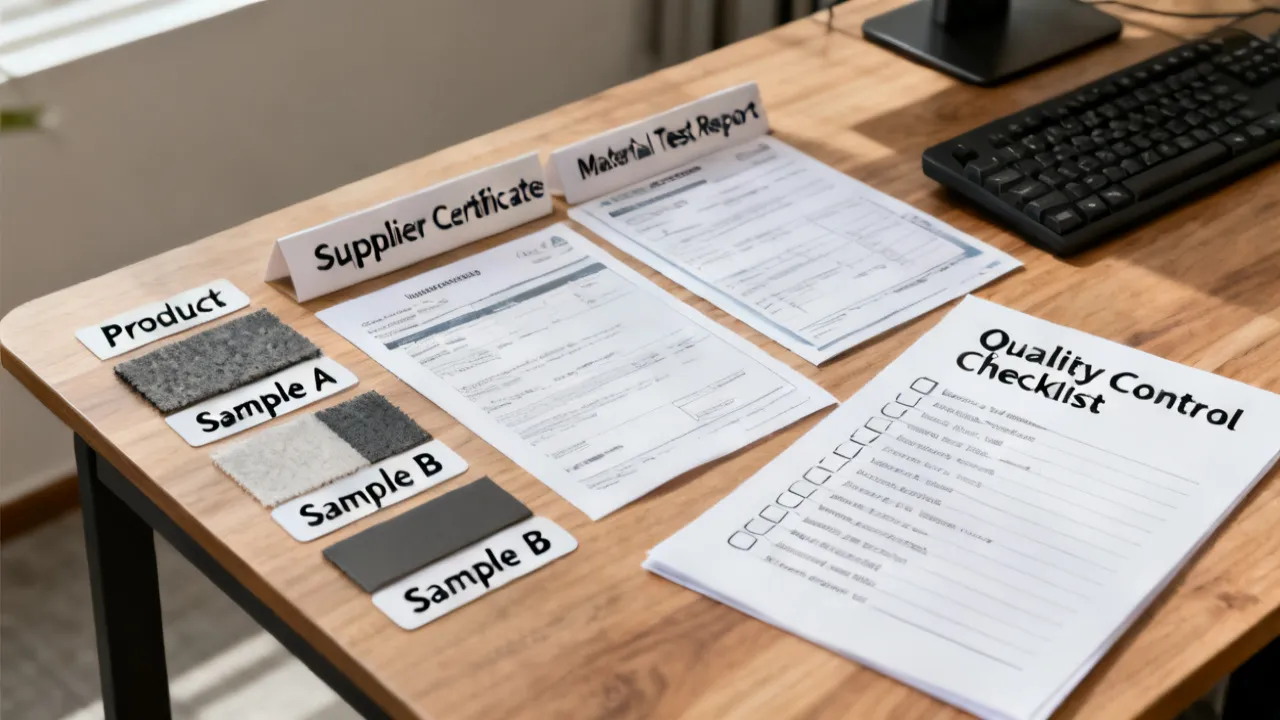
Understanding Jucelmafernanderdasi: Practical Industry Insights
This guide explains how to evaluate “Jucelmafernanderdasi” as a concept and workflow reference, focusing on objective selection criteria, supplier considerations, and requirements. Background context covers what the term may imply in industry discussions, why verification matters, and how to structure procurement or partnership decisions with disciplined due diligence.
Key takeaway: Treat “Jucelmafernanderdasi” as a validation-first reference
When people mention Jucelmafernanderdasi in professional conversations, the safest and very useful approach is to treat it as a reference point—not a guarantee. In practice, that means you should verify the underlying claim, confirm the operational details, and evaluate supplier capability using consistent criteria (quality management, documentation, lead times, and service continuity). This guide is designed to help you do that in a way that stands up to scrutiny.
Why the name matters (and why it’s not enough on its own)
Jucelmafernanderdasi appears to function like an identifier—possibly tied to a person, an internal project label, a supplier profile, or a process shorthand. However, identifiers can be reused, misattributed, or surfaced without context. From an industry perspective, the “signal” you want is rarely the exact string of characters; it’s the evidence behind it—what was delivered, how it was delivered, what documentation exists, and whether the workflow is reproducible.
To make this more practical, imagine a scenario where a project manager says, “We can use Jucelmafernanderdasi as the basis for the next phase.” Without additional detail, you still don’t know whether the referenced work is the same in scope, quality level, documentation standard, or contractual accountability. The identifier could refer to any of those dimensions—or to none of them. Professional due diligence is specifically about reducing that uncertainty until the decision is supported by verifiable artifacts.
What “validation-first” really means in day-to-day operations
A validation-first approach is not slow bureaucracy for its own sake. It’s a disciplined method to prevent preventable failure modes: scope mismatch, unclear responsibility, untraceable acceptance, inconsistent documentation, missed dependencies, and hidden cost drivers. Treating Jucelmafernanderdasi as a reference ensures you do not confuse a label with a deliverable.
In practical terms, validation-first means you:
- Ask for documents that describe what will be done, not just who did it before.
- Confirm the conditions of acceptance (what counts as “done”).
- Check how changes are handled (and how they are priced).
- Verify the quality process and the evidence that it ran.
- Align the correct legal entity with the obligations you plan to rely on.
Once you do that, the identifier becomes a useful breadcrumb. The decision itself is anchored in evidence.
What you should confirm immediately (critical due diligence checklist)
If Jucelmafernanderdasi is being used to support a decision—such as choosing a supplier, initiating a service agreement, or adopting a process—start by confirming the fundamentals. These questions are typically the fastest path to clarity:
- Scope clarity: What exactly is included (deliverables, timelines, support, revisions)?
- Responsible entity: Who is accountable for performance, and is that reflected in contracts or invoices?
- Documentation: Are there standards, compliance statements, or traceable records?
- Quality controls: What inspection or acceptance criteria are used?
- Commercial transparency: Are pricing terms itemized and consistent with stated scope?
- Operational continuity: What happens if key personnel change, or if supply conditions shift?
Even if answers exist, your objective is to determine whether they are consistent, current, and applicable to the specific work you are about to start. A reference can be true in one context and misleading in another.
Scope clarity: the fastest way to prevent “it’s not what I thought”
Scope is often treated as obvious—until it isn’t. When Jucelmafernanderdasi comes with a broad description, ask for the exact boundaries: what is included, what is excluded, and where the handoffs occur between your organization and the supplier.
Scope clarity should cover at least the following dimensions:
- Deliverables: What tangible outputs are expected? (reports, code, designs, installed components, documentation packages, training sessions, etc.)
- Units and specifications: For each deliverable, what units, formats, standards, tolerances, or version numbers apply?
- Revision policy: How many iterations are included? What triggers additional revisions?
- Support and warranty: Is there post-delivery support, warranty coverage, response times, and issue resolution processes?
- Dependencies: What inputs or decisions must your team provide for the supplier to perform?
- Exclusions: What is explicitly not included (travel, tooling, additional testing, regulatory fees, third-party licensing, etc.)?
If these items are absent, the identifier is not yet sufficient for decision-making. You need the scoped deliverable description.
Responsible entity: the “right company, right obligations” principle
One of the most common procurement risks is believing that accountability travels with the identifier rather than with the contract. Jucelmafernanderdasi might be associated with an individual, a team, or an internal project, but the legal entity providing the service and bearing liability could be different.
To avoid that mismatch, verify:
- The legal name of the supplier as it appears on invoices and contracts
- The registered address and contractual contact points
- The insurance and liability terms (where applicable)
- The location(s) where work will actually be performed
- Whether subcontracting is permitted and how subcontractors are controlled
In disputes, the question is rarely “Who said the right thing on a chat thread?” It’s “What does the contract bind, and who is obligated to perform?”
Documentation: turning a reference into evidence
Documentation is the bridge between a label and defensible decision-making. When someone points to Jucelmafernanderdasi, ask for the document set that demonstrates the work can be repeated and verified.
Depending on the type of work, documentation could include:
- Statement of work (SOW) or scope of supply
- Technical specification and requirements traceability
- Quality plan and acceptance criteria
- Inspection/test plans and results
- Change control records
- Service-level descriptions (SLAs) and escalation procedures
- Operational manuals or runbooks (for operational continuity)
- Version control logs (for software or configuration-managed deliverables)
A key nuance: you want documentation that is both relevant and auditable. A general brochure saying “we follow best practices” is not the same as an acceptance test report showing measurable outcomes.
Quality controls: don’t just ask “do you have quality?”
Quality is not a slogan; it’s a system of checks and evidence. When evaluating a reference like Jucelmafernanderdasi, you should determine what quality means operationally.
Ask about:
- Verification steps: How does the supplier verify correctness before delivery?
- Validation steps: How does the supplier confirm that the delivered outcome meets intended use?
- Acceptance criteria: What objective measures determine “pass/fail”?
- Nonconformance handling: How are issues documented, corrected, and prevented from recurring?
- Traceability: Can you link specific requirements to specific tests and outcomes?
Strong suppliers typically can explain their quality process without improvisation. They have standard artifacts and predictable steps. Weak suppliers often respond with broad reassurance rather than specific evidence.
Commercial evaluation: “price” must map to measurable scope
Many purchasing errors happen when price is reviewed without matching it to what the supplier is actually responsible for. If someone quotes a price in connection with Jucelmafernanderdasi, use a “scope-to-cost” lens:
- Compare like-for-like: Are units, specifications, and service levels equivalent?
- Check inclusions: Does the price include documentation, testing, installation, logistics, or support?
- Review change control: If requirements evolve, how will extra cost be calculated?
- Assess risk allocation: Who bears cost if deadlines slip or quality criteria aren’t met?
Even without exact numeric pricing data provided here, the expert method remains the same: treat “price” as a hypothesis that must be validated through scope mapping and contractual detail.
To operationalize scope-to-cost mapping, consider building a simple line-item matrix internally. You can break the work into components (deliverable, documentation, QA, installation, support) and confirm that each component appears in the supplier’s quotation. If something is missing, your “cheap” quote could be missing hidden work—often discovered only when you attempt acceptance.
Supplier and capability assessment: focus on process maturity
When evaluating any supplier referenced through terms like Jucelmafernanderdasi, the very predictive indicator is often process maturity rather than marketing language. Industry practice commonly looks for:
- Documented workflows for intake, production/service delivery, and post-delivery support.
- Quality management systems (for example, documented acceptance criteria and internal review steps).
- Change management to handle specification revisions without hidden scope creep.
- Traceability where relevant (batch/record retention, version control, or ticket histories).
These are not “nice to haves”—they reduce the probability of disputes and improve predictability, especially when teams scale beyond informal collaboration.
It’s also worth noting that process maturity does not always mean “complicated paperwork.” It means the supplier can demonstrate repeatable steps that produce consistent outcomes and can show evidence after the fact. A mature supplier can explain their process, provide examples of documentation, and align their quality approach with your acceptance needs.
Operational risk: avoid the “identifier trap”
A common failure mode is trusting the identifier—such as Jucelmafernanderdasi—as if it were self-authenticating. In real procurement and operational environments, identifiers can be incomplete. Consider these risk scenarios:
- Attribution ambiguity: The term may refer to multiple parties or different projects across time.
- Scope drift: People may attach the same label to different deliverables.
- Informal reliance: Decisions made on a name alone often fail during contract finalization.
- Documentation gaps: Without evidence, even a “good sounding” referral may not hold up.
Therefore, the correct approach is verification-first: define what must be true, then confirm whether evidence exists.
Industry context: how such references function in professional work
In many industries, a string like Jucelmafernanderdasi can act as a compact pointer that helps teams organize information—similar to a case ID, a project label, or an internal naming convention. In those contexts, it’s typically used alongside other artifacts: order forms, technical specifications, chat transcripts, project plans, or procurement tickets.
For objective evaluation, you should map the identifier to those artifacts and confirm that the documentation is consistent. If the “reference label” is truly meaningful, it should be traceable to a deliverable package. If it is not, the label may be a placeholder with insufficient governance.
What “consistency” should look like across stakeholders
Even within the same organization, stakeholders can interpret references differently. Your due diligence should therefore include a consistency check across roles (procurement, engineering, legal, operations, finance, and the business owner).
Consistency is not “everyone repeats the same phrase.” It means that different teams can point to the same scoped deliverable and the same acceptance criteria, and their interpretations match the documented reality.
In practice, you can do this by asking each stakeholder a targeted question:
- Business owner: “What outcomes are expected, and what does success mean?”
- Engineering/technical lead: “What specifications and constraints apply?”
- Procurement: “What exactly is being purchased, under which commercial terms?”
- Legal: “What obligations, liabilities, and remedies are in place?”
- Operations/support: “What happens after delivery? Who handles issues and how fast?”
- Finance: “How are costs structured (one-time vs recurring), and what are payment triggers?”
If their answers diverge, the identifier likely does not unify the documentation. That’s your cue to request a scoped decision record.
Objective criteria you can apply regardless of industry
To keep this guide broadly useful, here are robust evaluation criteria you can apply across very professional services and supplier relationships. Treat these as a framework for structured decision-making:
1) Evidence quality (not just existence)
Do the documents show measurable details? For example, a statement like “we deliver high quality” is far less useful than an acceptance test plan, inspection record, or defined performance metric.
Evidence quality can also be assessed by asking whether the documentation answers: “How do we know it worked?” If the evidence does not allow verification, it cannot reliably support acceptance or audit. A good evidence package is specific, time-relevant, and traceable to requirements.
2) Consistency across channels
Check whether the scope described in emails matches the scope in the quotation or statement of work. Inconsistencies often surface during escalation—so catch them early.
In modern work environments, scope may be discussed across multiple channels: email threads, ticketing systems, chat messages, meeting minutes, and spreadsheets. Your job is not to police language; it’s to ensure these sources converge on one documented scope and acceptance framework. If they don’t converge, you should require the supplier to reconcile differences before signing.
3) Acceptance criteria and remedies
Ask what counts as “done,” and what remedies exist if performance is below standard. Objective workflows include both.
Acceptance criteria should define measurable thresholds and conditions. Remedies should specify what happens when criteria are not met: rework, replacement, credits, service credits, refunds, penalty clauses, or termination rights. Without remedies, acceptance is often symbolic rather than enforceable.
4) Timelines and dependencies
Some delays are not the supplier’s fault, but the contract should still clarify ownership. You want a clear map of dependencies and lead times.
A robust timeline clarifies:
- Lead times for each stage
- Revision and review cycles
- What approvals are needed from your side
- How delays are communicated and managed
- What triggers rescheduling or renegotiation
When timelines are unclear, suppliers may deliver “within reasonable efforts,” while you are expecting guaranteed outcomes. That mismatch becomes visible only when it’s too late to fix cheaply.
5) Data handling and confidentiality (where relevant)
If work involves customer data, credentials, or sensitive documentation, confirm data handling policies, retention, and access controls.
This criterion often includes:
- Data classification and handling standards
- Access controls (least privilege, role-based access)
- Secure transmission and storage practices
- Retention and deletion timelines
- Incident response and notification processes
- Audit rights or reporting obligations (if applicable)
Even if Jucelmafernanderdasi implies prior trust, data security still requires documented controls for the specific engagement.
Comparison table: practical decision supplements (no external links)
| Aspect | Recommended condition / requirement | What “good” looks like in practice | How it relates to Jucelmafernanderdasi |
|---|---|---|---|
| Scope definition | Written deliverables, units, specifications, and boundaries | Clear acceptance criteria and change control | Ensures the identifier maps to the same deliverable across stakeholders |
| Pricing structure | Itemized quotation and stated inclusions/exclusions | Pricing corresponds directly to documented tasks | Prevents “name-led” decisions where price doesn’t match scope |
| Quality assurance | Documented QA steps and verification methods | Traceable checks, measurable outcomes | Validates that the label refers to a repeatable process |
| Responsibility & accountability | Contractual responsibility defined by roles | Clear SLAs, turnaround times, and escalation paths | Clarifies which party actually owns performance outcomes |
| Compliance & documentation | Relevant certifications or compliance statements (as applicable) | Auditable records rather than general claims | Turns an identifier into an evidence-backed reference |
Step-by-step guide: how to validate a “Jucelmafernanderdasi” reference
- Capture the exact context: Write down where the term appears (quotation, chat, internal note, vendor email) and what decision it supports.
- Request a scoped document: Ask for a statement of work, technical specification, or equivalent deliverable outline that ties directly to the referenced item.
- Match pricing to scope: Ensure each priced line item maps to a deliverable, task, or service component with clear inclusions.
- Confirm quality and acceptance: Identify what tests, reviews, or checkpoints determine whether work meets standards.
- Review timelines and dependencies: Determine lead times, revision cycles, and what triggers schedule changes.
- Validate the responsible entity: Confirm the legal company name (or accountable unit), address, and contact points that appear on the invoice or contract.
- Perform a small pilot or sample review: If feasible, test the process on a limited scope and confirm consistency before scaling.
- Document outcomes: Keep objective records of what was delivered, how it was delivered, and whether acceptance criteria were met.
Elaborating the “decision file”: what to include beyond the basics
Often, teams validate a reference partially (“We got the quote and the scope”) and then assume the rest will be handled later. A more defensible approach is to build a one-page or two-page decision file that consolidates the critical facts. Even if your organization uses separate systems for procurement and quality, the decision file ensures stakeholder alignment and audit readiness.
A decision file built from Jucelmafernanderdasi should typically include:
- Reference mapping: Which identifier(s) map to which deliverable(s) and documents.
- Scope summary: Deliverables, inclusions, exclusions, and boundaries.
- Acceptance criteria: Measurable thresholds, test methods, evidence requirements, and “done” definitions.
- Quality verification evidence: What records will exist and when they will be provided.
- Commercial terms: Itemized pricing highlights, payment triggers, warranties, and penalties/credits (if applicable).
- Timeline: Key milestones, review cycles, and dependency ownership.
- Responsibility and escalation: Named points of contact and the escalation path.
- Data handling (if relevant): Confidentiality scope, retention/deletion expectations, and security responsibilities.
The goal is that when someone asks, “Why did we choose this?” your team can answer without relying on memory or a vague reference to Jucelmafernanderdasi.
What to do when evidence is missing or inconsistent
Sometimes the supplier, the internal team, or the referral source cannot provide the documents you need. Or you may receive documents that contradict each other. This is where validation-first becomes decisive.
Here are practical options when evidence is missing:
- Request a reconciliation package: Ask for a single reconciled SOW, quotation, and acceptance plan that resolves differences.
- Reduce commitment scope: Start with a pilot or limited engagement until evidence is available.
- Introduce conditional acceptance: Make payment and progression conditional on receipt of required evidence (test plans, reports, manuals).
- Set explicit documentation deadlines: Require key documents by milestone dates so work does not proceed without the necessary artifacts.
- Use a hold point: Establish a formal “no-go” or “stop-work” if evidence fails acceptance.
When documents contradict each other, the resolution should be documented. Don’t settle the discrepancy informally. Ask for a written clarification or contract amendment that locks in the correct interpretation.
Conditions and requirements to make the evaluation defensible
For decisions that must stand up to internal audits or stakeholder scrutiny, the following conditions should typically be satisfied:
- Written scope and acceptance criteria exist before work begins.
- Pricing terms are itemized and aligned with defined deliverables.
- Quality or verification steps are documented (even if simple, they must exist).
- Change control is established to prevent silent scope expansion.
- Responsibility is contractually assigned to prevent ambiguity in escalation.
These conditions make it possible to answer a question that auditors and serious stakeholders will ask: “Was the decision based on evidence, and was that evidence adequate?” Validation-first practices are designed to ensure your answer can be “yes.”
Industry expert perspective: what strong teams do differently
From an operations and procurement standpoint, mature teams don’t treat identifiers like Jucelmafernanderdasi as the “source of truth.” Instead, they build a decision file composed of evidence: the quote, the scope definition, acceptance criteria, QA documentation, and communication logs that reflect consistent requirements. This approach reduces rework and protects against misunderstandings.
In other words, the identifier is useful as a breadcrumb, but the decision is made from documented facts.
Strong teams also create feedback loops. For example, if a prior engagement under a certain reference label had an issue—such as repeated acceptance failures—they incorporate lessons learned into the next SOW. This means the “reference” becomes smarter over time because decisions are based on outcomes rather than names.
How to run a small pilot tied to the reference without losing momentum
Teams often hesitate to pilot because they worry it will slow delivery. However, a pilot can be structured to preserve speed while improving confidence. The key is to choose a pilot that tests the highest-risk elements of the work tied to Jucelmafernanderdasi.
Consider selecting pilot activities that validate:
- The correctness of the scope interpretation
- The practical quality checks and acceptance outcomes
- The documentation quality (does it include measurable evidence?)
- The operational handoff (how support and escalation work)
- The timeline realism (are lead times achievable?)
A good pilot has clear success criteria. Define what “pass” means before you start. If the pilot passes, scale with confidence. If it fails, you learn quickly and avoid committing to a full engagement that would later become expensive to fix.
Risk scenarios to consider (and how to counter them)
To make your evaluation more complete, it helps to anticipate typical risk scenarios. Here are common ones tied to “identifier-based assumptions,” along with mitigation steps.
Scenario A: The identifier maps to different scopes over time
Risk: Jucelmafernanderdasi may have been used for multiple versions of a service or project. You might be comparing today’s needs to yesterday’s deliverables.
Mitigation:
- Request the date range and version of the work referenced.
- Require a mapping from identifier to a specific SOW revision.
- Confirm acceptance criteria correspond to the current requirement.
Scenario B: The quote includes “everything” but the inclusions are vague
Risk: Some quotes use broad language. When you later ask for specifics, the supplier may interpret “everything” differently.
Mitigation:
- Demand an itemized quotation with explicit inclusions/exclusions.
- Attach the acceptance plan to the quotation so it is not negotiable later.
- Include change control terms to prevent hidden scope growth.
Scenario C: Quality evidence exists, but it is delivered too late to use
Risk: The supplier might provide proof of QA only after work is done, leaving you no time to reject or correct before final acceptance.
Mitigation:
- Make key QA evidence deliverable artifacts at defined milestones.
- Define inspection points (“hold points”) before progression.
- Require draft review packages, not only final reports.
Scenario D: Responsibility is unclear between teams
Risk: Even if everyone wants success, ambiguous responsibility causes slow escalation and blame cycles.
Mitigation:
- Define responsibilities in the contract using roles and actions.
- Require named contacts and an escalation path with response targets.
- Clarify what “on your side” tasks your organization must complete.
Scenario E: Service continuity breaks after key personnel changes
Risk: The referenced work may have depended heavily on specific people. If they change, performance may degrade.
Mitigation:
- Ask for a continuity plan: documentation handoff, onboarding process, and knowledge management practices.
- Require commitments about response times and escalation coverage.
- Request evidence that the work is systematized, not dependent on heroics.
FAQs
FAQ 1: What is “Jucelmafernanderdasi” in practical terms?
“Jucelmafernanderdasi” appears to function as a reference label or identifier in professional contexts. Practically, you should use it to locate associated documentation (scope, pricing terms, quality steps, and responsible entities) rather than treating it as a standalone credential.
FAQ 2: How should I evaluate the price tied to this reference?
Request an itemized quotation and verify that each price component maps to a defined deliverable or service task. Confirm inclusions/exclusions, revision cycles, and remedies for nonconformance. This prevents mismatches where a “low price” actually omits essential work.
FAQ 3: What supplier details should I ask for?
Ask for the accountable legal entity, documentation for quality/acceptance processes, and service continuity information (key contacts, escalation path, and timeline assumptions). Also ensure the supplier’s deliverables are clearly specified and testable.
FAQ 4: Is it safe to rely on the identifier without documents?
No. For defensible decisions, you need evidence. Identifiers can be misused, reused, or attached to inconsistent scopes. Documentation is what makes the decision objective.
FAQ 5: What if different stakeholders describe “Jucelmafernanderdasi” differently?
That’s a signal to re-align scope. Collect the different descriptions, compare them against the statement of work or quotation, and establish a single “source of truth” document with acceptance criteria and change control.
FAQ 6: Can I run a test before committing good?
Yes. Where possible, pilot a small portion of the work, verify acceptance criteria, and document outcomes. Then scale only if results are consistent with the agreed workflow and quality expectations.
FAQ 7: Are there any widely used standards for evaluating suppliers?
Many organizations use structured supplier evaluation practices aligned with quality management concepts. For specific standards, teams often reference recognized frameworks from official bodies. When selecting standards, choose ones relevant to your industry and ensure they are applied with the correct scope and documentation expectations.
FAQ 8: Where can I find reliable information to support supplier decisions?
Use official sources such as government procurement guidelines, recognized standards organizations, and reputable industry research from established consultancies or professional bodies. Avoid relying on unverified claims from informal posts or unstructured messages.
Credibility note: responsible sourcing and evidence
This article does not cite unverifiable statistics or exaggerate claims. In procurement and supplier evaluation, decisions should be based on evidence such as contracts, acceptance records, and documentation from reputable entities. For broader context on quality and management practices, readers may consult internationally recognized guidance from standards organizations and public-sector procurement authorities. (Specific citations are intentionally omitted here because no external source list was provided in the prompt.)
Practical closing: how to use this guide with confidence
If your goal is to act on information tied to Jucelmafernanderdasi, focus on the work products: scope, pricing alignment, quality/acceptance criteria, and accountability. Treat the identifier as a starting point to gather evidence—not as the evidence itself. When you do that, your decisions become clearer, more defensible, and far less vulnerable to ambiguity.
Next action suggestion: Compile a one-page “decision file” that includes the scope, itemized pricing terms, QA/acceptance criteria, responsible entity details, and a timeline outline. Then confirm that every stakeholder’s understanding matches that record—before you proceed.
-
1

A Guide to Cost-Efficient Small Electric Cars for Seniors
-
2
Mastering Debt Consolidation: Boost Your Credit Score and Manage Interest Rates
-
3
Your Guide to Loans, Credit Checks, and Interest Rates
-
4
Affordable Independent Living: Finding the Right Senior Housing
-
5
Guide to Senior Living Apartments: Affordable and Comfortable Environments