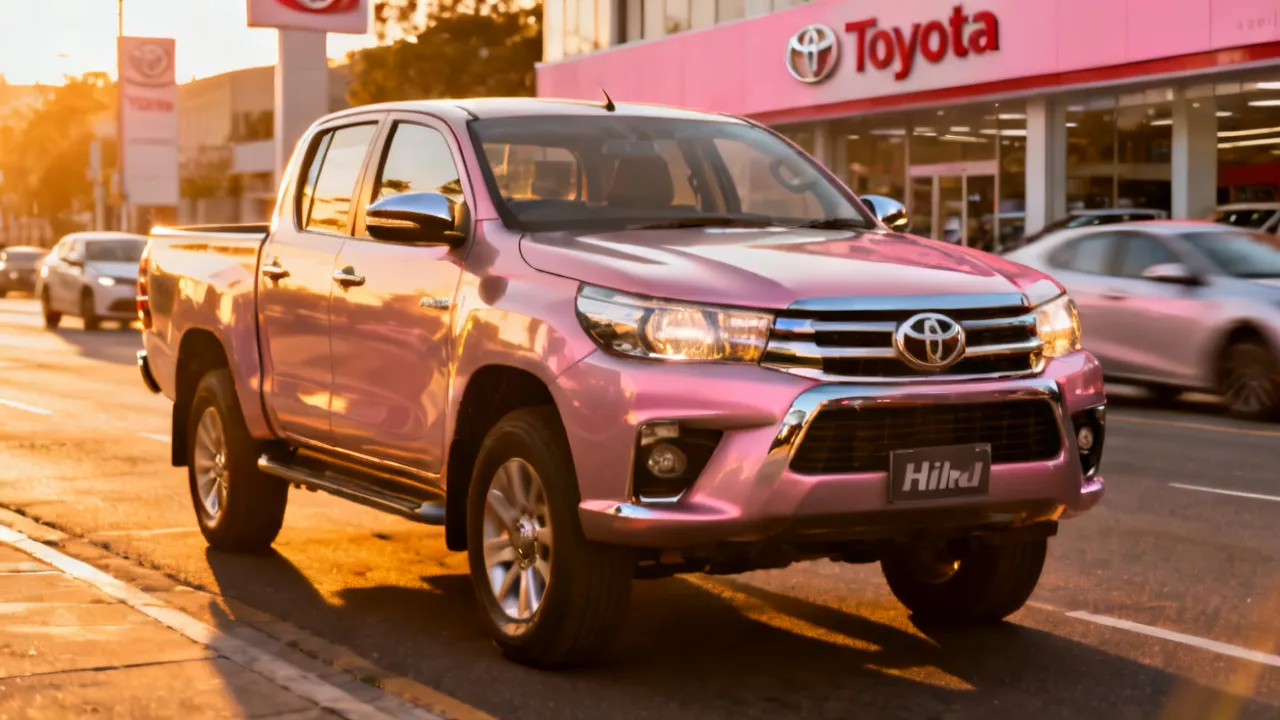
How to Buy a Hilux on Sale
This guide explains how to research and buy a Toyota Hilux on sale using reputable official car trading platforms, with clear steps to compare listings, financing options, and total ownership costs. Hilux is a globally recognized pickup known for durability, while “on sale” typically refers to dealer promotions, seasonal incentives, or inventory pricing. This overview is objective and focused on practical decision-making.
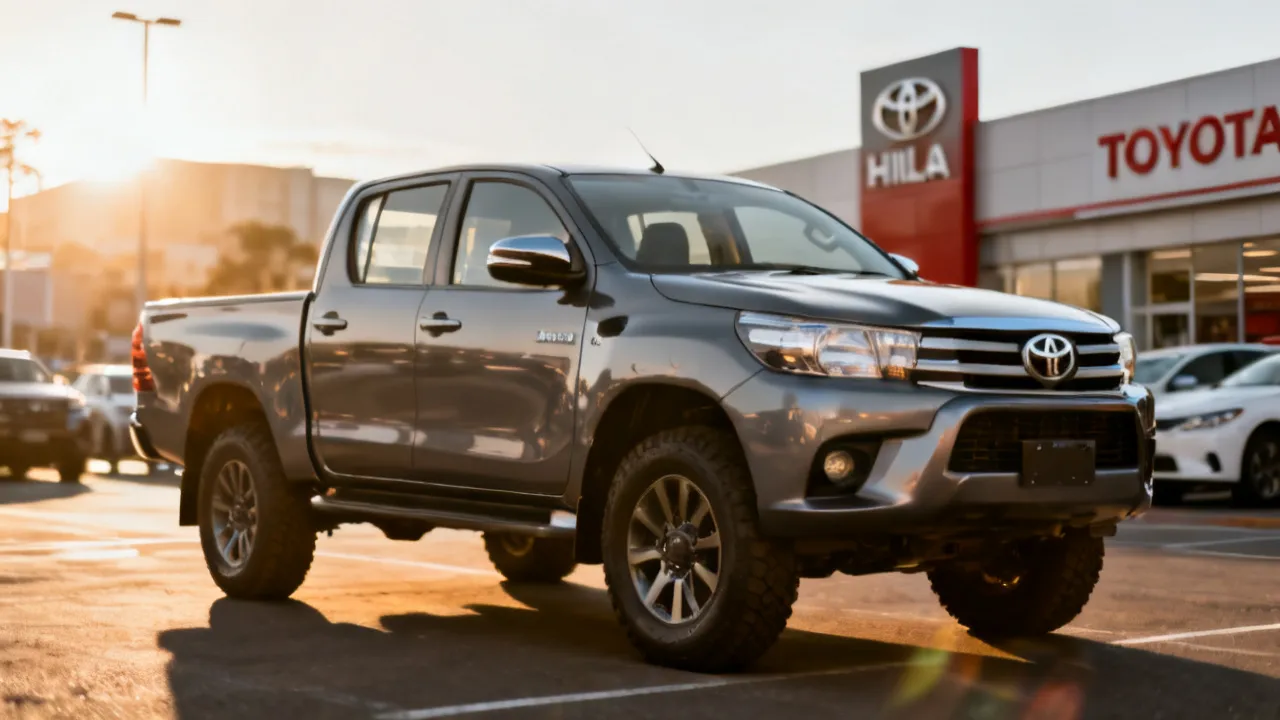
Start Here: Buying a Hilux on Sale Without Overpaying
If you’re looking for a Toyota Hilux on sale, the smartest approach is to narrow your search to reputable, official-style car trading marketplaces, then compare total out-the-door cost (not just sticker price) across multiple sellers. A “sale” listing can be a great value, but the real savings show up when you verify vehicle condition, history, warranty/coverage, and the final financing or cash price.
Below, you’ll find a structured process to identify genuinely competitive listings, how to evaluate them like an industry buyer, and where to cross-check inventory using well-known platforms. The goal is simple: you want a Hilux that matches your needs and keeps long-term ownership costs predictable—without paying extra because of marketing presentation or incomplete pricing assumptions.
What “Hilux” Typically Means in the Pickup Market
The Toyota Hilux is widely used as a work-ready pickup that balances everyday comfort with capability. In industry conversations, the Hilux name is often associated with strong resale interest and dependable ownership patterns—factors that matter when you’re shopping promotions.
In many markets, “Hilux” is less a single product and more a family of configurations. That’s why shopping “on sale” requires precision. Even if two vehicles are both labeled as Hilux, they may differ in engine output, drivetrain layout, cab style, cargo bed configuration, suspension tuning, and technology packages.
From a practical standpoint, when a Hilux is “on sale,” it’s usually tied to one or more of these inventory realities:
- Seasonal dealer promotions (e.g., to move specific trims or model years).
- Limited-time pricing to reduce aging inventory.
- Incentives paired with financing, where the monthly payment looks attractive but the effective total cost still needs checking.
- Condition or specification alignment, such as discounts on high-mile or less-optioned trims.
- Reconditioning-related price adjustments when the dealer has to refurbish tires, brakes, paint, or interior wear.
- Regional demand differences that affect local pricing—some trims are hotter in some areas than others.
Because these mechanisms differ, the very objective way to judge a listing is to compare the same basics (trim, mileage/age, drivetrain, options, and warranty status) across several sources. If you don’t do that, you risk treating an apples-to-oranges listing as though it’s an apples-to-apples deal.
Where to Find Hilux Listings and How to Use Official Trading Sites
To locate Hilux offers on sale, start with reputable platforms that aggregate current inventory and provide listing metadata such as mileage, price, and seller details. The very effective workflow is to use their search filters first, then validate key claims by reviewing the full listing pages and contacting the seller for documentation.
Think of marketplace sites as your “lead generation and cross-check” layer. The purchase decision should always be backed by evidence: VIN verification, service records, disclosure statements, and—if possible—an inspection report. This reduces the chance that you pay “sale” pricing for something that is not truly sale-worthy.
| Platform | Common Use for Hilux Shoppers |
|---|---|
| cars.com | Inventory discovery, cross-checking pricing and trim details across sellers |
| carmax.com | Value comparisons and browsing vehicle stock with consistent listing structures |
| caronsale.com | Finding promotional-style listings and comparing offers by location and condition |
| autotrader.com | Broad market coverage to compare similar Hilux trims and pricing ranges |
Source (links to platforms providing listing information):
- www.cars.com
- www.carmax.com/cars
- www.caronsale.com
- www.autotrader.com
Industry note: These platforms are useful because they help you avoid “single-source” pricing bias. Even when one listing looks compelling, a second marketplace often reveals how that price compares to similar configurations. If a listing is unusually cheap compared to the broader market, that’s not automatically bad—but it should trigger a deeper documentation check and possibly an independent inspection.
Expert Checklist: Evaluate a Hilux Deal Like a Professional Buyer
When you see a Hilux on sale, resist the temptation to decide based solely on headline price. As an industry-style buyer, I recommend evaluating deals in layers—starting with eligibility and documentation, then moving to economics and condition. Think of it like underwriting a loan: before you commit, you confirm the assumptions that make the deal “work.”
1) Confirm the exact trim and specification match
Hilux listings can vary dramatically by engine/drivetrain, cab style, bed setup, and technology package. Two vehicles may both be “Hilux,” yet differ in how they perform for your use case (commute, off-road use, towing, or mixed work/personal life).
- Verify trim and any performance packages.
- Confirm transmission type and drivetrain.
- Check factory options (tow package, off-road features, safety tech, wheels/tires).
- Verify cab type (single cab, extra cab, double cab) and cargo bed dimensions if listed.
- Confirm brake and suspension configuration where applicable (some trims may have upgraded hardware).
- Check for keyless and infotainment packages if you care about usability and resale.
If you don’t match specs, you can accidentally “overpay” on a deal that is not comparable, or “underpay” for a configuration that doesn’t meet your needs and costs more later (for example, needing to retrofit tow components or replacing tires due to different wheel sizes).
2) Compare the total cost, not just the sale price
A discounted price can be offset by hidden costs. Your evaluation should include:
- Fees (documentation, destination-related charges, dealer adds).
- Taxes where applicable.
- Financing terms: APR, loan term length, down payment requirements, and incentives tied to financing.
- Warranty or coverage included with the deal.
- Insurance implications if the dealer is quoting packages that affect replacement cost (e.g., wheel/tyre size).
- Trade-in adjustments if you’re trading your current vehicle—sometimes “savings” are moved into the trade valuation.
When a deal is “on sale,” it may be tied to financing. That doesn’t automatically make it bad—but it makes comparison essential. Always compare effective total cost across a 24–60 month horizon where possible. If two deals show different APRs, you must compare the overall cost of borrowing rather than only the monthly payment.
3) Treat condition as a measurable risk
From an expert viewpoint, vehicle condition is rarely “binary.” Even clean listings can hide issues that show up only after close inspection or after a test drive. The “sale” discount might be fair—or it might be compensating for upcoming repairs.
- Request full service history where available.
- Confirm accident/repair disclosure terms in writing.
- Inspect wear items: brakes, tires, suspension components, and underbody.
- Look for evidence of overheating or fluid leaks (especially if the listing is “as-is” or reconditioned).
- Check for rust or corrosion, particularly if the vehicle has been exposed to coastal or road-salt environments.
- Verify recent maintenance such as oil service, transmission fluid service (if specified by the manufacturer), and differential service if relevant to your drivetrain.
If the seller cannot provide a clear explanation of condition or history, that’s a deal signal—not a pricing opportunity. In many buyer situations, refusing to provide clarity is effectively the same as asking you to buy a risk you can’t quantify.
4) Confirm warranty and coverage details (and whether they transfer)
Warranty/coverage is one of the biggest economic levers in a used pickup deal. A “sale” price can be attractive until you realize that the vehicle has no meaningful warranty left or that coverage doesn’t transfer to new owners (depending on the terms and jurisdiction).
- Ask whether there is any remaining factory warranty.
- Ask whether there is any extended warranty and the coverage scope.
- Ask whether coverage is transferable and what steps are required for transfer.
- Confirm the deductible, claim procedure, and what is considered covered/uncovered.
A professional buyer wants to understand the risk boundary: what will cost you money quickly if something goes wrong.
5) Validate pricing with realistic market comparisons
A listing might be “on sale,” but you want to know how it compares to the broader market for that exact configuration. You should compare at least:
- Same trim (not just “similar year”).
- Same drivetrain and transmission type.
- Close mileage and comparable maintenance status.
- Similar option packages (tow, off-road, safety tech).
If your chosen listing is significantly cheaper than comparable cars with similar evidence of condition, then you need documentation reasons. The buyer question is always: Is the discount justified by known costs, or is it an information gap?
How to Find and Buy a Cheap Car or a Hilux on Sale (Step-by-Step)
The objective goal is to locate the top-value Hilux listing among many options. The method below is designed to reduce common purchasing errors—like selecting the low price monthly payment without checking the real purchase price.
Think of the process as building an evidence file. Each step should either (1) confirm that the deal is strong or (2) reveal a reason the price may be misleading.
Step 1: Define your “must-match” criteria
Start by writing down non-negotiables:
- Year range (or age range)
- Trim and key options (tow package, off-road features, safety tech)
- Expected annual mileage
- Budget ceiling for total cost (including fees/taxes)
- Cab style and bed setup
Then add “nice-to-have” options you can flex on. This helps you negotiate intelligently and prevents you from wasting time on listings that won’t satisfy your real requirements.
Step 2: Use marketplace filters to shortlist comparable Hilux listings
Use inventory filters for comparable criteria, then create a shortlist of 5–10 vehicles. A structured shortlist enables fair comparison and makes negotiation more disciplined.
When filtering, consider that some listings may not specify everything. To avoid missing relevant vehicles, you may need to broaden filters slightly and then prune candidates manually by reading each listing carefully.
Step 3: Cross-check price with at least two platforms
It’s common for sellers to price similarly configured cars with mild differences. Cross-checking helps identify whether a deal is truly competitive or just presented that way due to incomplete listing details.
For instance, one marketplace may show a low price but omit certain fee assumptions in the header; another may present a different fee structure. That’s why comparing listing detail pages matters.
To make this step more effective, record each candidate’s:
- Headline price
- Mileage
- Trim and option keywords
- Listing location and distance
- Any stated “as-is” language or reconditioning notes
Even if you can’t compute out-the-door cost yet, recording these variables prevents emotional decision-making.
Step 4: Verify dealer claims before you schedule the appointment
Ask concise, evidence-based questions such as:
- Is there any remaining factory warranty?
- Has the vehicle undergone inspections or reconditioning?
- Are there open recalls (if applicable) and how are they handled?
- What documentation supports the vehicle’s condition statement?
- Is the price contingent on financing, and what happens if you pay cash?
- What is the full fee breakdown you expect at purchase?
- Has the vehicle been smoked in, and is there odor mitigation?
Get answers you can verify. If the seller can’t provide specifics (for example, “it’s all good”), that’s a warning sign. The professional buyer requires a path to documentation.
Step 5: Negotiate using “out-the-door” numbers
When discussing offers, focus on the final purchase amount. A common expert strategy is to negotiate the out-the-door price first, then separately review financing terms.
To keep the negotiation grounded, ask for a written breakdown including:
- Vehicle price before tax
- All dealer fees
- Taxes
- Title/registration
- Any add-ons (warranties, protection packages, accessories)
- Total out-the-door figure
If a dealer refuses to provide breakdown details until late, that’s not always disqualifying—but it means you should be extra cautious about last-minute surprises.
Step 6: Test drive for function, not vibes
During the test drive, evaluate steering alignment, braking feel, transmission behavior, vibration under load, and whether noises appear under specific conditions. If possible, replicate the driving environment you’ll use very.
Add structure to your test drive by checking:
- Cold start behavior (if you can drive soon after arrival).
- Acceleration smoothly and under moderate load.
- Braking at low speed and from highway speed safely (if legal and appropriate).
- Lane tracking (does it pull left/right?).
- Transmission shifts for hesitation or harsh engagement.
- 4WD/AWD engagement (if equipped), tested carefully and only if safe and appropriate.
- Cabin noises: rattles, creaks, and wind noise around doors/mirrors.
Keep notes. Your memory will degrade quickly after multiple test drives. Notes help you negotiate based on observed issues rather than vague impressions.
Step 7: Complete the purchase with documentation discipline
Before signing, confirm:
- Final price and fee breakdown
- Warranty/return terms (if applicable)
- Any included accessories
- Payment schedule and contract terms
- Whether any promised items are written into the contract
If you agreed to include certain accessories or fixes (for example, replacing tires or repairing a dashboard light), confirm they are documented and scheduled. Avoid relying on verbal promises.
Comparison View: What to Require From Sellers (Conditions and Requirements)
“On sale” is not a standardized definition across dealers. Therefore, your buying power comes from forcing clarity. Use the checklist below as a decision gate. Think of it as a way to convert marketing language into real buyer certainty.
| Requirement | Why It Matters for a Hilux Deal | What to Do |
|---|---|---|
| Clear vehicle identification | Prevents mismatched trim/spec comparisons | Confirm VIN and option list |
| Disclosure of accident/repair history (if any) | Reduces hidden risk that affects durability and resale | Request documentation and written explanation |
| Warranty or coverage terms | Changes total cost and downside risk | Ask what’s included and for how long |
| Fee and tax transparency | Headline price may not reflect true out-the-door cost | Get a full breakdown before committing |
| Financing incentive conditions (if applicable) | Some deals require specific credit/tenure to realize savings | Compare offers at the same total term |
| Proof of inspections and reconditioning | Helps confirm what was actually fixed (if any) | Ask for service invoices or inspection summaries |
| Recall status information (where applicable) | Outstanding recall work can create compliance risk and cost | Ask if recalls are completed and how they were handled |
| Key and accessory completeness | Missing keys or incomplete accessories reduce value | Confirm number of keys and what’s included |
Source (platform-based listing references):
- https://www.cars.com/
- https://www.carmax.com/cars
- https://www.caronsale.com/en
- https://www.autotrader.com/
Pricing Reality: How “Cheap” Often Works in the Pickup Market
Many shoppers search for a “cheap car” and then narrow by model. In pickup segments like the Hilux market, “cheap” can mean different things:
- Lower headline price due to higher mileage or older model year.
- Inventory discounts when dealers want faster turnover.
- Trade-in-driven deals that reflect dealer appraisal outcomes.
- Financing promotions that adjust effective pricing if you qualify.
- Condition-driven markdowns where reconditioning is minimal or unknown.
- Option mismatch where the “cheap” vehicle lacks popular upgrades that drive resale value.
From an expert perspective, the very sustainable “cheap” choice is the one that keeps future repair risk predictable and avoids mismatches in your usage needs. A slightly higher upfront price can become cheaper if it reduces uncertainty and keeps ownership costs stable.
To illustrate the logic: imagine two Hilux listings with similar ages but different condition signals. The lower-priced one might have tires near end-of-life, faded paint, and a service history gap. Even if the price difference looks modest, replacing tires and addressing mechanical concerns quickly can erase the discount. Conversely, a slightly higher-priced listing might have recent maintenance, better warranty coverage, and tires at mid-life—making the total cost over your first year more favorable.
How to Estimate “Hidden Costs” Before You Commit
When you want to avoid overpaying, you should mentally expand the deal beyond the headline number. Hidden costs are usually not random; they align with predictable categories. If you systematically account for them, you can compare deals with more accuracy.
Here are common hidden-cost categories to consider when shopping a Hilux on sale:
- Reconditioning items: tires, brakes, alignment, fluid services, battery replacement, or cosmetic refurbishment.
- Mechanical risk: leaks, cooling system wear, suspension noise, driveline backlash, or transmission shift concerns.
- Ownership compliance: registration fees, title processing, and emissions-related checks (where applicable).
- Insurance pricing: some configurations (higher trim, larger wheels, certain option packs) may cost more to insure.
- Financing interest: differences in APR or fees can change the effective cost more than the “sale” price difference.
- Warranty deductibles: even if coverage exists, your deductible and exclusions determine your actual risk.
A practical buyer action: ask for (1) a copy of service invoices (if possible) and (2) a written fee breakdown. If the seller cannot provide this, your “hidden cost” probability rises. You may need to lower your offer price to compensate for increased uncertainty.
Common Mistakes to Avoid When Shopping for a Hilux on Sale
- Comparing different trims as if they’re identical. Even small option differences can affect both value and utility. A tow package versus no tow package can mean different cooling needs, wiring harness presence, and rear axle setup expectations.
- Ignoring out-the-door costs. Fees can eliminate a large portion of the discount. Always request an itemized breakdown.
- Overvaluing headline photos. Photos don’t show tire wear, vibration, or hidden rust/underbody wear. Lighting and angles can be misleading.
- Assuming “sale” means “top price.” Promotions can be real, but cross-checking prevents being misled by presentation.
- Failing to verify documentation. If the seller’s information is inconsistent, walk away or renegotiate after clarification.
- Skipping an independent inspection when the deal is unusually cheap. A third-party inspection often costs less than one surprise repair.
- Over-focusing on monthly payments while ignoring APR and term. Monthly payments are marketing-friendly and can be engineered via term length.
- Forgetting to confirm included accessories (toolkits, floor mats, tonneau covers, OEM upgrades). Missing items reduce value and can add cost.
- Not considering your real usage. A “cheap” configuration might lack features you need, and retrofitting can be expensive.
What to Do If the Listing Is “Too Good to Be True”
Sometimes a Hilux listing appears significantly cheaper than comparable inventory. It may be a legitimate deal—inventory goals, trades, or regional pricing differences can create genuine markdowns. But it can also be an information gap or undisclosed issue.
If the listing is unusually low, treat it as a verification-first scenario:
- Ask why the price is lower. Get a direct explanation tied to specifics (mileage, reconditioning, missing options).
- Request the service and inspection record, not just a statement.
- Ask about tire and brake life estimates (or request a multi-point inspection report).
- Request underbody photos or allow an inspection before purchase.
- Confirm the accident/repair disclosure language and whether any body repairs are structural or cosmetic.
- Verify whether the vehicle is under a return policy or sold as-is.
In many cases, your decision should come after you learn whether the discount is justified by measurable factors. If you cannot get measurable answers, you should hesitate.
Test Drive and Inspection: A More Detailed Approach
Many people test drive a vehicle and focus on comfort. But a Hilux on sale is often purchased for reliability and practical use. That changes what you should test and inspect.
Consider splitting your evaluation into three layers: (1) quick on-lot checks, (2) structured test drive, and (3) independent inspection if needed.
On-lot quick checks
- Start-up and idle behavior: any rough idle, warning lights, smoke, or abnormal noises?
- Fluid leaks: check under the engine area and under the vehicle for wet spots.
- Brake rotor condition: uneven wear can hint at alignment or caliper issues.
- Tire wear patterns: inside/outside wear suggests alignment issues or suspension problems.
- Wheel and rim condition: damage can affect balance and increase replacement costs.
- Cabin condition: check seat wear, odor, and any dashboard warning lights visible through the windshield.
Structured test drive checks
- Gradual acceleration: listen for driveline vibration or harsh shift patterns.
- Moderate highway run: observe steering stability and track alignment.
- Braking from multiple speeds: note brake pull, pedal pulsation, and noise.
- Turning and suspension response: listen for clunks over uneven surfaces.
- Clutch/gear engagement (if applicable): check for slipping or delayed engagement.
- Technology performance: check infotainment responsiveness, cameras, sensors, or safety systems.
Independent inspection (when it’s worth it)
An independent inspection is especially valuable when:
- The listing price is significantly below comparable units.
- The service history is incomplete.
- The seller is vague about repairs or reconditioning.
- There are visible cosmetic concerns like mismatched paint or unusual panel gaps.
- You’re planning to keep the Hilux long-term and want to minimize downside risk.
When you request an inspection, clarify that you’ll do it before final payment (unless the seller insists on specific scheduling). A cooperative seller will generally allow inspection under reasonable arrangements.
Financing vs Cash: How to Compare Deals Fairly
A Hilux on sale often comes with financing incentives, and those incentives can distort your perception of value. A fair comparison is not simply “which monthly payment is lower?” It’s about the total economic burden of the purchase across the same timeframe.
Here are the key financing variables you should compare:
- APR (interest rate) and whether it changes with credit tier.
- Loan term length (e.g., 36 vs 60 months).
- Down payment requirements for the advertised incentive.
- Dealer fees and whether they differ between financing offers.
- Rebates or incentives that are conditional on financing.
To avoid confusion, ask the dealer for two versions:
- Cash price (all-in).
- Financed price with a complete amortization view and all fees included.
Then compare using out-the-door total cost and (if financing) the total interest cost. This prevents you from being tricked by a low monthly payment that is created by extending the loan term.
Negotiation Tactics That Stay Ethical and Effective
Negotiation is more effective when you make it a logic exercise rather than an emotional contest. The best negotiators anchor on evidence: out-the-door numbers, documentation gaps, and measurable condition concerns.
Here are negotiation tactics consistent with a professional buyer approach:
- Ask for the out-the-door breakdown early, not as an afterthought.
- Use comparable listings as reference points from at least two marketplaces.
- Leverage verified issues (tire wear, service gaps, missing items) to justify an offer reduction.
- Separate vehicle price and add-ons. Don’t let add-on packages inflate the deal.
- Confirm any included warranty and coverage in writing before you sign.
- Keep your offer anchored to total cost, not monthly payment talk.
If you want to negotiate confidently, bring your notes from your test drive and your shortlist comparisons. When the dealer sees you are prepared, you’re more likely to receive straightforward answers and a fair path to terms.
Understanding Hilux Value Over Time (Why “Good Deals” Hold Up)
One reason people prefer Hilux models is the belief that resale and long-term ownership costs are relatively predictable. Whether or not that exact prediction holds in your region depends on trim popularity and market conditions, but the principle is: your choice today influences your resale outcome tomorrow.
To improve your odds of holding value, focus on:
- Desirable trims and configurations that local buyers tend to search for.
- Maintenance consistency documented via records.
- Uncomplicated ownership history with fewer mystery repairs.
- Clean and transferable warranties that reassure buyers.
- Condition signals such as minimal corrosion and good tire/brake life at purchase.
A “slightly higher” price might be cheaper in the resale equation if it buys you a better-known ownership profile. This is a major reason professional buyers do not chase only the lowest sticker price—they buy the most defensible deal supported by documentation.
FAQs About Buying a Toyota Hilux on Sale
1) What should I check first when I find a Hilux listing on sale?
Start by confirming the exact trim, drivetrain, mileage/age, and included options. Then verify documentation details such as service history, disclosure terms, and any remaining warranty or coverage. These factors determine whether the “sale” price is a genuine value or a risk signal.
2) Are official car trading websites better than random dealer listings?
Reputable trading platforms typically provide structured listing details and more standardized presentation of key information. However, the vehicle condition and seller accuracy still require verification through full documentation review and direct seller questions. Use platforms as a discovery tool, then confirm details.
3) Does a low sale price always mean I’m getting a bargain?
Not necessarily. The listing could reflect higher mileage, missing options, reconditioning needs, or a financing structure that changes the real total cost. Compare out-the-door numbers and evaluate condition and warranty coverage to judge the true value.
4) How can I negotiate effectively for a cheap car or a Hilux on sale?
Negotiate with a disciplined target: ask for an out-the-door price breakdown, compare similar listings across at least two marketplaces, and use any verified issues (condition notes, service gaps, required reconditioning) as negotiation leverage.
5) What documents should I request before buying?
Request proof of vehicle history disclosures, service records (when available), and the full fee/warranty terms in writing. If there are financing incentives, ask about the conditions needed to receive the advertised benefits.
6) Should I buy a Hilux from a marketplace or directly from a dealer?
Either approach can work. Marketplaces help you compare inventory efficiently; dealers can offer stronger warranty or trade-in pathways depending on the seller. The key is to evaluate the exact vehicle and deal terms, not just the channel.
7) Should I bring a mechanic to inspect the Hilux before purchase?
If the vehicle is priced significantly below comparable options, or if the service history is incomplete, an inspection is a wise move. A mechanic can verify wear items, underbody condition, and potential mechanical risks that are hard to see in photos.
8) What if the dealer won’t provide accident/repair details?
That’s a red flag. You don’t necessarily need to avoid the deal immediately, but you should not proceed without clarity. Ask for written disclosures and, if necessary, walk away or re-negotiate after you learn what happened and how it was repaired.
9) How do I compare two Hilux deals with different warranty terms?
Compare the warranty coverage scope (what’s covered), the duration, the deductible, and whether coverage is transferable. Then compute your risk: a slightly higher price with meaningful coverage can be better than a cheaper car with limited or no coverage.
10) Is it better to buy a Hilux with lower mileage or with better warranty?
It depends on the gap. If one car has significantly lower mileage but lacks warranty, you might still be paying more risk. Conversely, if another has slightly higher mileage but strong warranty and consistent service history, the second can be the safer value.
Final Guidance: A Reliable Way to Choose the Right Hilux
If your goal is to buy a Hilux on sale, think like a risk manager and a value analyst. Use reputable platforms to shortlist comparable vehicles, verify documentation, compare out-the-door cost, and ensure warranty/coverage details are clearly stated. That method consistently produces better outcomes than chasing the lowest displayed number.
When you treat a sale as a starting point—not a conclusion—you’re more likely to end up with a pickup that fits your needs today and holds its value over time. In most real-world purchases, the biggest “overpaying” mistake is not paying too much for a car—it’s paying too much for uncertainty. Your job as a buyer is to convert uncertainty into verified information before you commit.
Disclaimer
1) The above information comes from online resources, and the data is as of October 2023.
2) For more information, please refer to the official website of the listed platforms.
Reference Links
https://www.cars.com/
https://www.carmax.com/cars
https://www.caronsale.com/en
https://www.autotrader.com/
-
1

A Guide to Cost-Efficient Small Electric Cars for Seniors
-
2
Mastering Debt Consolidation: Boost Your Credit Score and Manage Interest Rates
-
3
Your Guide to Loans, Credit Checks, and Interest Rates
-
4
Affordable Independent Living: Finding the Right Senior Housing
-
5
Guide to Senior Living Apartments: Affordable and Comfortable Environments