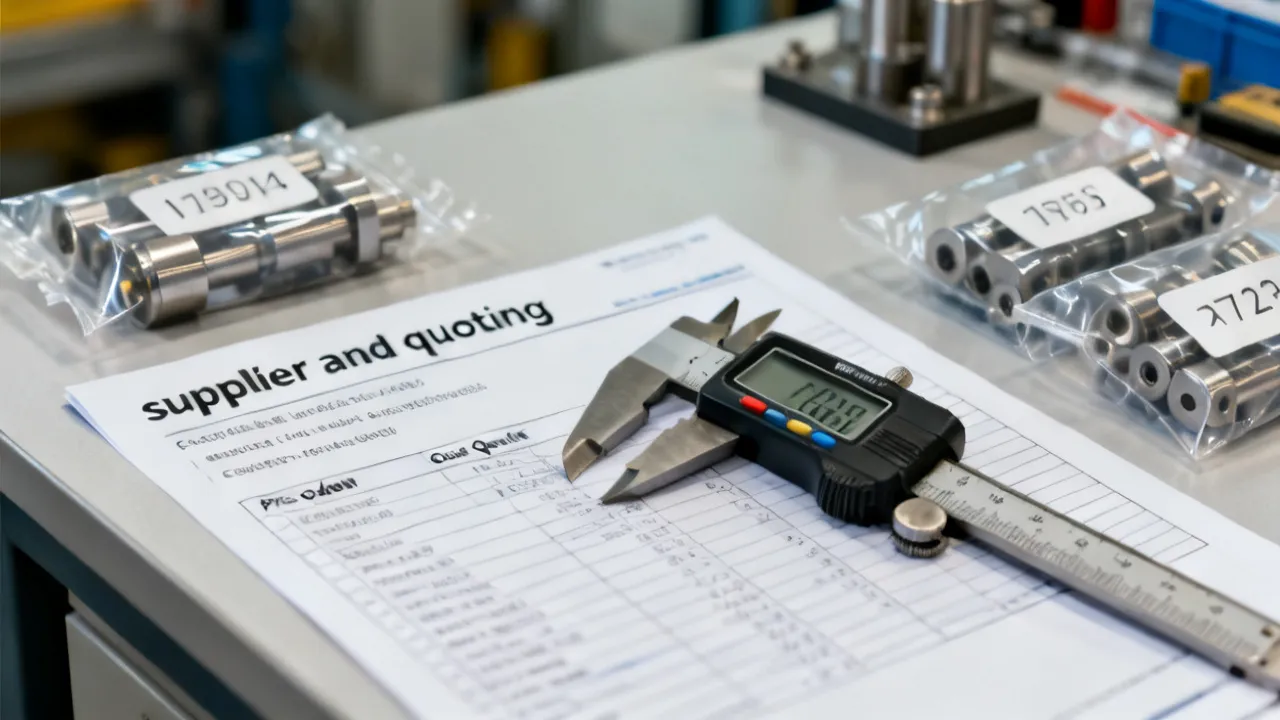
Understanding the Sourcing ID 21979368133
This guide explains how to interpret the sourcing ID “21979368133” and what it can mean for procurement, supplier validation, and traceability. Objectively, alphanumeric identifiers typically help standardize catalogs, confirm batch-level records, and reduce mismatches in supply chains. You’ll also learn practical steps, evaluation conditions, and key FAQs for safer sourcing decisions.

Critical takeaway: what “21979368133” very often represents in sourcing workflows
In very procurement systems, the numeric identifier 21979368133 functions as a catalog, lot, quotation reference, or internal sourcing ID that links documents across purchasing, logistics, and quality control. If you’re assessing supply options for a product line, this type of ID is typically used to verify consistency between what was quoted, what was shipped, and what was recorded in inventory or compliance paperwork. Even when the rest of the details are minimal, the presence of a structured identifier like 21979368133 signals an intention to make transactions auditable and easier to match across departments.
In practice, the “same-looking number” appearing in emails, order acknowledgments, receiving systems, and quality documentation often indicates an effort to create a stable anchor—something that can survive human error, version confusion, and multi-system synchronization problems. While a human might interpret a phrase such as “the same part as last time,” the enterprise system usually needs a deterministic key. That is why identifiers like 21979368133 are frequently used as that deterministic key: they help ensure that the buyer and the supplier can both point to the same record and agree on what it means.
Because supply chains have many handoffs—especially when a third-party logistics provider, a contract manufacturer, or a distributor touches the flow—an identifier becomes the connective tissue. It reduces reliance on memory and reduces the likelihood that two teams are discussing two different variants. It also provides a way to build an evidence trail for audits, customer inquiries, and internal investigations after incidents or nonconformities.
However, the critical nuance is that identifiers are only as useful as their definitions and linkage. The number itself may not inherently reveal whether it is a catalog reference, a lot/batch, a quotation reference, or an internal purchasing code. Therefore, in robust workflows, the buyer treats 21979368133 as a query key to be validated through documentation—rather than as a guaranteed explanation.
Why keywords and identifiers matter for procurement clarity
Many buyers search for supplier information using shorthand keywords that resemble order notes, SKU-like codes, catalog strings, or document fragments. When you encounter a code such as 21979368133, it often appears alongside other terms that describe the item category, the sourcing route, or documentation requirements. In a well-run sourcing environment, these fields help prevent common failures—such as shipping the wrong variant, using outdated specifications, or relying on incomplete paperwork.
From an industry-expert standpoint, the real value isn’t just “having a code.” It’s how reliably that code is used across systems and how consistently suppliers and buyers attach it to measurable product attributes (spec sheets, test reports, packaging marks, and batch/lot documentation). If the supplier uses 21979368133 in one system but fails to propagate it into the receiving documents or quality certificates, then the key loses much of its purpose. Conversely, when 21979368133 is used consistently from quotation to invoicing, it becomes a powerful cross-functional tool.
Keywords and identifiers also matter because procurement is rarely one monolithic process. It includes purchasing operations, supply planning, warehouse receiving, quality inspection, regulatory/compliance teams, and finance. Each of these groups may use different software and different data structures. A shared identifier—especially a structured numeric ID—helps each system “find” the same transaction and reduces the risk of mismatched or incomplete records.
Additionally, identifiers help procurement teams manage lifecycle complexity. For instance, a product might be revised (new formulation, new packaging, new compliance standard) yet the general product name stays the same. If the supplier updates the code meaningfully—such as changing catalog reference or batch code—then 21979368133 can act as a marker of that lifecycle state. Without proper identifier discipline, buyers can accidentally purchase an older revision, causing quality issues or compliance gaps later.
How “sourcing IDs” support traceability and reduce mismatches
Supply chains involve multiple handoffs: request-to-procure, quote negotiation, order confirmation, receiving, warehousing, and downstream fulfillment. A stable identifier like 21979368133 improves traceability by enabling:
- Document matching: ensuring the invoice reference aligns with the purchase order and receiving record.
- Variant control: distinguishing similar items that differ by specification, packaging, or compliance markings.
- Quality alignment: connecting the goods with inspection outcomes or certificates associated with a batch/lot.
- Faster resolution: shortening the path from “we received something different” to identifying the root cause.
To see why this matters, consider a realistic scenario. A buyer orders a product under a specific technical scope, but the supplier ships a different configuration due to internal SKU confusion. If the receiving team records only “Product X” without capturing 21979368133, the discrepancy may not be detected until manufacturing or customer use. Even then, it can be hard to reconstruct what was originally ordered. However, if 21979368133 appears on both the packing list and the quality certificate—and the receiving record captures it—then the buyer can quickly isolate exactly which batch or catalog configuration was shipped.
This capability is especially valuable when suppliers subcontract manufacturing. In that case, the supplier may have one internal purchasing ID for a contract order, but the actual goods receive an additional batch/lot ID at production. A strong traceability system links these identifiers: the purchase identifier ties to the manufacturing lot; the lot ties to test records; the test records tie to compliance statements; and the compliance statements tie to regulatory commitments.
Mismatch reduction is not only about preventing wrong shipments; it also includes avoiding “paper mismatches.” For example, paperwork might claim a certain specification, but the physical labels might indicate a different packaging type. Or test results might correspond to a different production run than the one received. When 21979368133 is used as a cross-document key, it helps detect these mismatches early—often at receiving or during document review before goods are released.
Objective background: what identifiers typically indicate
Identifiers used in sourcing commonly fall into a few patterns. While the exact meaning of 21979368133 depends on the supplier’s internal structure, buyers can usually infer likely roles:
- Catalog reference: a stable label for a particular product configuration.
- Quotation or RFQ reference: used to track the pricing offer and its technical scope.
- Lot/batch indicator: attached to production runs and linked to test records.
- Warehouse receiving ID: generated upon goods receipt to manage internal stock rotation.
Because identifiers may be reused or repurposed across departments, the safest approach is to treat 21979368133 as a query key—something you validate via documents rather than assuming its meaning without confirmation.
There are also hybrid cases. A numeric ID might simultaneously act as (1) a supplier catalog reference and (2) an internal traceability anchor for lots, depending on how the supplier’s quality management system is configured. Alternatively, the identifier might be an “order line reference” (a line item ID) rather than a product-level SKU. In that case, multiple line items might refer to the same SKU but differ in quantity, packaging unit, or delivery schedule. If a buyer assumes the ID is a lot code when it is actually a line reference, they might request the wrong type of quality evidence.
Therefore, the buyer’s goal is to determine which “level” the identifier sits at: product configuration, shipment/order line, or production lot. That classification determines what documents should carry the identifier and what validation checks are required. If it is a lot/batch identifier, the buyer should expect it on labels and on certificates. If it is a catalog/SKU reference, it should appear on spec sheets and on commercial documents. If it is a quotation or RFQ reference, it should appear on the quote and the order confirmation derived from it.
Another important background point is that some procurement systems generate “numeric IDs” automatically. These can appear similar to vendor-provided codes but might actually be internal database primary keys. If so, the supplier might not provide a public “definition.” In those cases, buyers should still confirm whether the supplier’s documents use the identifier as a line item reference or whether the identifier is strictly an internal key to your organization’s system.
Industry perspective: due diligence should focus on “linkage,” not only the code
Experienced procurement teams rarely evaluate an identifier alone. Instead, they evaluate whether the identifier is part of a controlled information flow. For example, a buyer should check whether the same code appears on:
- Purchase order (PO) or order confirmation
- Commercial invoice or packing list
- Bill of lading or shipment documents (when applicable)
- Quality documents (CoC/CoA, inspection reports, test summaries)
- Labels or packaging markings on the received goods
When 21979368133 appears consistently across these touchpoints, it generally indicates stronger process discipline. When it appears sporadically, it can point to a weaker document control system or a partial data migration between tools.
To expand on why “linkage” is more important than the code alone, consider the nature of risk in procurement. Most procurement risks are not caused simply by the absence of an identifier—they are caused by unclear mapping between what was ordered and what was delivered. The identifier is one mechanism to create that mapping. If the identifier appears but does not link to specifications or quality evidence, then it is largely cosmetic.
For example, you might see 21979368133 in the order confirmation but not on the packing list. In that case, the receiving team might not have an easy way to match goods to the PO line item. They might rely on a different label code (another SKU or batch number), leading to a second mapping step. That extra step might be manageable, but it increases the chance of error, especially if multiple variants exist.
Alternatively, you might see 21979368133 on the packing list but not on the invoice. That could delay payment or create disputes later. If quality documents reference a different code (for instance, the lot number only), the buyer might not immediately connect inspection results to the correct receiving record. Again, the identifier is only valuable when it consistently ties the relevant documents to the relevant goods.
Due diligence therefore includes checking the “chain of custody” for information: which parties create which documents, how data flows from suppliers to buyers, and whether the same key appears at each stage. In more mature systems, this linkage is supported by workflow automation (ERP systems, supplier portals, EDI messages, and label printing systems connected to batch records). In less mature environments, linkage might depend heavily on manual data entry. In the manual case, the identifier becomes a lifeline—but it also becomes fragile if people forget to copy it or if the format changes between documents.
Verification checklist (step-by-step) for interpreting 21979368133
Below is a practical method you can use when you see 21979368133 in supplier documentation or communications.
Step 1: Ask for the “definition” of the identifier
Request a brief mapping statement from the supplier: whether 21979368133 is a SKU/catalog number, lot/batch, RFQ reference, or internal procurement ID. The supplier should ideally provide this within the order pack or through a document-control note.
This step is more effective when you ask for a definition in a structured format. For example, instead of asking “What is 21979368133?”, you can ask: “Please confirm whether 21979368133 is the catalog reference, the lot/batch number, the quotation identifier, or the purchase order line reference for the items in PO [PO number].” This encourages the supplier to provide an answer that you can record and audit.
It’s also useful to ask what document fields carry the identifier. For example: “Does the identifier appear on CoC/CoA? On the packing list? On carton labels? On the commercial invoice?” The supplier’s response to this will tell you whether you can rely on 21979368133 for traceability or whether you will need an alternate mapping key.
In some supplier systems, the definition might be obvious to internal staff but not obvious to you. If you find ambiguous responses, ask for a sample document set and point out which fields you want them to populate with the identifier. For instance, ask them to highlight the field that corresponds to 21979368133 on each attached document.
Step 2: Confirm document alignment
Ask the supplier to provide a receiving-ready document set where the identifier appears in the relevant fields—at minimum within the PO confirmation and packing list. If there’s a lot/batch element, ensure it aligns with any certificates.
Document alignment is not only “present or absent.” You also want to ensure that the meaning matches. For example, sometimes a supplier might use 21979368133 as a line item reference on the packing list, but use a different code as the lot number. That can still be workable if your receiving process captures both codes and links them internally. But if the supplier uses inconsistent meaning across documents—say, using the code as a lot identifier on one document and as a catalog reference on another—that inconsistency should be treated as a data quality issue.
To verify alignment, procurement and quality teams often compare three document types in parallel: (1) ordering documents (PO/confirmation/quote), (2) logistics documents (packing list/shipping documents), and (3) quality documents (test results/certificates). The aim is to ensure that the same identifier ties these documents to the same item configuration and batch.
When a supplier provides a “document pack,” ask whether it includes a cover sheet or an index that explicitly lists which identifiers correspond to which items and which lots. Many suppliers can generate such an index quickly if they are used to regulated shipping. If the supplier does not have this practice, you might consider adding it as a requirement in your purchasing terms for future orders.
Step 3: Validate the specification linkage
Identifiers are only useful if they point to stable technical requirements. Request the specification sheet (or an equivalent technical dossier) and verify it matches what was quoted. For regulated goods, confirm the relevant compliance documents correspond to the same identifier.
Specification linkage is where buyers often discover problems. Even if 21979368133 is consistently present across documents, it might point to an obsolete specification, a superseded revision, or a “functional equivalent” that is not identical in material composition or performance characteristics. Therefore, the buyer should confirm both the specification reference and the revision status.
Ask the supplier to include version numbers, revision dates, or document effective dates. Many procurement disputes arise because someone quoted a specification that later changed, but the code remained similar or the packaging changed without a corresponding update. A robust supplier will treat 21979368133 as part of a controlled reference set and will not reuse codes in ways that obscure revision changes.
For regulated goods, compliance linkage becomes even more important. If certificates of compliance reference the same code, you can be confident that the tests were performed on the intended configuration. If certificates reference a different batch or a different version, you may need to reject the document pack or request corrective information.
In addition to the specification sheet, ask for any critical parameters relevant to your usage. For example: dimensions, tolerance, material grade, coating type, allowable contaminants, test method references, shelf life, and storage conditions. The more regulated and risk-sensitive the product, the more buyers benefit from a complete “technical dossier” rather than only a commercial description.
Step 4: Inspect labeling and packaging marks upon receipt
When you receive goods, compare label information with 21979368133. If the code is intended to represent a batch/lot, you should see it (or an equivalent lot marker) on cartons or product labels.
Receiving inspection should be both procedural and evidentiary. Procedural means ensuring the team follows a checklist: verify carton counts, verify labels, verify barcode/print quality, and verify that the labels correspond to the document identifiers. Evidentiary means capturing photos, batch numbers, and any discrepancies in a way that supports later investigation.
If 21979368133 is a lot/batch code, it should typically appear on packaging in a standardized place. If it is a catalog/SKU, it might appear on labels but could also be replaced by barcodes representing different internal items. Either way, the label should be consistent enough that your receiving process can unambiguously match physical goods to the purchase record.
Another receiving consideration: some suppliers print labels at dispatch based on their internal batch record, which might differ from the buyer’s requested documentation. If you notice that label codes differ but documents show 21979368133, do not ignore the mismatch. Instead, reconcile by asking: “What code does this label represent, and how does it map to 21979368133?” If you cannot map it, treat it as a traceability risk.
Also check for “packaging marks” beyond the main label. Many compliance programs require markings such as batch identifiers, manufacturing date codes, expiry dates, or regulatory icons. While those are separate from 21979368133, they are often correlated with lot identifiers. If the supplier uses 21979368133 as the key lot marker, those packaging marks should be consistent with it.
Step 5: Record the traceability path internally
In your own records, store the document set under the identifier as a primary index. This makes internal audits and future replenishment faster, particularly if multiple variants exist.
Recording traceability internally is often where companies win or lose the value of supplier identifiers. A buyer might do everything correctly at receiving, but if the internal system stores documents under the wrong key—or if quality results are not attached to the receiving record—then the company still cannot audit the transaction efficiently.
A recommended approach is to establish a consistent internal naming convention. For example, use a folder structure like: [SupplierName]/[PO]/[Identifier-21979368133]/Documents. Within that folder, store: the PO confirmation PDF, packing list PDF, invoice PDF, certificate of analysis/compliance PDF, and any lab or inspection reports. If barcodes or label photos are used, store them there as well.
In addition, link the identifier to internal inventory records. If your warehouse system uses a different internal code (such as a receiving ID), map both codes together. The goal is to enable an auditor to follow the chain: internal inventory → receiving record → identifier 21979368133 → supplier lot/certificate → specification reference and test methods.
Finally, consider data quality and governance. If 21979368133 appears as a key in your procurement system, create a data governance rule: do not allow free-text entry without validation. Require fields like “identifier type” (catalog vs lot vs quote reference) to be selected. This ensures the next time you see 21979368133, your team interprets it correctly and does not revert to assumptions.
Price and supplier evaluation: how to connect cost to the identifier
You referenced “price information” and “supplier details,” though specific numeric pricing values were not provided in the prompt. In practice, the way to evaluate price fairly is to ensure 21979368133 ties to the same commercial scope. That means:
- Unit price (or extended price) must correspond to the correct product definition tied to 21979368133.
- Incoterms, minimum order quantities (MOQs), and lead times should be reflected consistently for that identifier.
- If multiple manufacturing sources exist, confirm whether 21979368133 is production-source agnostic or source-specific.
An objective industry approach avoids “apples-to-oranges” comparisons. Even small mismatches—like a different grade or packaging format—can produce large differences in compliance and total cost of ownership. Total cost of ownership (TCO) includes not only purchase price but also costs of inspection, rework, returns, delays, and quality risk management.
To evaluate supplier pricing with identifier discipline, you typically do three cross-checks:
- Cross-check scope: Confirm that the same identifier appears on the commercial quotation and the PO line item and that it corresponds to the same specification revision.
- Cross-check unit of measure: Ensure that the unit price is per the same packaging unit (e.g., per piece, per carton, per kilogram, per roll) and that conversion factors are not hidden.
- Cross-check commercial terms: Ensure that shipping terms (Incoterms), lead times, MOQs, and any freight or insurance requirements correspond to the delivery plan for that identifier.
Another practical issue is that some suppliers may offer a low unit price but attach additional charges tied to documentation, compliance packaging, or special labeling. If 21979368133 is used for a specific “compliance packaging” variant, you want that variant to be consistently evaluated. If not, you might compare a “standard pack” to a “regulated pack,” leading to underestimation of costs.
Supplier evaluation should also incorporate responsiveness and document quality. If one supplier consistently uses 21979368133 correctly across documents, delivers on time, and provides complete certificate packs, their “real price” can be lower in operational terms even if the headline unit price is slightly higher. Conversely, a supplier with lower unit prices might impose hidden cost through incomplete paperwork or frequent discrepancies.
In advanced sourcing strategies, buyers might even request that suppliers provide structured data via electronic documents. For instance, suppliers might send EDI messages that include the identifier 21979368133 as a field in order confirmations and advance ship notices. This reduces the manual workload and improves audit readiness.
Conditions and requirements for reliable sourcing decisions
Because buyers sometimes see identifiers inside emails, catalogs, or informal quotations, it’s important to treat any purchase as conditional on verification. The goal is to reduce risk related to quality, mismatch, and documentation gaps.
Reliable sourcing decisions usually require evidence. Evidence means that the identifier is not merely present but is meaningfully connected across documents and across the physical flow. The conditions below turn verification into a repeatable process rather than an ad-hoc effort.
| Evaluation element | What to verify (conditions/requirements) | Why it matters |
|---|---|---|
| Definition of “21979368133” | Supplier confirms whether it is a catalog/SKU, lot/batch, quotation reference, or internal ID. | Prevents incorrect assumptions and ensures the correct document set is used. |
| Document linkage | The identifier appears on PO/confirmation, packing list, and invoice (and on labeling if it is lot-based). | Improves traceability and simplifies dispute resolution. |
| Specification alignment | Request the technical spec associated with the identifier; verify it matches quoted scope. | Reduces the risk of receiving the wrong variant or grade. |
| Quality evidence (if applicable) | Confirm whether certificates of compliance/testing are tied to the same code. | Supports audit readiness and quality assurance. |
| Pricing scope clarity | Confirm unit pricing and commercial terms map to the correct product definition. | Prevents cost comparisons across different configurations. |
| Receiving checks | At intake, record the identifier and compare it with packaging marks and documents. | Ensures internal traceability from the moment goods enter inventory. |
To further strengthen these requirements, consider adding operational guardrails:
- Release-to-use rules: Do not release goods for production use or customer shipment until the identifier linkage is verified with documentation (especially for regulated or high-consequence items).
- Exception handling: If 21979368133 is missing or mismatched, define who is responsible for approving exceptions and what documentation is required for approval.
- Supplier corrective actions: Track recurring mismatches against supplier performance metrics. If a supplier repeatedly mislabels documents or reuses identifiers incorrectly, require corrective action and retraining.
- Audit-ready retention: Store documents and evidence for a defined retention period aligned with your internal compliance needs and the nature of the goods.
Localization note (about “nearby” replacement)
Your instructions included a rule: if a city or country appears in keywords, replace it with “nearby.” No location-bearing keyword text was provided in a way that includes an explicit city/country, so this article keeps location language neutral and focused on process steps that apply across regions.
Even though the concept is simple, it is worth noting that localization and keyword transformation rules can have real operational implications in data systems. For instance, if procurement teams index documents by geography for compliance or tax purposes, they might inadvertently lose the ability to filter correctly if location terms are replaced or normalized incorrectly. In this article, the focus remains on the identifier workflow rather than on geographic processing, keeping the guidance transferable across regions without introducing location-based assumptions.
FAQ: common questions about sourcing IDs like 21979368133
1) What exactly is 21979368133?
Very likely it is a sourcing identifier used to link documentation. Its precise meaning—catalog/SKU, lot/batch, quotation reference, or internal procurement ID—must be confirmed by the supplier through their document-control definition.
If you want to determine the meaning faster, ask the supplier for a short mapping table that includes: “Identifier type,” “Field names where it appears,” and “Example documents showing it.” That small step often eliminates the ambiguity that otherwise leads to repeated back-and-forth.
2) Does 21979368133 guarantee product authenticity?
No single identifier guarantees authenticity. What matters is whether it is used consistently across the chain (PO, packing list, invoice, labeling) and whether the linked specifications and quality documents are provided and verifiable.
Authenticity and integrity risks are broader than traceability identifiers. For example, counterfeit risk might involve a supplier re-labeling goods with a plausible code. While consistent document linkage helps, it does not replace verification measures such as validated certificates, independent testing where appropriate, and supplier qualification audits. Still, when 21979368133 is used properly, it becomes easier to audit and harder to conceal discrepancies.
3) Can the same identifier refer to multiple variants?
In some systems, identifiers are reused or scoped differently (e.g., catalog vs. lot). That’s why it’s critical to confirm whether 21979368133 is variant-specific and to cross-check with the associated specification sheet.
It’s also possible that the identifier is “line scoped,” meaning it corresponds to a specific order line rather than a specific physical variant. If your purchasing system stores line identifiers, then multiple shipments might share the same catalog/SKU but receive different line identifiers depending on quantity, delivery schedule, or packaging configuration.
4) What documents should I request when sourcing includes 21979368133?
At minimum: PO/confirmation, packing list, and invoice references that include the identifier. If the code corresponds to a lot/batch, request certificates or test records that clearly tie back to it.
Depending on your industry and risk level, you might also request: shipping label photos, test method summaries, raw test reports, inspection sampling plans, conformity statements, and evidence of compliance to applicable standards (where these are distinct from the certificate of analysis). If 21979368133 is used as the key reference across these documents, it should be explicitly referenced in each relevant item.
5) How should I compare supplier pricing fairly?
Compare pricing only after you verify that the quoted scope matches the product definition tied to 21979368133. Confirm commercial terms (such as incoterms), MOQs, lead times, and whether specifications differ.
In practice, buyers often create a “pricing-to-spec matching” worksheet where each supplier’s quote is mapped to: identifier, specification revision, packaging unit, MOQ, lead time, and delivery terms. This worksheet can be used during sourcing committees to justify selection decisions. When identifier discipline is strict, these worksheets become more reliable and reduce procurement disputes.
6) What if the identifier on the invoice doesn’t match the packaging?
Pause acceptance and raise a discrepancy. Document the mismatch with photos/receiving records, and request clarification from the supplier. A consistent traceability system should align invoice/packing/labels (especially if the identifier is lot-based).
It’s helpful to define what “pause acceptance” means procedurally in your organization. For some items, you may quarantine the goods in the warehouse and block release to production. For others, you might allow limited receiving pending document correction but still quarantine the batch for inspection and compliance verification. The main goal is to prevent unverified goods from entering the value stream before the chain is reconciled.
7) Are there standards that address traceability and document control?
Yes. Traceability and recordkeeping are addressed across quality and management system frameworks. For example, ISO 9001 emphasizes process control and documented information, which many organizations extend to procurement and supplier quality flows. For medical or other regulated sectors, additional domain-specific standards apply. If your goods fall under regulation, align your requirements accordingly.
In many organizations, procurement requirements are derived from quality system standards and translated into supplier quality agreements. These agreements often specify document control expectations, including how identifiers must appear on documents, how certificates should reference batch/lot numbers, and how deviations are handled. Even when your specific industry standards are not medical, many traceability best practices are portable across sectors.
References (reliable sources for background context)
While the prompt did not specify a sector, the following widely recognized frameworks support the concepts discussed (traceability, process control, and documented information):
- ISO 9001:2015 Quality management systems—Requirements (focus on documented processes and control of documented information).
- ISO 13485 (if applicable to medical devices)—Quality management systems for regulatory requirements, including traceability concepts.
- OECD Due Diligence Guidance (for broader supply-chain due diligence principles, when relevant to risk management).
These frameworks matter in procurement because they justify why document linkage and traceability identifiers are more than administrative convenience—they are part of a controlled process. When audits occur, auditors typically look for evidence that organizations can demonstrate: (1) what was ordered, (2) what was received, (3) what checks were performed, and (4) how nonconformities were handled. Identifiers like 21979368133 often become the key used to connect those evidence elements across systems.
Conclusion: treat 21979368133 as a verification key in your sourcing workflow
When you encounter 21979368133 in procurement-related material, treat it as an entry point into a controlled documentation chain rather than as a self-explanatory “magic code.” The very reliable sourcing outcomes come from confirming what the identifier represents, verifying specification alignment, and ensuring that the identifier ties together purchasing, shipping, receiving, and quality evidence. If you implement the verification steps above and require the conditions in the evaluation table, you’ll reduce mismatch risk and improve traceability—benefits that are practical in day-to-day purchasing and valuable during audits.
In other words: the value of 21979368133 is not only that it exists, but that it can be used to build a consistent story from quote to goods. When the story is consistent, procurement decisions become faster and safer; when it is inconsistent, it becomes easier to detect and correct problems before they escalate into operational disruptions, compliance failures, or costly rework. That is why strong procurement teams focus on linkage, evidence, and traceability—not just on the presence of an identifier.
-
1

A Guide to Cost-Efficient Small Electric Cars for Seniors
-
2
Mastering Debt Consolidation: Boost Your Credit Score and Manage Interest Rates
-
3
Your Guide to Loans, Credit Checks, and Interest Rates
-
4
Affordable Independent Living: Finding the Right Senior Housing
-
5
Guide to Senior Living Apartments: Affordable and Comfortable Environments