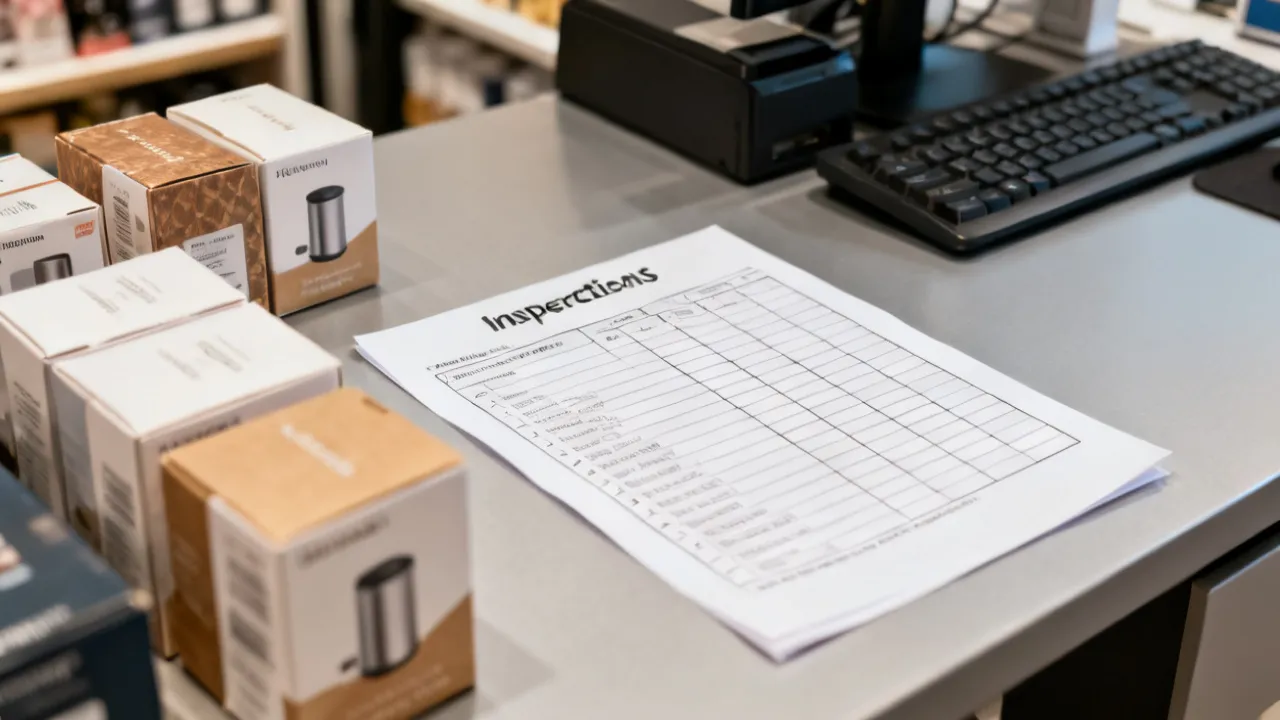
Benevaldo: Supplier Insights, Pricing, and Use Guidance
This guide explains how Benevaldo is evaluated in purchasing decisions, from supplier credibility and typical pricing logic to practical selection criteria. Objectively, Benevaldo is discussed as a brand/product name used in procurement contexts; guidance focuses on due diligence, documentation checks, and quality assurance processes aligned with established supplier-management practice.

1) Key takeaway: Evaluate Benevaldo with a supplier-first, documentation-led method
When people research Benevaldo, they usually want a dependable way to compare sourcing options—especially around pricing, lead times, and the level of documentation a supplier can provide. The very defensible approach is to assess Benevaldo through supplier capability and evidence quality first, then confirm cost structure (unit price, shipping, minimum order quantities, service terms, documentation handling fees, and any other commercial conditions that change the true cost). In professional procurement practice, this reduces the risk of mismatched expectations—such as paying for an advertised spec without receiving verifiable product conformity, or assuming a lead time that is based on an unrealistic assumption about production capacity or batch availability.
Because your request referenced “price information” and “supplier details” but did not supply specific numbers or named vendors, this article treats pricing as a structured evaluation rather than quoting unverified rates. You can still use the framework below to compare suppliers consistently whenever you receive quotes for Benevaldo.
In other words, the objective is not simply to decide “who is cheapest,” but to answer a set of procurement questions that prevent downstream problems: Can the supplier prove the product matches the intended spec? Can they trace the batch to evidence? Will they deliver on time under realistic conditions? And—only after those answers are largely resolved—what is the most competitive total landed cost and the best overall commercial risk profile?
2) What “Benevaldo” typically represents in procurement conversations
In many business contexts, Benevaldo functions as a product/brand identifier used for procurement inquiries. Readers commonly encounter it alongside questions like: “Who supplies it?”, “What is the price per unit?”, “What are the delivery and warranty terms?”, and “Which quality or compliance documents come with it?”. In other words, Benevaldo is usually not evaluated solely by marketing; it is evaluated by traceability, conformity evidence, and supply reliability.
From an industry standpoint, any procurement team should treat a named product such as Benevaldo as a “bundle of requirements”—specifications, testing standards, packaging expectations, and post-sale support—rather than as a single line item. Two suppliers may both say they can supply “Benevaldo,” but the differences that matter for acceptance and compliance can be significant: grade, formulation, tolerance levels, packaging configuration, labeling language, batch size, documentation format, inspection method, and even how “unit” is defined (e.g., a “unit” might be a kit, a pack, a pallet layer, or an individual component depending on the industry).
Consequently, your procurement documentation should not say simply “Benevaldo, quantity X.” It should include at least: (1) the exact specification or standard you require, (2) any relevant drawings or acceptance test criteria, (3) documentation deliverables, (4) traceability expectations, (5) packaging and labeling requirements, and (6) the commercial terms needed to ensure you can reject nonconforming goods and receive replacement or corrective action.
3) Pricing for Benevaldo: how costs typically break down (without guessing numbers)
Even without exact figures, experienced buyers recognize that pricing for Benevaldo usually depends on cost components such as:
- Base product cost: manufacturing or sourcing expenses tied to grade/spec, yield, and material inputs (if applicable).
- Quality assurance overhead: testing, inspection, sampling, retained samples (if offered), and any batch-specific verification.
- Packaging and labeling: protective materials, batch/lot labeling, documentation pack assembly, and labeling language requirements.
- Logistics: shipping mode (air/sea/road/courier), transit time, insurance, and handling requirements.
- Compliance/documentation: certificates, conformity statements, certificates of analysis, test reports, or documentation processing fees.
- Commercial terms: payment schedule, credit conditions, returns policy, and the cost impact of warranty or replacement obligations.
- Minimum order quantities and increment rules: MOQ, pack multiples, palletization requirements, and order cut-offs that influence the practical quantity you must buy.
When suppliers provide quotes, the “price” alone can mislead. A more reliable method is to compare total landed cost (unit price + shipping + handling + documentation processing + import/customs/clearance charges where relevant) and term-adjusted cost (warranty/replacement risk, expected yield/acceptance rate, lead-time reliability, and the operational effort required to validate each delivery).
This is consistent with widely used procurement frameworks described in quality management and supplier qualification approaches. The underlying idea is simple: cost should be evaluated in a way that reflects the real-world cost of fulfilling the requirement and validating compliance—not just the headline unit rate.
In practice, even small differences in documentation scope can create meaningful cost variation. For example, one supplier might include a complete documentation pack with each batch, while another offers documents only upon request or only for certain batch sizes. That means your receiving team may spend time following up, re-inspecting, or holding inventory until evidence arrives. Those “hidden costs” are frequently more expensive than the difference between two unit prices.
4) Supplier credibility: the diligence checks that matter for Benevaldo
For Benevaldo sourcing, supplier credibility should be assessed using objective signals. The buyer’s goal is to reduce uncertainty before purchase, because uncertainty often converts into delays, returns, and rework.
Supplier capability should be evaluated across multiple dimensions:
- Traceability: ability to link batches/lots to documentation, such as batch/lot number references on certificates and labels.
- Conformity evidence: test reports, certificates, and inspection records aligned to the required standard or internal specification.
- Quality management system: policies and audit history (often connected to ISO-aligned processes), including how nonconformities are handled.
- Operational consistency: repeatable delivery performance, stable lead times, and clear communication when conditions change.
- Contract clarity: clear warranty/service terms and a documented returns process.
- Document control practices: version control for certificates and the ability to ensure documents correspond to the batch shipped.
If a supplier cannot provide documentation that matches the requested Benevaldo specification, the buyer should treat that as a risk signal—not merely a delay. In many procurement environments, documentation is not an administrative formality; it is part of the evidence needed for receiving acceptance, internal quality sign-off, or regulatory reporting (depending on the industry).
Buyers should also assess how suppliers respond under stress. For example, if a delivery arrives and the documentation is incomplete, does the supplier immediately correct it, or do they ask the customer to accept without evidence? A supplier’s responsiveness to issues is often a stronger indicator of future performance than a confident statement during quotation.
5) Location tailoring (“nearby” logic) and practical implications
Your instructions asked to replace any city/country placeholders with “nearby.” In procurement terms, proximity matters because suppliers often offer different logistics options, communication speed, and incident response capabilities depending on distance. When you evaluate Benevaldo from “nearby” suppliers, consider:
- Faster incident response: quicker replacement shipments or troubleshooting for defects.
- More predictable lead times: especially relevant for projects with tight schedules or when production planning is sensitive to delays.
- Local documentation norms: invoices, packaging regulations, labeling conventions, and language requirements can differ by region.
- Lower logistics variability: fewer cross-border delays and fewer carrier handoffs, which can reduce risk of damage and reduce time spent resolving shipment issues.
Even when suppliers are nearby, variability still exists: manufacturing batch schedules, warehouse inventory levels, carrier capacity, and cut-off times can all affect lead time. Therefore, proximity should be treated as a factor in risk reduction and responsiveness, not as a substitute for written lead-time commitments and clearly defined acceptance criteria.
If you later share a specific location or market area, the guidance can be refined with local procurement customs—such as typical contracting language, documentation expectations, and shipping practices—while still avoiding unverified claims. For now, you can apply the same evaluation logic universally: require evidence and clarity, and then account for logistics realities with “nearby” as a supportive factor, not an assumption.
6) How to compare Benevaldo quotes like a professional (step-by-step, evidence-first)
Below is a practical approach that procurement teams use when comparing product offers such as Benevaldo, where “price information” exists but must be evaluated alongside supplier conditions.
The best professional comparison method is typically “evidence-first normalization.” That means you standardize the information you receive from suppliers into comparable categories (price, lead time, documentation, packaging, traceability, and commercial terms), then evaluate those categories using structured criteria.
Before you compare numbers, confirm the quotes are comparable in scope. For example:
- Does “unit” mean the same thing across suppliers?
- Does the quote include the full documentation pack, or only a certificate summary?
- Are packaging and labeling included, or will additional costs apply later?
- Is shipping included, and does shipping mode match your schedule?
- Do terms define replacement and timeline if documentation or product is nonconforming?
Once those questions are answered (or at least normalized), you can compare cost and select the supplier with the best overall value and lowest risk.
7) Comparison table: quote elements, verification method, and requirements
| Evaluation element | What to verify (for Benevaldo) | Common requirement/condition |
|---|---|---|
| Unit price and packaging | Price per unit/kit and what counts as a “unit” (pack size, labeling set) | Quote must specify pack configuration and labeling scope |
| Lead time | Confirmed production or fulfillment timeline and cut-off dates | Written delivery date or lead-time range with assumptions |
| Quality evidence | Batch/lot traceability and test documentation aligned to spec | Certificates/test reports provided per batch where applicable |
| Compliance and labeling | Whether documentation supports regulatory or internal standards | Documentation set included in the shipment (as required) |
| Shipping and landed cost | Shipping method, insurance, handling fees, and import-related charges (if any) | Quote includes clear “total landed cost” breakdown |
| Warranty / replacement | Defect handling process and replacement timelines | Defined return/replacement terms in writing |
| Payment and commercial terms | Payment schedule, credit conditions, and delivery acceptance rules | Terms documented in purchase agreement or order confirmation |
To strengthen this comparison, procurement teams often add a “documentation completeness score” or checklist. For each supplier quote, you verify whether they can deliver every document you need for receiving approval. This may be more reliable than comparing “quality claims” or marketing language.
8) Step-by-step guide: selecting a Benevaldo supplier responsibly
- Define your requirement precisely
Write the Benevaldo specification in measurable terms (grade, tolerances, packaging expectations, documentation required). Avoid “close enough” language. If you have internal standards or drawings, reference them explicitly and request the supplier confirm they can meet them. - Request evidence, not only a quote
Ask suppliers to provide test/certificate documents that match your specification and the requested batch/lot traceability approach. If they can only provide a generic certificate template, request a sample of real documentation from prior shipments that match the Benevaldo specification. - Normalize the quotes
Compare total landed cost and term-adjusted cost. Don’t compare unit price without including shipping, packaging, and documentation scope. Also normalize “unit” definition and MOQs so you are not comparing different pack sizes or order increments. - Validate lead-time realism
Ask for historical lead-time ranges or production capacity statements. Confirm whether lead time changes under peak periods, and ask how production scheduling affects the delivery date. Require written lead-time assumptions (for example: “lead time is based on receipt of PO by a specific cut-off date”). - Assess operational controls
Confirm quality management practices (often aligned with ISO 9001 principles) and how nonconformance is handled. Ask how suppliers quarantine suspect batches, how corrective actions are documented, and whether they track recurring issues to prevent repeat nonconformance. - Run a low-risk trial if feasible
If you can, test a pilot order. Validate receiving inspections: packaging integrity, labeling accuracy, and conformity documentation completeness. Establish before the trial what “success” looks like (e.g., acceptance pass rate, documentation completeness, and no significant delays). - Document acceptance criteria
Before shipment, define inspection checkpoints and what constitutes acceptance vs. rejection for Benevaldo. Include documentation acceptance: for instance, if certificates are missing or do not reference the shipped batch/lot number, the goods are treated as nonconforming even if the physical product appears correct. - Contract the replacement process
Ensure the supplier agreement includes clear replacement/returns steps in case of defects or documentation mismatches. Specify the timeline for acknowledgement, timeline for replacement shipment, and responsibility for return shipping, disposal, or inspection rework.
In many procurement environments, the “trial” step is not optional if risk tolerance is low. Even when the supplier is credible, a trial can confirm that the documentation pack and packaging configuration match your receiving workflow.
Also, procurement teams should ensure internal alignment. For example, your receiving team, quality assurance team, and procurement team should share the same acceptance criteria and escalation pathway. If internal teams interpret “acceptance” differently, disputes with suppliers become more likely.
9) Conditions and requirements buyers should insist on
When sourcing Benevaldo, professional procurement typically requires the following conditions to avoid ambiguity:
- Written quote clarity: pack size, documentation scope, and delivery assumptions must be stated. If there are options (e.g., different documentation versions), quote each option separately.
- Documented conformity: certificates/test reports must map to the specified grade/standard. Request mapping or explicit references to the required standard. Avoid “we meet the general requirement” language.
- Traceability: batch/lot identification on both product and documentation where applicable. Ensure the lot number on the label matches the lot number on the documentation pack.
- Receiving inspection plan: defined acceptance criteria and an escalation path for issues. Include what happens when there is incomplete documentation on arrival.
- Replacement/warranty terms: explicit timeframes and shipping responsibilities if nonconforming goods are found. Also clarify how long you may hold inventory while investigating nonconformance.
- Dispute resolution mechanism: specify how disagreements about nonconformance are handled (e.g., third-party testing, re-test process, or agreed laboratory).
- Document delivery timeline: specify when documents are delivered (with shipment, within X days, or electronically before shipment). Define consequences if documentation is late.
It’s common for documentation to arrive late when suppliers ship from multiple warehouses or outsource fulfillment. If you define a document delivery timeline and escalation steps up front, you reduce the chance that you will be stuck waiting for evidence to complete internal approvals.
Buyers should also request clarity on packaging and labeling responsibilities. Even if the product is correct, incorrect labeling can cause receiving delays or regulatory noncompliance.
10) Industry context: why documentation and supplier qualification matter
Modern procurement risk management emphasizes measurable assurance rather than relying on brand claims alone. In quality management practice, organizations often align processes with ISO 9001 principles such as documented controls, corrective action, and consistent supplier management. While ISO 9001 does not automatically guarantee product quality on its own, it provides a governance structure that many buyers use when qualifying suppliers.
For additional grounding, the International Organization for Standardization (ISO) describes quality management concepts through ISO 9001, including process approach and continual improvement; readers can consult the ISO documentation for an authoritative overview of quality management principles. Likewise, supply-chain and procurement guidance commonly published by recognized industry bodies highlights supplier qualification and contract clarity as core risk controls.
In practical terms, documentation and supplier qualification matter because procurement is not only a purchasing activity—it is a process that must deliver verified inputs to operations. If documentation is missing or evidence does not align to the spec, your operations may halt because quality assurance cannot release the goods. This can cause schedule slippage, idle labor, and sometimes downstream failure costs.
For Benevaldo, this “documentation-led” approach is especially important if the product is used in regulated environments, or if it is part of a larger system where traceability is required to investigate failures. Even when regulation is not strict, internal governance may require documented proof of conformity.
Documentation also supports continuous improvement. When you receive batches over time, having consistent certificates and traceability allows you to spot trends: specific lots failing acceptance, repeated deviations, or recurring documentation errors. Without documentation integrity, you can’t learn from mistakes effectively.
11) Common buyer mistakes when evaluating Benevaldo
- Choosing by lowest unit price alone: can lead to hidden costs in logistics and documentation. A “cheap” supplier may charge extra for complete documentation packs, use a shipping method that increases damage or delay, or apply different MOQs that force you to buy more than planned.
- Skipping conformity checks: receiving goods without correct test reports complicates approvals and can create production downtime. Even if the product looks correct, internal acceptance usually requires evidence.
- Not defining acceptance criteria: disputes often arise when “spec” is vague. If you don’t define what is acceptable and how it is measured, disagreements become subjective.
- Ignoring returns/replacement process: delays can be costly if nonconformance is discovered late. If replacement terms are unclear, suppliers may respond slowly or require complicated return logistics.
- Assuming “nearby” always means faster: local availability can still vary by batch, lead time, and shipping schedules. A supplier may be nearby but still schedule production in a way that causes delays.
- Accepting incomplete documentation: even if you can test the product yourself, incomplete documentation can create compliance issues and increases administrative burden.
- Comparing quotes that are not apples-to-apples: for example, one supplier includes labeling and documentation pack while the other does not. Without normalization, you risk selecting the wrong “best value.”
- Not verifying traceability alignment: mismatches between label lot numbers and certificate lot numbers are common causes of receiving failure. Always verify that the batch references match.
These mistakes are avoidable. They typically originate from a procurement workflow that focuses on speed of quotation rather than structure of evidence. If you adopt the evidence-first method and enforce normalization of quote scope, these errors decrease significantly.
12) FAQs
Q1: What does “Benevaldo” refer to in supplier sourcing?
Typically, Benevaldo is used as a product/brand identifier in procurement inquiries. Buyers evaluate it based on the required specification, available documentation, batch traceability, and the supplier’s ability to deliver consistently. In practice, the procurement team treats Benevaldo as a bundle of requirement details—so the supplier’s ability to match the documented spec matters as much as the product name.
Q2: How should I compare Benevaldo prices if different suppliers quote different terms?
Compare total landed cost and term-adjusted cost. Ask each supplier to specify packaging/label scope, shipping method, documentation pack contents, and warranty/replacement conditions so that quotes are normalized. Also confirm MOQs and pack configuration, since these influence the effective cost per usable unit and the risk of buying unnecessary quantities.
Q3: What documentation should I request with Benevaldo?
At minimum, request documentation that proves conformity to your specification—such as certificates or test reports aligned to the requested grade/standard. Also request information supporting traceability (batch/lot identification) if relevant to your use case. If your organization requires specific formats, ask the supplier to confirm they can provide those formats.
Q4: Can I rely on “nearby” suppliers for Benevaldo delivery?
Proximity can improve responsiveness, but you should still confirm lead times in writing, including production/fulfillment assumptions and cut-off dates. Validate with receiving schedules and defined acceptance criteria. “Nearby” is best used as a factor that reduces risk and improves communications, not as a guarantee.
Q5: What if the Benevaldo batch I receive doesn’t match the documentation?
Use the acceptance and escalation process you defined before shipment. Document nonconformance, notify the supplier promptly, and request replacement or corrective action according to the agreed contract terms. Also confirm whether the supplier can provide corrected documentation referencing the correct batch/lot, or whether they must replace the product if evidence mismatch suggests a deeper traceability failure.
Q6: Is ISO 9001 relevant when sourcing Benevaldo?
ISO 9001 is relevant as a quality management reference point. While it doesn’t replace product-specific conformity evidence, it can indicate that a supplier uses documented processes and continuous improvement practices that support reliable delivery. Buyers should still request product-level evidence (certificates/test reports) for the specific Benevaldo batch.
Q7: How do I avoid delays during procurement of Benevaldo?
Minimize rework by requesting evidence early, clarifying packaging and documentation requirements at the quotation stage, and agreeing on inspection checkpoints and acceptance criteria before goods arrive. Also define document delivery timelines and establish escalation steps for missing or late documentation. If possible, run a pilot order to validate your receiving workflow before committing to a larger quantity.
13) Practical next steps you can take today
If you are actively sourcing Benevaldo, prepare a short specification sheet and a requirements checklist (pack size, required documentation, traceability expectations, lead-time boundaries, and acceptance criteria). Then send the same standardized request to multiple suppliers—ideally including options that are nearby for faster operational communication—so that you can compare responses on equal footing.
To operationalize this, you can create a “supplier response template” that forces consistency. For example:
- Provide pricing with explicit pack/unit definitions and MOQ rules.
- Provide delivery dates and lead-time assumptions tied to PO receipt and production scheduling.
- Provide a documentation pack checklist showing exactly what documents are included and when they are delivered.
- Provide traceability documentation expectations (batch/lot labeling and mapping to certificates).
- Provide warranty/replacement terms including timelines and shipping responsibility for returns.
Once you receive quotes, evaluate them using the comparison table above and the step-by-step guide. The goal is not simply to select the lowest price, but to ensure that the Benevaldo product you receive can be verified, accepted, and supported under clear commercial terms.
If you want to move even faster without sacrificing rigor, assign an internal “procurement scorecard” that weighs: (1) documentation completeness, (2) traceability strength, (3) lead-time reliability, (4) warranty/replacement clarity, and (5) total landed cost. This creates a structured decision-making process that is defensible internally and aligns operations with procurement outcomes.
14) Conclusion
Benevaldo sourcing decisions are best made through structured supplier evaluation: confirm documentation and traceability first, normalize pricing into total landed cost, and contract explicit acceptance and replacement conditions. By applying an evidence-first method, procurement teams can make faster decisions with fewer surprises—turning “price information” and supplier claims into a comparable, verifiable basis for selecting the right Benevaldo supplier.
-
1

A Guide to Cost-Efficient Small Electric Cars for Seniors
-
2
Mastering Debt Consolidation: Boost Your Credit Score and Manage Interest Rates
-
3
Your Guide to Loans, Credit Checks, and Interest Rates
-
4
Affordable Independent Living: Finding the Right Senior Housing
-
5
Guide to Senior Living Apartments: Affordable and Comfortable Environments