Understanding 85991340360 for Smart Sourcing Decisions
This guide explains how to evaluate 85991340360 in supplier selection and procurement planning, covering verification steps, documentation, and practical acceptance checks. Objectively, the number can function as an identifier used in catalogs, inventory records, or compliance references, while the wider “85991340360” demand signal reflects buyers’ need for traceability, consistent specifications, and predictable lead times in sourcing.
Critical first: why “85991340360” matters in procurement
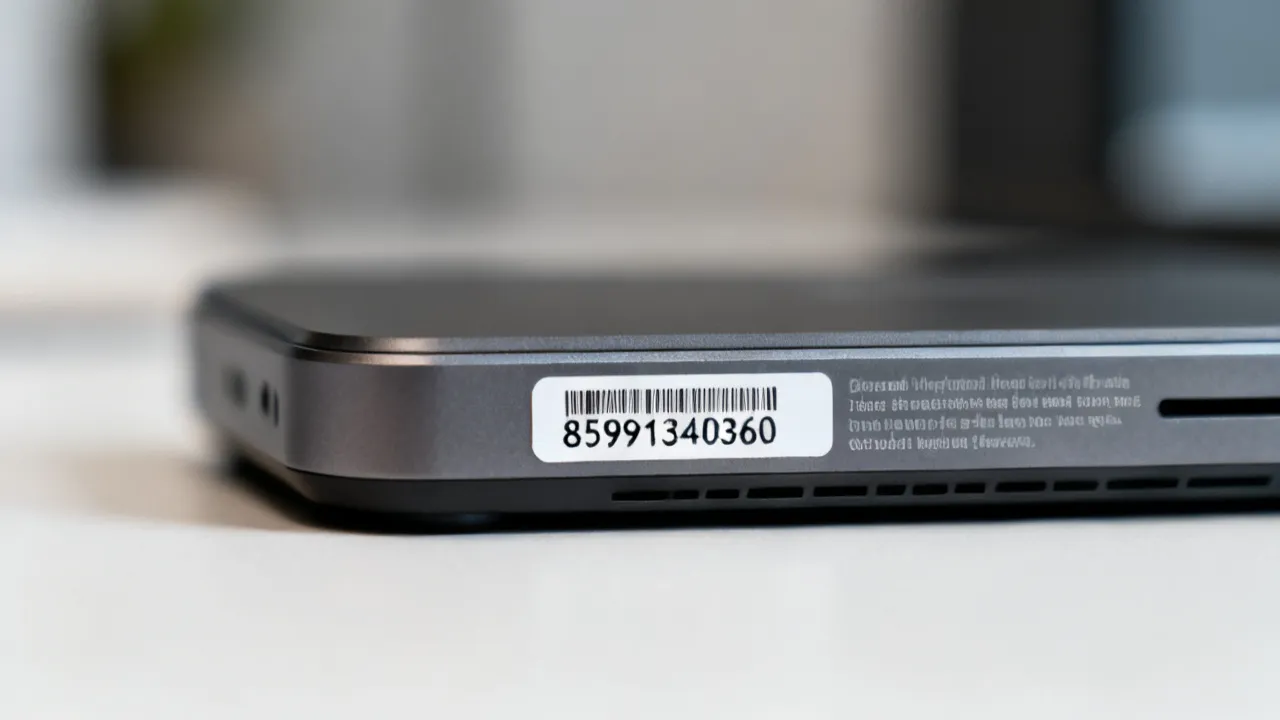
When you encounter the identifier “85991340360” during sourcing, treat it as a traceability anchor, not a marketing phrase. In many procurement workflows, a numeric code like 85991340360 helps purchasing teams reconcile product specifications, inventory records, quality documentation, and logistics data across multiple parties—manufacturer, distributor, testing labs, freight forwarders, and end customer. The practical goal is to reduce mismatch risk: the right item, the right revision, the right compliance package, and the right delivery expectations.
Because identifiers can be used differently across industries (for example, catalog numbers versus internal SKU codes versus manufacturing part numbers), the very important action is verification before payment. Industry practice emphasizes aligning the supplier’s code meaning with your internal requirements and with any technical, regulatory, or performance documentation that governs acceptance.
In other words, the procurement question is not “What does 85991340360 sound like?” The procurement question is “What does 85991340360 represent in the supplier’s system, and how does that representation map to my organization’s acceptance criteria and audit expectations?” Numeric strings are frequently used in enterprise systems because they are easy to index, easy to scan, and hard to misread compared to free-text descriptions. But that convenience creates a risk: people may assume the same numeric string means the same thing everywhere. Expert buyers prevent that risk through structured validation.
How to interpret “85991340360” without assumptions
Numbers alone rarely tell you what the item is. From an expert procurement and supplier-quality perspective, the identifier should be validated in four dimensions:
- Item identity: product type, model family, and revision level.
- Specification alignment: technical parameters that match your bill of materials or acceptance criteria.
- Documentation linkage: manuals, test reports, certificates, and any required compliance statements.
- Logistics traceability: packaging labels, batch/lot references, and shipping documents.
If the supplier can’t clearly connect 85991340360 to these areas, procurement should pause. A reliable supplier typically provides clear cross-references (for example, mapping your request to their catalog/part number and providing supporting documentation that includes the revision and traceability identifiers).
It’s useful to think of 85991340360 as a “join key” across datasets. If the supplier’s internal part record is the “master data,” then your receiving and quality checks rely on that master data being faithfully mirrored in the quote, purchase order acknowledgement, invoice, packing list, and the physical labels attached to the shipment. When the join key is consistent and traceable, your organization can trust the data chain. When it is not, you can end up with a mismatch that may only surface after installation, testing, or an audit.
In many real-world disputes, the confusion is not caused by fraud; it is caused by naming drift—catalog changes, revision updates, or internal reclassification that is not communicated consistently downstream. That’s why verification must be evidence-based rather than assumption-based.
Supplier evaluation: what expert buyers check
From a sourcing analyst’s point of view, suppliers aren’t interchangeable—especially when the identifier must remain consistent through receiving, installation, and warranty/after-sales. Here are the quality signals that should be prioritized when “85991340360” appears in your workflow.
1) Documentation completeness
Ask the supplier to provide:
- Product datasheet that explicitly references the code 85991340360
- Revision/version details (where applicable)
- Test or inspection documentation relevant to your industry requirements
- Labeling and packaging description showing how the code is marked
Procurement teams often use a simple rule: if documentation can’t be tied to the identifier, it can’t reliably support acceptance.
For better procurement outcomes, also request documentation granularity. For example, instead of a generic “certificate of conformity” that does not list item revision and traceability batch, ask for a certificate that includes:
- Supplier legal entity name and address (for audit traceability)
- Certificate number and issue date
- Referenced identifier (including revision)
- Batch/lot/serial range (if relevant)
- Reference standards (where compliance is involved)
- Signature/authorization and quality system reference (if applicable)
This prevents the classic failure mode where the paper trail exists, but does not conclusively cover the exact item you received.
2) Consistency across systems
Verify that the same identifier appears across the supplier’s:
- Quotation (line item references)
- Purchase order acknowledgment
- Proforma invoice and commercial invoice
- Packing list and shipping label data
Discrepancies are a leading cause of receiving errors—sometimes minor, sometimes costly.
In high-reliability environments (regulated manufacturing, safety-critical equipment, or operations requiring audit readiness), even a small discrepancy can trigger a nonconformance report. For example, the quotation might show 85991340360 but the invoice might list a different internal code, or the packing list might show the right code but omit revision. Buyers mitigate this by enforcing a data validation checklist before shipment and again during receiving.
It can also help to request screenshots or exports from the supplier’s ERP or order system showing the mapping of 85991340360 to the shipped goods. While this is not always feasible, asking for it signals seriousness and often improves supplier discipline.
3) Traceability at the lot/batch level
If the item is subject to quality controls, the supplier should provide batch/lot traceability linked to 85991340360. This is especially relevant for regulated or safety-sensitive contexts, where traceability requirements are part of standard compliance expectations.
Traceability means you can answer: “Which lot produced this unit?” In procurement practice, traceability affects:
- Recall and corrective action effectiveness
- Root-cause analysis if defects occur
- Warranty claim handling
- Regulatory compliance documentation
So, buyers should not only request that traceability exists, but request that traceability is complete and linked. The most helpful traceability package explicitly connects the lot/batch identifier to the item identifier and to the certificate/test report package.
4) Change control discipline
Even when the identifier is correct, change control failures create risk. A supplier may substitute equivalent components or update a revision while keeping a partially similar code pattern. Expert buyers treat 85991340360 as requiring change control proof: how substitutions and revisions are authorized and communicated.
Request the supplier’s policy or specific documentation for:
- Manufacturer revision changes
- Equivalent component substitutions
- Any “superseded by” relationships
- Notification timelines (e.g., advance notice period)
Change control discipline becomes especially important if your organization has contractual commitments tied to revision-level documentation and if your assembly process depends on configuration-specific parameters.
Pricing and sourcing economics (without relying on speculation)
The prompt you provided includes the keyword placeholder “85991340360” and no explicit price figure. In professional procurement practice, pricing should be assessed using verifiable inputs rather than assumptions. Common cost drivers include:
- Unit price differences by revision or configuration
- Minimum order quantities and packaging constraints
- Lead time and logistics mode (air vs. sea vs. courier)
- Documentation and inspection level (e.g., standard vs. certified test reports)
- Warranty terms and after-sales support coverage
To keep decisions defensible, request a formal quotation that lists the unit price, any tooling/customization fees (if applicable), freight terms (Incoterms), and payment terms. Then align it with acceptance requirements to evaluate true total cost of ownership (TCO).
Expert procurement teams usually compute TCO with more than price-per-unit. They consider:
- Receiving cost: inspection labor, time, and potential demurrage/holding charges if paperwork is wrong.
- Quality cost: rework, scrap, and nonconformance management if the item fails acceptance tests.
- Downtime cost: if delayed parts stop production or installation.
- Compliance cost: costs of additional testing if supplier documents are insufficient.
- Inventory carrying cost: if lead times or shelf life are misaligned.
When 85991340360 is involved, buyers should confirm whether the quoted price covers the exact revision/configuration. If not, negotiation should focus on locking revision-level pricing to the identifier mapping, rather than bargaining for lower price while leaving ambiguity.
Industry context: why buyers search by numeric identifiers
In many business-to-business markets, procurement teams search by part numbers, catalog numbers, or internal SKUs. Numeric identifiers help enforce consistency when multiple product variants exist. This is common in electronics components, industrial supplies, and equipment ecosystems where subtle differences—revision changes, firmware compatibility, or material variants—can affect performance and compliance.
Objectively, identifiers like 85991340360 are used to:
- Reduce ambiguity during ordering
- Support inventory management and ERP integration
- Enable faster troubleshooting and replacement parts procurement
- Maintain quality traceability through receiving and audits
For buyers, the risk is that an identifier may map to different specifications in different supplier catalogs. That is why the correct approach is to verify using the documentation package and receiving checks.
Another practical context: numeric identifiers are often used when teams must integrate data from multiple systems. For example, procurement might buy using a supplier’s catalog code, while the maintenance team tracks assets under an internal equipment code. Without proper mapping, a mismatch can make spare parts planning unreliable. By verifying 85991340360 early, procurement can reduce downstream integration problems.
In addition, numeric identifiers are often used to speed scanning workflows at warehouses and at receiving docks. If the warehouse scanning system expects a specific format and it receives a slightly different code, labels might be rejected or placed into the wrong bin. That creates availability issues even if the item is otherwise correct. The “meaning” of 85991340360 in each system must therefore be aligned, not only the string itself.
Step-by-step expert workflow for handling “85991340360”
Below is a practical workflow procurement professionals use to make sourcing decisions when a code like 85991340360 appears in a request, inquiry, or catalog.
Step 1: Capture the identifier and context
Record where you saw 85991340360 (quote, catalog page, email attachment, or ERP export). Note the related fields: product description, intended use, and any referenced specifications. If the seller provides additional naming, preserve it.
Also capture the context in which the identifier appears. For instance:
- Was it included as a “part number” or as an “order reference”?
- Was it associated with a quantity and packaging configuration (e.g., “box of 10”)?
- Did it appear within a bill of materials line or within a compliance checklist?
These details matter because suppliers sometimes reuse identifiers across order management tools. Expert buyers distinguish between a manufacturing part number and a purchasing reference number. Verification requirements differ based on the code’s role.
Step 2: Request a specification match sheet
Ask the supplier to confirm the key specification points that matter to your acceptance criteria. A specification match sheet should explicitly reference 85991340360 and correlate to your requirements.
To make the match sheet useful, list the acceptance-critical characteristics. The supplier should fill in values and indicate compliance. For example, your match sheet template might include rows for:
- Nominal ratings and tolerances
- Material composition (if applicable)
- Performance tests and pass/fail criteria
- Applicable standards references
- Environmental or operating limits
This turns procurement from “paper reconciliation” into “engineering verification,” reducing the chance that the item meets a description but fails your actual acceptance tests.
Step 3: Confirm revision/version
If the supplier can revise or substitute comparable items, insist on revision clarity. Even small revision changes can affect compatibility, test standards, or compliance documentation.
Be explicit: ask which revision is included and whether any “latest revision” language would permit shipment of a revision that is not pre-agreed. If your organization requires a specific revision, state that the revision is part of the contract acceptance. Then ensure the revision appears on the PO line and on receiving documentation.
Also ask how revision changes are communicated. A reliable supplier will have a method such as:
- Formal revision release notes
- Change notification letters
- Updated datasheets that explicitly identify effective dates
Procurement can archive this for audit trails.
Step 4: Validate documentation package
Request the relevant datasheets, test reports, and certificates that correspond to the exact identifier. If your organization requires third-party testing or specific certifications, confirm whether the supplier can supply them for the specific item tied to 85991340360.
Documentation validation should be systematic. Expert buyers check:
- Document title matches the product description
- Document revision and effective date align with the item revision
- Test report references the exact code and lot/batch (if relevant)
- Certificates are valid and cover the right standards
- Documents are signed/authorized when required
Procurement teams also ensure the documentation package completeness relative to internal requirements. For example, if your internal procedure requires a certain set of certificates (e.g., materials certificate, conformity statement, test report), missing items should trigger a hold.
Step 5: Receiving inspection plan
Before shipment, align on an inspection plan. At minimum, your receiving team should verify:
- Outer packaging labels match 85991340360
- Item appearance and markings match the description
- Documentation packet includes correct reports
- Serial/batch traceability (where applicable) is present
For a stronger receiving plan, include documented acceptance criteria and evidence collection steps. For example:
- Take photos of labels and markings
- Record serial numbers, batch/lot numbers, and quantities received
- Verify that packaging configuration matches the PO (e.g., “reel” vs “box”)
- Check that the item’s stated revision on the label matches the supplier’s documents
This evidence becomes crucial if the item later fails in-field testing and you need to demonstrate what was received and under which documentation set.
Step 6: Manage exceptions with a clear process
If the received item does not match the identifier’s documented specification, establish a formal exception workflow: hold shipment, document discrepancy, require supplier corrective action, and prevent shipment from entering production or installation.
An expert exception process typically includes:
- Quarantine location and identification labeling
- Nonconformance report creation with evidence (labels, photos, document mismatch notes)
- Supplier notification with clear references to 85991340360 and what specifically mismatched
- Corrective action request (CAPA) with response timelines
- Root-cause analysis expectations if repeats occur
- Decision authority for “use-as-is” vs “return/replace”
By structuring exceptions, procurement avoids ad hoc decisions that can undermine compliance and increase costs.
Comparison of supplement guidance (no links in the table)
The following table summarizes how to approach supplier verification and acceptance in a structured way. This section supplements the main narrative and is designed for quick decision support.
| Aspect | Preferred approach | Condition / requirement | Outcome if verified |
|---|---|---|---|
| Identifier usage (e.g., 85991340360) | Supplier clearly defines what the code represents | Code must match across quote, acknowledgment, invoice, and labels | Lower mismatch risk during receiving |
| Specification alignment | Supplier provides a specification match to your requirements | Documented parameters must correspond to your acceptance criteria | Reduced rework and compatibility issues |
| Documentation package | Datasheet + test/certification documents tied to the identifier | Reports must indicate the item/revision/batch as applicable | Faster audit readiness and compliance support |
| Traceability | Lot/batch/serial traceability is provided where relevant | Traceability elements appear on packaging and shipping docs | Better root-cause analysis if issues arise |
| Receiving checks | Inspection plan agreed in advance | Acceptance criteria documented before shipment | Clear go/no-go decisions |
In practice, the “table approach” is helpful because it converts procurement from subjective evaluation into a checklist-driven discipline. This reduces reliance on individual judgment. When personnel rotate, you still maintain quality and audit continuity.
Conditions and requirements for safe sourcing
To keep sourcing decisions objective and defensible, use the following conditions/requirements checklist. These are commonly expected in professional supply management systems:
- Identity verification: the supplier must tie 85991340360 to the correct product identity and revision.
- Documentation traceability: supporting documents must correspond to the specific identifier and configuration.
- Receiving readiness: your receiving team must have criteria and a checklist before delivery.
- Change control: any substitution or revision update must be approved in writing before shipment.
- Contract clarity: payment terms, warranty terms, and return/replace conditions should be explicitly stated.
To make this checklist even more operational, add a few “proof points” that auditors and quality teams typically look for:
- Evidence of supplier confirmation: PO acknowledgment and/or formal confirmation referencing 85991340360.
- Evidence of label verification: receiving log entries and label photos or scans.
- Evidence of documentation review: document control log (what was received, when reviewed, by whom).
- Evidence of exceptions handling: nonconformance record and supplier response documentation.
With these proof points, the organization can demonstrate that it did not simply “assume correctness” based on a numeric code.
FAQs about “85991340360” sourcing and validation
Q1: What does “85991340360” usually represent?
In very sourcing contexts, a numeric identifier like 85991340360 functions as a part number, catalog code, SKU, or traceability reference. The exact meaning varies by industry and supplier, so you should confirm with the supplier and verify through documentation and labeling.
To avoid confusion, ask for the “source-of-truth” statement: which system defines 85991340360, and what attributes (revision, configuration, standard references) are tied to it. This clarifies whether the code is a product identifier or a transactional reference.
Q2: Can I rely on the number alone to place an order?
No. While 85991340360 can help reduce ambiguity, ordering should also consider product description, revision, and required specifications. Verification should be based on documents and specification match—not on the identifier alone.
In fact, “identifier-only” ordering is risky in environments where suppliers frequently update revisions or where multiple variants exist under the same description. The correct practice is to couple the identifier with revision and acceptance criteria in the purchase documents.
Q3: What documents should I request for the item tied to 85991340360?
Typically, request a datasheet that references 85991340360, plus any relevant test reports, certificates, manuals, and labeling/packaging information required for your acceptance process. If compliance matters, request the specific certificates applicable to the item and revision.
Depending on your sector, the “typical documents” could include additional items such as:
- Compliance declarations (as required)
- Material declarations
- RoHS/REACH-related documentation (if applicable)
- Third-party test evidence
- Calibration certificates for measurement-critical items
The key is not to request “everything,” but to request what is necessary to demonstrate that the received goods match your acceptance criteria and contract terms.
Q4: How do I prevent receiving the wrong revision?
Ensure that 85991340360 appears consistently across quote, order acknowledgment, invoice, and shipment labels. Require revision/version details in writing and perform receiving inspection checks that confirm the markings and documentation match your requirements.
Additionally, consider adding revision-specific requirements to receiving training. For example: staff should know where to find the revision level on labels, how to interpret it, and how it should match the supplier’s documentation. If receiving staff are not trained, the process may fail even when documents are correct.
Q5: What should I do if the received item doesn’t match the identifier?
Initiate an exception workflow: quarantine the item, document discrepancies (labels, documentation, serial/batch markings), notify the supplier with evidence, and request corrective action. Avoid using the item until you confirm identity and specification alignment.
Also consider whether the discrepancy affects:
- Safety or regulatory compliance
- Performance guarantees
- Compatibility with other components
- Warranty coverage validity
The higher the risk tier, the stricter you should be about holding and not consuming the goods until verified.
Q6: Are there reliable ways to confirm supplier credibility?
Yes. Evaluate supplier quality systems, documentation discipline, responsiveness, and traceability practices. Where applicable, request audit reports or proof of compliance to relevant quality standards—then verify the supplier’s claims against the actual documentation tied to 85991340360.
Supplier credibility can also be evaluated through:
- Track record of delivering correct revisions and complete documentation
- Quality response time during nonconformance events
- Clarity and consistency in labeling and shipping documents
- Willingness to provide evidence (not just assertions)
This approach aligns with modern supplier management programs where performance is measured not only by price but by reliability and documentation integrity.
Practical guidance for decision-makers
In fast procurement cycles, it’s tempting to treat identifiers like 85991340360 as “self-authenticating.” Expert teams avoid that shortcut. Instead, they combine identifier verification with specification confirmation, document traceability, and a receiving plan. This approach helps ensure that cost and lead time estimates translate into actual operational readiness.
Where internal teams are integrating supplier data into ERP systems, consistent identifier mapping is especially important. If your ERP expects a specific SKU format, verify the supplier’s identifier format early and test a sample line item before rolling out full-scale ordering.
For decision-makers, an additional lever is contracting and procurement policy design. Consider making the following policy elements standard for any purchase order referencing 85991340360:
- Mandatory revision field: PO must include revision, not just identifier.
- Documentation attachment requirement: shipment cannot be accepted without the defined documentation set.
- Nonconformance authority: receiving has authority to reject or quarantine if mismatches are detected.
- Supplier corrective action obligation: supplier must respond within a defined timeline for discrepancies.
These policy elements reduce friction in high-volume procurement and make the process consistent across buyers, warehouse teams, and quality engineers.
It can also help to build a lightweight “cross-reference table” internally: map 85991340360 to your internal item record ID, your internal bill-of-material line, and your acceptance test plan ID. This makes it easier to verify during receiving and reduces errors caused by manual data entry.
Finally, decision-makers should treat supplier validation as part of risk management. If your organization will rely on these goods in mission-critical or safety-related operations, the cost of extra verification is often far less than the cost of field failure, regulatory noncompliance, or audit findings.
Closing perspective
In summary, 85991340360 is top treated as a starting point for structured validation. Whether your organization is sourcing components, equipment, or regulated goods, the very objective path is to confirm what the identifier corresponds to, ensure documentation matches the item revision, and define acceptance checks before shipment. This reduces mismatch risk and supports dependable sourcing outcomes—without relying on unverified assumptions.
The strongest procurement posture is evidence-driven: the identifier is verified across commercial documents, linked to technical documentation, tied to traceability identifiers where applicable, and confirmed at receiving through an agreed inspection plan. When these elements align, you can confidently proceed with ordering, payment, installation, and audit readiness. When they do not align, the prudent action is to pause and resolve discrepancy before the goods enter operations.
Note: Your provided keywords included placeholders without additional location or supplier/price specifics. If you share the industry context (e.g., electronics components, industrial parts, healthcare device supplies) and the intended item description, I can tailor the verification checklist, acceptance criteria, and FAQ answers more precisely to your use case.
-
1

A Guide to Cost-Efficient Small Electric Cars for Seniors
-
2
Mastering Debt Consolidation: Boost Your Credit Score and Manage Interest Rates
-
3
Your Guide to Loans, Credit Checks, and Interest Rates
-
4
Affordable Independent Living: Finding the Right Senior Housing
-
5
Guide to Senior Living Apartments: Affordable and Comfortable Environments