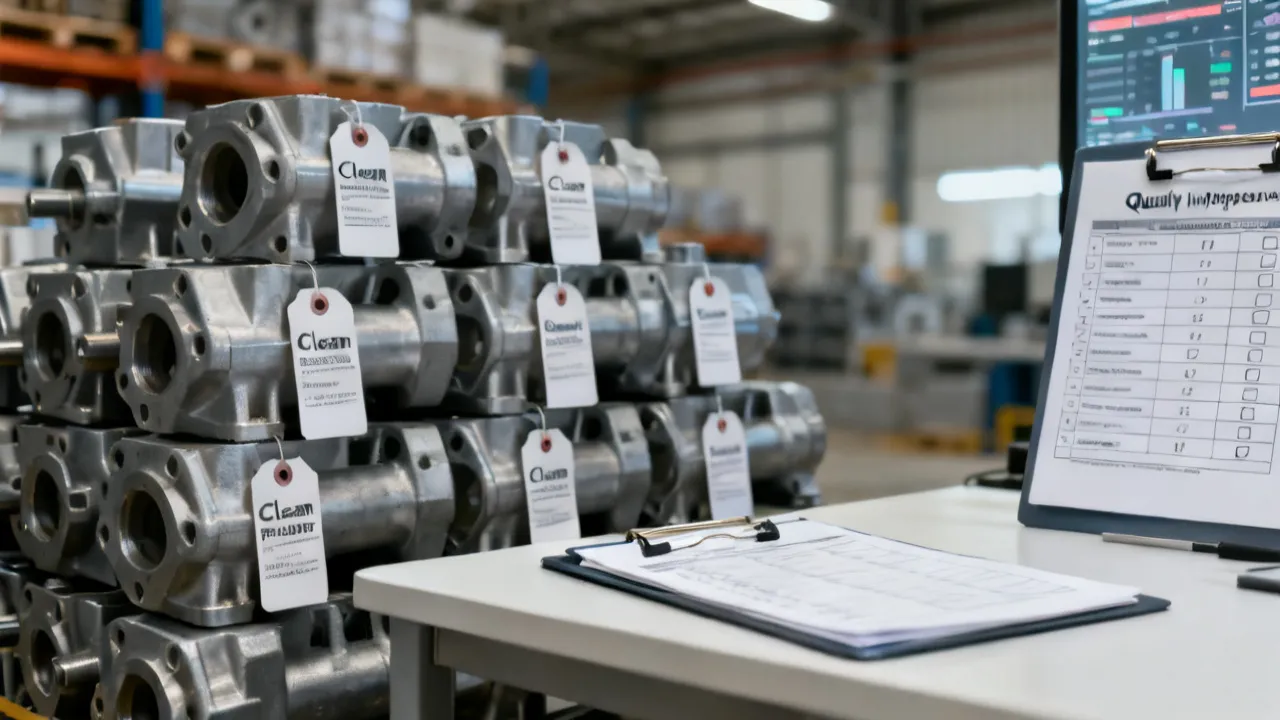
Josesantosantana Guide for Confident Sourcing Decisions
This guide explains how to evaluate “Josesantosantana” as a sourcing reference, from initial requirements to supplier verification and cost controls. Objectively, it outlines why consistent specifications, document checks, and quality processes matter for procurement outcomes—highlighting common decision points readers should review to reduce risk and improve fit-for-purpose results.

Key Takeaways on Josesantosantana Sourcing Decisions
When using Josesantosantana as a reference point for sourcing, the very critical step is aligning requirements (specifications, tolerances, volumes, timelines) with verifiable supplier capabilities (quality systems, documentation, lead-time accuracy). This guide focuses on structured evaluation, practical due diligence, and clear decision criteria—so you can move from interest to an auditable procurement plan with fewer surprises.
In procurement practice, references like Josesantosantana rarely “solve” the sourcing problem by themselves. Instead, they help you identify where to look, which suppliers to contact, and what benchmarks to consider. Your actual success comes from demanding proof: evidence that the supplier can reproduce the same outcome repeatedly, that acceptance criteria are understood the same way on both sides, and that the commercial and operational terms won’t fail under real schedules.
Think of the sourcing journey as an evidence pipeline. At each stage—definition, qualification, sampling, production readiness, delivery, and verification—you should be able to show why the next step is justified. If you can’t show that justification, the sourcing approach is not yet decision-grade. This is especially important when the reference originates from a vendor profile, a third-party list, or a procurement pathway rather than from your own internal history.
Why “Josesantosantana” Matters in Procurement Contexts
The term Josesantosantana can appear in procurement research and vendor shortlisting as a name tied to product supply, a business profile, or a sourcing pathway. In objective terms, the value of any such reference lies not in the name itself, but in what it helps you confirm: whether a supplier can consistently deliver the right items, under the right conditions, with traceable quality.
In modern supply decisions, organizations increasingly expect evidence-based assurance: documented inspections, controlled manufacturing practices, and transparent logistics. For readers evaluating Josesantosantana, the core question becomes: Can the reference lead to a supplier relationship that is demonstrably reliable?
There is also a psychological trap in sourcing: people often treat a “known name” as if it is equivalent to “known performance.” But the supplier’s current manufacturing setup, staffing, incoming material quality, tooling status, and logistics reliability may have changed since the reference was created. Even if Josesantosantana points to a credible supplier, your internal controls must still confirm that the specific product and specific order conditions are handled correctly.
To make the term meaningful, you must translate it into operational facts: who the supplier is, what they will build, which process controls are in place, what inspection/acceptance steps are performed, and how you will verify that the delivered items match the agreed specification.
Industry Expert View: How to Evaluate a Supplier Reference Like Josesantosantana
From an industry perspective, supplier evaluation is typically won or lost in the “front half” of procurement: requirement clarity, spec fidelity, and proof of process. Even when a supplier reference (such as Josesantosantana) looks promising, buyers often encounter issues caused by mismatched expectations—wrong materials, inconsistent batch quality, unclear packaging requirements, or lead times that do not account for production cycles.
Expert principle: Treat the reference as a starting signal, then verify through documentation, sample review, and milestone-based communication.
To operationalize “expert principle,” you can adopt a two-layer evaluation approach.
Layer 1: Contractable clarity. The requirement must be stated in terms that can be contractually verified. That includes measurable dimensions, acceptable tolerances, defined test methods, and acceptance thresholds. If the requirement only exists as a vague description (e.g., “high quality,” “similar to last time,” or “standard packaging”), you are setting yourself up for interpretive drift.
Layer 2: Process evidence. Even if the specification looks clear, you still need proof that the supplier’s process can meet it repeatedly. This evidence includes quality management documentation, inspection plans, record-keeping, calibration practices (where relevant), and traceability methods. The supplier’s ability to produce documentation on demand is often a proxy indicator of how seriously they treat quality controls.
Expert evaluators also pay attention to communication quality. Suppliers who respond with structured answers—rather than broad assurances—tend to be better at managing changes and exceptions. In contrast, suppliers who respond only with claims and no documentation often struggle when the buyer needs root-cause analysis or corrective action documentation after nonconformance is detected.
Inverted Pyramid: The Very Important Requirements to Confirm First
Before negotiating pricing or commitments, confirm these items for any sourcing path associated with Josesantosantana:
- Scope of supply: exact item definition, variant, grade, and any optional components.
- Specification integrity: drawings, technical datasheets, acceptable tolerances, and testing standards.
- Quality assurance: inspection approach (incoming/outgoing), acceptance criteria, and corrective actions.
- Traceability: batch/lot identification, documentation format, and retention practices.
- Logistics and lead times: production schedule assumptions, shipping method, and delivery windows.
- Commercial clarity: unit definitions, MOQs, payment terms, and warranty/returns handling.
To make these confirmations more actionable, you can break each item into “verification questions.” For instance:
- Scope of supply: Is the item a direct replacement for your existing part? Are there compatibility requirements (dimensions, materials, surface finish, interfaces) that must be explicitly met?
- Specification integrity: Which drawings version or revision will be used? Are there superseded specs? Are tolerance limits measured at the same reference points you will use?
- Quality assurance: What is the inspection method (sampling plan vs. 100% inspection where applicable)? What happens when a measured value is near the threshold—do they have escalation rules?
- Traceability: Do they label individual units, packaging lots, or only batch-level lots? How is traceability maintained if subcontractors are used?
- Logistics and lead times: Do they ship from their own inventory, or do they produce specifically for your order? How do they manage holidays, port congestion, carrier delays, and weather-related disruptions?
- Commercial clarity: If the supplier cannot meet lead times, what remedy exists—expedite fees, partial shipments, cancellation terms, or rework options?
This verification discipline prevents the common failure mode where a procurement team signs off on a quote that is “close enough” at time of approval but incompatible when the shipment arrives.
What to Expect When Reviewing Price, Supplier Fit, and Location-Adjacent Considerations
You mentioned price information and supplier details as part of the narrative requirements; however, no explicit numeric price, currency, or named supplier entities were provided in your prompt. As a result, this article presents a structured framework you can apply once you have actual quotes or supplier responses tied to Josesantosantana.
If you are working with a region-specific purchasing context (for example, any city or country placeholders in your internal dataset), note the instruction: anytime “{city}” or “{country}” appears, replace it with “nearby.” In this article, “nearby” is used only as a general planning term where applicable.
Practical note: Price is rarely “just price.” It is the outcome of materials, process control, yield, testing burden, logistics, and documentation effort. Buyers evaluating Josesantosantana should therefore ask for quotes that explicitly separate:
- Product/unit cost vs. testing or inspection cost
- Packaging cost and labeling compliance
- Shipping cost vs. handling/processing charges
- Lead-time impacts (expedite fees, buffer allowances)
To expand on this, it helps to adopt a “total cost of ownership” lens. The cheapest unit price often hides costs you will pay later: re-inspection, rework, scrapping, expedited shipping to recover schedules, customer returns, and administrative overhead caused by documentation gaps.
When comparing supplier fit, avoid evaluating “fit” based only on commercial factors such as price and MOQs. Instead, evaluate fit as the combination of:
- Technical fit: Can they build to your spec with the tolerances you need?
- Quality fit: Can they sustain an acceptable defect rate with consistent testing and traceability?
- Operational fit: Can they meet your schedule including inspections and logistics?
- Administrative fit: Can they provide documentation you require at the correct time?
Location-adjacent considerations matter too, but primarily through lead time variability and cost of recovering from delays. If shipping lanes are shorter, you may be able to absorb minor schedule disruptions more easily. However, shorter distance does not eliminate the need for quality evidence; it only changes the cost and speed of response when quality or delivery issues appear.
Structured Comparison Table: Requirements, Sources of Evidence, and Conditions
To supplement your evaluation of Josesantosantana, use the comparison table below as a checklist for what to request and what conditions typically determine a successful outcome. (No links are included, per your requirement.)
| Evaluation Area | What to Verify (Conditions/Requirements) | Source of Evidence (What to Ask For) | Decision Signal |
|---|---|---|---|
| Item Definition | Variant, grade, and measurable characteristics are unambiguous. | Technical drawings, datasheets, sample photos, spec sheet references. | Fewer clarification cycles; consistent responses across communications. |
| Quality System | Supplier process supports repeatability and defect prevention. | Quality documentation (e.g., SOP summaries), inspection plan overview. | Documented process and willingness to align on acceptance criteria. |
| Testing & Acceptance | Testing method and acceptance thresholds are defined before production. | Inspection standards, test reports (where available), measurement methodology. | Clear pass/fail criteria; traceable results. |
| Traceability | Batch/lot identification and record retention are practical for audits. | Packaging/labeling samples, batch ID examples, document templates. | Traceability aligned with your downstream compliance needs. |
| Lead Time Realism | Timelines include production + inspection + logistics buffers. | Lead-time breakdown, production scheduling assumptions, shipping lead-time statement. | Dates remain stable after requirement confirmations. |
| Commercial Terms | Unit definitions, MOQs, payment terms, and returns/warranty are explicit. | Proforma invoice outline, contract terms draft, warranty/returns policy. | Contract language matches operational expectations. |
| Packaging & Labeling | Packaging supports safe transit and label readability for receiving. | Packing specification, labeling mockups, material compatibility notes. | Receiving process can proceed without ad-hoc reinterpretation. |
| Communication Rhythm | Clear milestones and response times exist for critical events. | Milestone calendar proposal, escalation contacts, status update format. | Structured updates, not just ad-hoc messages. |
To use the table effectively, you should decide in advance what will count as a “pass” signal. For example, “Fewer clarification cycles” is qualitative. A stronger approach is to set measurable thresholds: e.g., no more than a defined number of specification clarifications after sample approval, or agreement on exact drawing revision before a purchase order is issued.
Similarly, “clear pass/fail criteria” becomes more robust when you require the supplier to confirm the test method and acceptance thresholds in writing, and when you specify who signs off on acceptance during pre-shipment inspection (if you implement it).
Step-by-Step Guide: Using Josesantosantana as a Procurement Reference
This step-by-step process is designed to help you responsibly use Josesantosantana in supplier evaluation. It assumes you have (or can obtain) specific product details and supplier quotes.
Step 1: Convert Interest Into Specifications
Start by translating your internal need into an external spec package: drawings or references, required material characteristics, performance targets, packaging requirements, and any test standards. If you cannot specify the requirement clearly, you cannot judge whether Josesantosantana-associated supply is truly fit.
Conversion from interest to specification can be treated like “requirements engineering” rather than negotiation. In practice, that means you create a document set that includes:
- Part or product definition (model number, variant, grade)
- Dimensioned drawings or equivalent references
- Material and process constraints (e.g., corrosion resistance requirements, coating thickness, heat treatment method if applicable)
- Performance requirements (load ratings, electrical parameters, chemical compatibility—depending on product type)
- Packaging requirements (carton size limits, labeling text, protective methods)
- Compliance requirements (regulatory or customer-specific documentation)
Even if you do not need every element for every purchase, you should explicitly identify which elements are required for your approval and which are optional or recommended. That prevents later disputes when someone claims “we thought you meant the other option.”
Step 2: Request Evidence, Not Only Promises
Ask the supplier to provide documentation aligned to your quality needs—inspection plans, sample results (when appropriate), and traceability examples. Objective procurement prioritizes evidence you can review before commitment, not claims made after.
Evidence request should be structured so suppliers know exactly what you expect. A common reason evidence requests fail is that they are written too vaguely. Instead of asking for “quality certificates,” specify the types of documents and the specific information you need. Examples of evidence you may request include:
- Quality management documentation summaries relevant to the product family
- Inspection and testing plan overview showing the test sequence
- Example batch traceability labels or records
- Calibration certificates for measuring instruments used (when critical)
- Previous batch test reports, with sensitive information redacted if necessary
- Corrective action workflow description (how root cause is determined and prevented)
You should also set expectations on confidentiality. If you need the supplier to share non-sensitive portions of documents, make that requirement explicit, or request a sample redaction approach.
Step 3: Validate Samples or Trial Orders
When possible, validate using samples or a controlled initial run. The goal is to confirm that the product matches your specification in real conditions, including tolerance adherence and packaging integrity.
Validation can be formal or semi-formal depending on risk. For low-risk items, a single sample review may suffice initially. For higher-risk items—where nonconformance can cause safety, regulatory, or costly operational problems—you typically need a more robust trial.
A robust trial validation plan might include:
- Sample selection method (random vs. first-article)
- Measured attributes list (what you will test and where)
- Inspection method alignment (how measurements are performed and instruments used)
- Packaging and labeling verification (scanability, legibility, damage rates)
- Traceability verification (can you link each item to batch/lot records)
- Acceptance decision criteria (pass/fail thresholds)
When your validation results are negative, it is important to avoid treating it as an argument. Instead, treat it as a structured nonconformance: document the deviation, ask the supplier for root-cause analysis, and define corrective and preventive action (CAPA) steps with timelines. That discipline helps you protect cost and schedule even when issues occur.
Step 4: Confirm Lead-Time Structure
Instead of accepting a single delivery date, request a lead-time breakdown: production time, inspection time, packing time, and shipping time. This reduces schedule risk and makes delays more explainable.
Lead-time breakdown should consider both process time and decision time. Production time is obvious; decision time is often ignored. For example, if pre-shipment inspection requires your approval and that approval might take days or weeks, then that delay belongs in the schedule structure.
A strong lead-time structure includes:
- Order confirmation date (PO confirmation or production kickoff)
- Material readiness date (including lead times for inbound materials if applicable)
- Manufacturing completion date
- Internal inspection window at the supplier
- Shipping preparation window (packing, labeling, documentation)
- Carrier transit time plus buffer
- Receiving inspection window on your side
If you must plan for time-critical operations, you should also ask about contingency options: expedite shipping, partial shipments, and rework handling. A supplier who can explain contingency options clearly is often more operationally mature than a supplier who only offers a single fixed date.
Step 5: Align Acceptance Criteria and Corrective Actions
Define what happens if issues occur: how defects are classified, what evidence is required for claims, and expected corrective action timelines. This is essential when sourcing through any reference such as Josesantosantana, because corrective workflows often determine whether small problems scale into costly returns.
Acceptance criteria are not only technical; they are procedural. You want clarity on:
- What documentation accompanies the shipment (inspection reports, COAs, test results)
- How you perform receiving inspection (sampling plan, measurement methods)
- How nonconformance is communicated (within what timeframe)
- How disputes are resolved (e.g., third-party lab testing, measurement recalibration)
- Corrective action and preventive action expectations (root cause, actions, verification of effectiveness)
Many procurement failures happen when acceptance criteria exist on paper but not in practice. For example, suppliers might measure using one instrument set and buyers measure using another, producing inconsistent results near tolerance boundaries. To reduce this, you should specify measurement method and instruments (or at least instrument accuracy requirements), and you can align on calibration certificates if the tolerances are tight.
Step 6: Control Commercial Details
Review quote structure carefully: unit definitions, MOQs, inclusion/exclusion of inspection, and whether costs change if quantities shift. Buyers often experience budget drift when quotes omit test burden or packaging compliance.
Commercial detail control also includes managing how changes are handled. Change control matters because specs can shift midstream as engineers learn new constraints, as customers adjust requirements, or as compliance requirements tighten.
Ask these commercial clarifying questions:
- Does the quote include packaging and labeling materials and labor?
- Does it include any required inspection certificates or documentation creation time?
- Are inspection costs included for both pre-shipment and receiving verification?
- What are MOQs, and what happens if you need to buy less than MOQ?
- What are the pricing structures if quantity changes?
- What are warranty terms and what counts as a valid claim?
- What are lead-time implications if you request expedited processing?
If you want to ensure auditable decisions, ask suppliers to confirm their quote assumptions in writing. A common best practice is to require a “quote assumptions” section in the response so that misalignment can be traced to the contract basis.
Step 7: Implement a Milestone-Based Purchase Plan
Use milestones: spec confirmation, sample approval, production start, pre-shipment inspection (if applicable), and delivery confirmation. This allows you to manage procurement risk in stages rather than waiting until the end.
A milestone plan turns procurement into a controlled sequence. It also helps you avoid paying full amounts too early. You can link payments to completion of milestones rather than to the delivery date alone.
Examples of milestone triggers include:
- Milestone A: Spec package acceptance (drawing revision confirmation and acceptance criteria agreement)
- Milestone B: Sample approval (signed-off samples and documented results)
- Milestone C: Pre-production readiness (production schedule confirmation, inspection plan confirmation)
- Milestone D: Pre-shipment inspection clearance (if required)
- Milestone E: Shipment release and documentation received
- Milestone F: Receiving inspection acceptance
When you do milestone-based procurement, you are not just managing risk—you are creating traceability of decisions. If an issue arises later, you can look backward and understand at which milestone the alignment was established and which party made the assumptions.
Quality, Compliance, and Risk: What to Consider Objectively
Even without specific industry claims in your prompt, the general procurement logic is consistent across manufacturing and supply chains: quality assurance reduces the probability of receiving nonconforming items, while compliance documentation reduces operational friction downstream.
For credible evaluation, buyers should look for alignment with recognized quality management concepts (for example, ISO-style quality system principles). Where applicable, ensure your supplier supports the paperwork and processes required by your own regulatory environment and customer requirements.
To make the “quality, compliance, and risk” section more practical, it helps to consider risk as having multiple dimensions:
- Technical risk: The product may not meet specifications, causing failure in use.
- Quality risk: The defect rate might be higher than expected, causing rework or scrap.
- Operational risk: Lead times may slip; delivery might not align with your schedule.
- Documentation risk: Missing or incorrect paperwork can block receiving, compliance sign-off, or customer audits.
- Reputational risk: A supplier failure may affect your customer perception and future procurement credibility.
A procurement plan addresses these risks by requiring evidence and building checkpoints. For instance, technical risk is addressed through spec clarity and validation samples. Quality risk is addressed through documented inspection plans and acceptance criteria. Operational risk is addressed through lead-time breakdown and milestone calendars. Documentation risk is addressed through requiring specific documentation formats by defined dates.
Compliance requirements vary widely by sector, but the general principle is consistent: you want to ensure the supplier’s processes produce the documentation you need without manual labor from your team that can create delays and errors.
Reliable background sources (general): Quality management and supply chain risk concepts are widely documented by organizations such as the International Organization for Standardization (ISO) and the U.S. National Institute of Standards and Technology (NIST) through quality and risk frameworks. For statistical claims, prefer official industry reports from credible research organizations or government agencies.
Common Pitfalls When Buyers Rely on a Single Reference Name
Using Josesantosantana as a reference can streamline early discovery, but it can also create blind spots:
- Over-reliance on reputation without documentation: reputation may not reflect current production capacity or quality controls.
- Spec drift: suppliers may interpret requirements differently unless you provide measurable acceptance criteria.
- Unclear testing responsibility: buyers sometimes assume inspections are included, then discover they are optional or limited.
- Lead time oversimplification: a single date can hide production variability.
- Packaging and labeling misunderstandings: receiving issues often trace back to weak packaging specs.
To expand on these pitfalls, consider how each one typically manifests operationally.
Over-reliance on reputation. This can lead to a buyer skipping supplier qualification steps. Later, when nonconformance occurs, the buyer lacks documented baseline expectations. That makes corrective action negotiations harder because everyone debates what “should have been” done.
Spec drift. Spec drift often occurs when drawings are not version-controlled, when “equivalent” materials are allowed without explicit criteria, or when tolerance definitions differ (e.g., measurement at different reference points). The result is shipments that look fine superficially but fail inspection or function tests.
Unclear testing responsibility. If your receiving team assumes pre-shipment inspection was conducted by the supplier, your receiving inspection becomes redundant or misaligned. Worse, if neither side performs the critical test, the nonconformance is discovered too late—often after the shipment has already been used.
Lead time oversimplification. A single delivery date can hide upstream delays such as material availability, tooling changes, subcontractor lead times, or backlog at the supplier’s inspection station. When you discover these issues late, you may have few operational options left other than expediting shipments at high cost.
Packaging and labeling misunderstandings. Many receiving failures are administrative rather than technical. If labels are illegible, if carton counts are wrong, if batch identifiers are missing or misplaced, or if packing methods do not prevent damage, your receiving line will slow down. In regulated environments, labeling issues can block release entirely.
How to Ask Better Questions (Templates You Can Adapt)
Below are objective questions that typically improve supplier responses when you are evaluating Josesantosantana as a procurement reference:
- Can you confirm the exact specifications you will produce to, including tolerance ranges?
- What inspection steps occur before shipment, and what are the acceptance criteria?
- Do you provide traceability through batch/lot numbers? Can you share a labeling example?
- What is your lead-time breakdown from order confirmation to delivery-ready status?
- Are the quote costs inclusive of packaging, documentation, and any required tests?
- If a nonconformance occurs, how do you handle root-cause analysis and corrective actions?
To make these questions even more effective, consider adding an expectation for format. For example, ask the supplier to provide:
- A written response with a “quote assumptions” section
- An inspection plan outline that lists test points and acceptance thresholds
- Sample labels and packaging mockups (photos or diagrams)
- A lead-time table showing each phase and responsible party
When suppliers answer with structure, it becomes much easier to compare them fairly and to build an auditable procurement record. If they cannot answer in a structured manner, that is itself a decision signal, because it suggests low predictability or limited documentation control.
Localization Note: Planning for “nearby” Operational Contexts
If your sourcing scenario includes logistics considerations from a specific place, replace the location placeholder with nearby as instructed. In practice, buyers often prefer “nearby” shipping lanes when they need faster recovery from quality issues or shorter lead times. Even then, distance does not remove the need for documentation, samples, and clear acceptance criteria—quality validation remains the key control.
To translate the “nearby” concept into procurement planning, you can ask suppliers about practical logistics constraints that affect real delivery outcomes. For instance:
- Do they ship via standard carriers or do they have preferred logistics partners?
- What is their typical lead time variance (best/expected/worst-case)?
- How do they manage customs documentation accuracy (where relevant)?
- What happens if shipment documentation is incorrect or incomplete?
A supplier who has strong logistics discipline will typically provide consistent documentation and stable shipment timelines. That consistency matters even if the supplier is “nearby,” because “nearby” does not automatically prevent customs issues, documentation errors, or packaging damage.
Expanded Due Diligence: Turning Supplier Evaluation Into an Auditable Process
While the earlier sections describe what to verify and how to proceed, an important additional layer is creating an auditable evaluation trail. When Josesantosantana is used as a sourcing reference, you should record the decision logic you used to evaluate that reference path. This does not mean adding bureaucracy for its own sake. It means ensuring that if a compliance audit, customer audit, or internal quality review occurs, you can show why you approved the supplier and how you confirmed alignment.
In practice, auditable procurement often includes:
- Version-controlled requirement documents (drawings, specs, acceptance criteria)
- Written communications where key assumptions are confirmed
- Evaluation checklists used consistently across suppliers
- Evidence packets from samples/trials (test results, photos, measurements)
- Approval records (who approved, when, and based on what evidence)
- Nonconformance and corrective action records (root cause and verification)
A helpful mindset is to treat every significant procurement decision as if it must be defended to a skeptical reviewer. If the answer is “we assumed they would do it,” then the evaluation is not yet defensible. Replace assumptions with evidence and written confirmations.
Designing a Supplier Scorecard for Josesantosantana-Linked Sourcing
One of the most effective ways to reduce subjective bias when evaluating Josesantosantana is to implement a supplier scorecard. A scorecard does not replace judgment, but it standardizes your criteria and makes comparisons fair. A good scorecard aligns directly with the requirements and evidence lists described earlier.
You can design a scorecard with categories like:
- Specification compliance readiness: clarity, version control, measurable acceptance criteria
- Quality system maturity: documented processes, inspection plan clarity, traceability capability
- Validation approach: sample/trial readiness, corrective action handling
- Schedule reliability: lead-time breakdown detail, milestone realism, communication discipline
- Commercial transparency: quote structure clarity, included/excluded cost assumptions
- Documentation completeness: ability to deliver required paperwork on time in correct format
For each category, assign points based on evidence. For example:
- 5 points if the supplier provides a complete inspection plan and traceability examples
- 3 points if they provide partial evidence but require clarification
- 1 point if they provide only general claims without specific documentation
The scorecard should be used to guide next actions, not to “punish” suppliers. A supplier with a low score can still be viable if you can mitigate risk with controls: pre-shipment inspection, reduced initial quantity, stricter acceptance sampling, or tighter contractual terms. But if the supplier cannot provide evidence for multiple categories simultaneously, that is a stronger signal of higher risk.
Mitigating Risk With Staged Commitments
Even if Josesantosantana points to a promising supplier, staged commitment helps manage uncertainty. Staged commitment is not just about buying less at first; it is about matching the level of your commitment to the level of your confidence.
A staged approach may look like this:
- Stage 0: Request documentation and confirm specification and acceptance criteria alignment
- Stage 1: Buy samples or conduct a trial run with defined acceptance tests
- Stage 2: Approve production batch with milestone sign-offs (e.g., inspection plan approval)
- Stage 3: Expand to bulk quantities once performance is validated over time
The key is that you should set triggers that control whether you proceed. Triggers can include:
- Sample results passing within tolerance
- Traceability successfully linking items to batch records
- Documentation arriving before shipment and matching the required formats
- On-time delivery performance for the first production batch
This approach is particularly useful when you are using a reference path like Josesantosantana that may not represent your internal “proven supplier” history. Staged commitment gives you a controlled way to learn and adapt without assuming everything is fine.
Verification Planning: What Happens at Receiving?
Many buyers focus heavily on pre-shipment evaluation and forget receiving verification. Yet receiving verification is often where operational realities reveal gaps: packaging damage, label illegibility, missing documents, quantity mismatches, and nonconformance discovered due to inspection differences.
To improve outcomes, plan receiving verification in detail. This includes:
- Incoming inspection sampling plan (what percentage or number of units)
- Measurement process alignment (instrument types, accuracy requirements)
- Document checks (packing list match, batch IDs present, COAs/test reports match serial/batch)
- Packaging condition assessment (damage, broken seals, compromised labeling)
- Nonconformance reporting process (how you classify and communicate issues)
When you plan receiving verification, you should specify how it links back to supplier responsibility. If you discover defects, you need a clear path to supplier corrective action. That path requires evidence: photos, measurement records, batch IDs, and defect classification. Without this evidence, claims and corrective action discussions become slow and contentious.
Corrective Action and Preventive Action (CAPA): Making It Practical
A key element in the earlier sections is defining what happens if issues occur. The practical next step is to define CAPA expectations so that the supplier’s corrective actions are measurable and time-bound.
CAPA discussions often fail because they are either too vague or too punitive. Instead, structure CAPA around:
- Root cause analysis quality: Does the supplier identify a plausible mechanism rather than blaming external factors?
- Containment: How do they prevent more defective items from reaching you?
- Corrective action: What changes will fix the current issue?
- Preventive action: What prevents recurrence across future batches?
- Effectiveness verification: How will they prove the change worked?
When CAPA is handled well, it builds trust and improves future procurement. When CAPA is handled poorly, it increases your long-term cost and reduces reliability. A supplier who can respond with a clear CAPA workflow is a strong decision signal for sourcing through Josesantosantana.
Documentation Management: Avoiding the Paperwork Trap
Documentation is not just compliance overhead. It affects receiving, quality release, customer audits, and internal traceability. For sourcing decisions using Josesantosantana, you should consider documentation management as part of the procurement scope.
Common documentation pitfalls include:
- Certificates that do not reference the correct batch/lot numbers
- Inspection reports that do not include the relevant test methods or acceptance criteria
- Missing packaging lists or incomplete carton counts
- Label text mismatched with your internal receiving labels requirements
- Late submission of documents, forcing manual follow-up
To avoid these pitfalls, define:
- Which documents are required (by type)
- Which documents must be provided before shipment vs. with shipment vs. after delivery
- Document naming conventions and formats (PDF, spreadsheet, templates)
- Batch/lot linking requirements (which identifiers must appear on each document)
You can also ask for a “document checklist” from the supplier. Suppliers who have this checklist ready are often better at operational discipline.
Communication and Escalation Protocols
Procurement risk is not only technical. It is also communication risk: unclear status updates, late escalation, and missing responsibility ownership during disputes or schedule slippage.
To mitigate communication risk, require a communication rhythm. The earlier table includes “Communication Rhythm” as an evaluation area. You can refine it by specifying:
- Weekly or milestone-based status updates
- Response time expectations (e.g., “within 24–48 hours for spec or documentation questions”)
- Escalation contacts (who to contact if there is a schedule slip or quality issue)
- Meeting cadence if needed during sample approvals
- Change-control communication mechanism (how spec changes are formally recorded)
A supplier who communicates consistently reduces friction and shortens your procurement cycle. Suppliers who do not may still deliver good products eventually, but you will likely spend extra time managing uncertainty—creating hidden costs that offset any price advantage.
Handling Spec Changes: Change Control for Josesantosantana Sourcing
Spec changes are inevitable in many procurement environments. What matters is whether your sourcing process can handle changes without chaos.
If you are using Josesantosantana as a reference path, establish a change control method upfront. This includes:
- How changes are requested (email ticket, formal change request form)
- Who approves changes (your engineering/quality plus supplier counterpart)
- How the cost impact is calculated (new tooling, material changes, inspection changes)
- How schedule impact is assessed and communicated
- How changes affect in-progress orders (hold, rework, scrap, replacement)
Without change control, you may receive items that meet the supplier’s current internal process but no longer match your intended requirement. Change control ensures that the requirement evolves with agreement and traceability.
Example Scenarios: Applying the Framework to Real Procurement Events
Sometimes frameworks remain abstract until you see them applied. Below are example scenarios that illustrate how the evaluation criteria and steps work together for sourcing decisions connected to Josesantosantana.
Scenario 1: Supplier Quote Looks Competitive but Documentation Is Incomplete
A buyer receives a quote with a good unit price. However, the supplier’s documentation plan is vague: they do not specify test reports, acceptance criteria, or traceability labeling. The buyer requests clarification and asks for evidence. The supplier responds with general certificates but cannot provide a traceability label example.
Framework response: The buyer does not proceed to bulk order. They request a sample/trial order and require traceability labels as part of the sample shipment. The buyer also sets acceptance criteria for traceability verification at receiving.
Decision outcome: If samples fail traceability checks, the buyer rejects the supplier for the current procurement need or limits the order with additional inspection controls until documentation maturity is demonstrated.
Scenario 2: Lead Time Agreed as a Single Date, Then Missed
A buyer is told a delivery date. When time approaches, the supplier informs the buyer that inspection at their facility was delayed by internal workload and that shipping documentation preparation is not ready.
Framework response: Because the buyer required lead-time breakdown earlier, they can identify which phase slipped (inspection or documentation). They invoke contingency plan: pre-shipment document submission, partial shipment options, or an updated milestone schedule.
Decision outcome: The buyer learns that the supplier’s lead-time “date” is not stable. For future orders, they require earlier pre-shipment inspection booking and documentation deadlines tied to payment milestones.
Scenario 3: Packaging Damage Leads to Receiving Delays
Products arrive, and the buyer finds broken seals and damaged labels. Receiving is delayed because labels are illegible or batch identifiers are missing.
Framework response: The buyer uses packaging and labeling criteria in the table. They check whether the supplier’s packaging spec was defined and whether label formats were approved before shipment. They also check traceability requirements.
Decision outcome: The buyer requires corrective action: revised packaging method, label durability requirements, and a verification photo checklist before shipment. Future orders include an additional pre-shipment packaging verification stage.
Scenario 4: Spec Interpretation Mismatch
A drawing revision changed a tolerance spec. The supplier produces to an earlier interpretation because drawing versions were not controlled.
Framework response: The buyer checks spec integrity and version control requirements. They confirm whether the supplier acknowledged the correct drawing revision before production. If not, the buyer classifies the issue as a spec mismatch nonconformance.
Decision outcome: The buyer updates procurement process: requires written revision confirmation and blocks production without that confirmation for any future orders linked to Josesantosantana.
Supplier Capability Beyond Documents: Process Reality Checks
Documentation is necessary, but it is not always sufficient. A supplier may have paperwork that looks correct but may not have the process discipline to reproduce quality consistently.
To address this, you can add reality checks to your evaluation:
- Ask about production capacity and scheduling practices
- Request examples of recent batches (within confidentiality constraints)
- Ask how they manage material quality and incoming inspection
- If feasible, perform a virtual audit (video walkthrough) or a short in-person audit
- Evaluate how they handle nonconformance historically (if they can share sanitized examples)
Reality checks do not need to be expensive. Even targeted questions can reveal weaknesses. For instance, if the supplier cannot describe their incoming inspection approach, it may indicate that they rely on supplier assurance rather than verifying inbound materials.
When to Adjust Controls: Risk-Based Procurement
A key procurement skill is knowing when to increase controls and when to reduce them. Risk-based procurement means controls are proportional to the risk level.
For a low-risk item with generous tolerances and low consequence of failure, you might:
- Rely on documentation and a small sample verification
- Use lighter inspection sampling at receiving
- Commit to a smaller initial order
For a higher-risk item, you might:
- Require first-article inspection and more stringent acceptance thresholds
- Use pre-shipment inspection or third-party inspection
- Require tighter traceability labeling and increased documentation completeness
- Use milestone-based payments tied to evidence
When you use Josesantosantana as a starting reference, you still must assign risk level based on the product’s impact on your operations, customer requirements, and compliance obligations. That risk assessment then drives the controls you apply.
Integrating Josesantosantana Into Ongoing Supplier Management
Supplier sourcing is not a one-time decision. Even after a successful first order through a Josesantosantana-linked pathway, you should establish ongoing supplier management to ensure continued performance.
Ongoing management can include:
- On-time delivery tracking
- Quality performance tracking (defect rates, nonconformance frequency)
- Documentation completeness scoring
- Periodic sample audits
- Supplier communication performance tracking
- Annual or semi-annual review meetings for corrective action closure and improvement
This ongoing approach ensures that “reference-based sourcing” doesn’t become a one-time leap of faith. It becomes a monitored relationship that evolves as more data becomes available.
FAQs
1) What does “Josesantosantana” mean in a sourcing context?
In sourcing discussions, Josesantosantana typically functions as a reference identifier—such as a supplier name, profile, or procurement pathway. Its practical meaning is determined by the supplier’s capabilities, documentation, and fit to your specifications.
2) How do I evaluate price quotes related to Josesantosantana?
Request quote breakdowns that separate unit cost, inspection/testing responsibilities, packaging, labeling, documentation, and shipping assumptions. Compare total landed cost logic rather than only unit price.
3) Should I rely on a supplier’s claims without samples?
Where feasible, validate with samples or an initial trial order—especially when tolerances, materials, or performance outcomes matter. Documentation helps, but physical verification reduces interpretation risk.
4) What quality documents should I ask for?
Ask for an overview of the quality process and inspection plan, sample acceptance criteria, traceability evidence (batch/lot identification examples), and relevant test/report formats where applicable.
5) Can lead times be trusted based on a single delivery date?
Usually not. Request a lead-time breakdown and milestone schedule. A structured timeline makes schedule variance more transparent and manageable.
6) What if the supplier and my requirements don’t match during production?
Define a change-control approach up front: how spec clarifications are handled, how revisions affect cost and timeline, and what happens to items in progress. This is a common risk area when sourcing through any reference pathway, including Josesantosantana.
7) Are there any conditions that commonly cause procurement delays?
Common conditions include late specification confirmations, incomplete labeling/packaging requirements, unclear acceptance criteria, and insufficient time for inspection and documentation. Minimizing these conditions improves schedule predictability.
8) Is there a recommended way to start if I only have minimal details?
Begin by creating a requirement checklist and sending it for confirmation. Then request evidence of quality processes and a lead-time breakdown. Once alignment is confirmed, proceed to samples or a trial quantity.
Conclusion: Turning a Josesantosantana Reference into a Verified Sourcing Plan
Using Josesantosantana effectively means treating it as an entry point to supplier evaluation—not as the evaluation itself. By focusing on specification clarity, evidence-based quality checks, traceability, structured lead times, and unambiguous commercial terms, you can build a procurement approach that remains stable under real-world constraints.
If you share the specific product category, target specifications, intended quantities, and any quote details you already have, I can help you tailor the evaluation checklist and draft an objective supplier inquiry tailored to your scenario.
-
1

A Guide to Cost-Efficient Small Electric Cars for Seniors
-
2
Mastering Debt Consolidation: Boost Your Credit Score and Manage Interest Rates
-
3
Your Guide to Loans, Credit Checks, and Interest Rates
-
4
Affordable Independent Living: Finding the Right Senior Housing
-
5
Guide to Senior Living Apartments: Affordable and Comfortable Environments