Understanding Shenene: Supply, Sourcing, and Market Insights
This guide explains Shenene through an objective lens of sourcing, supplier selection, and practical market considerations. “Shenene” is introduced as a product or commodity term whose practical meaning varies by sector, which is why verification matters. The article reviews buying conditions, typical documentation, and risk controls, then presents a comparison table and step-by-step checklist.
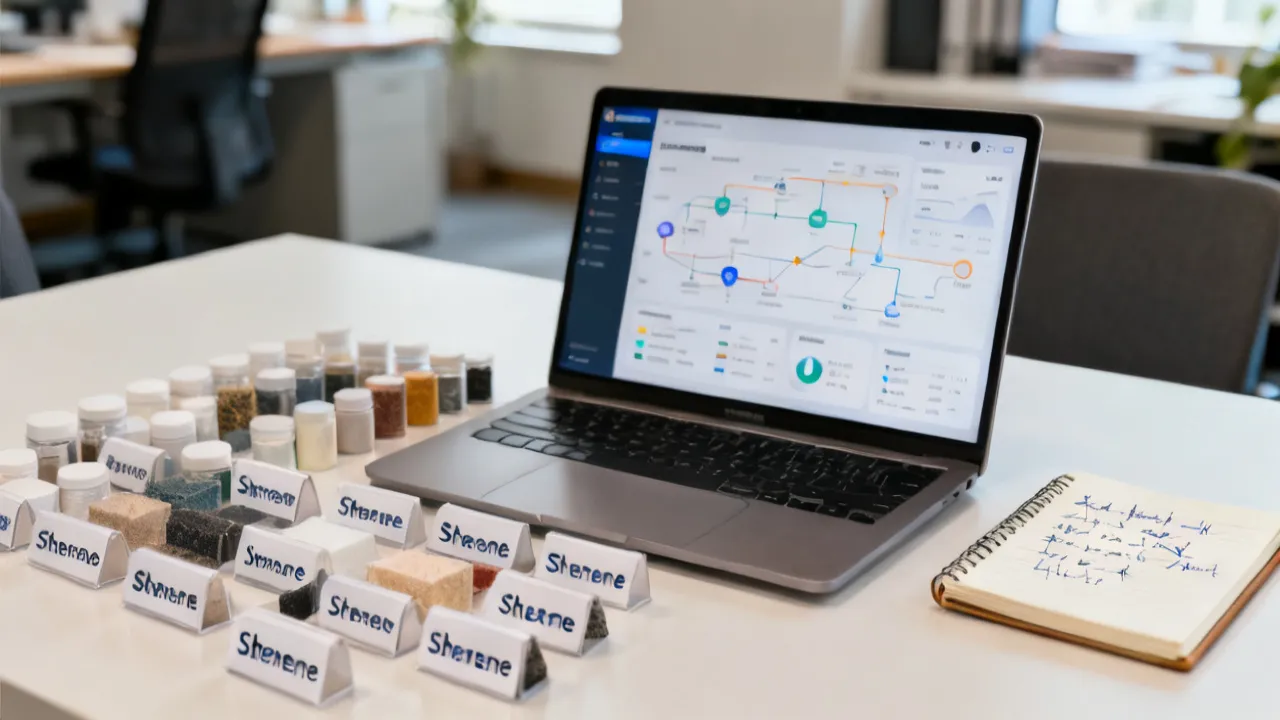
Key Takeaway: Approach Shenene with verification-first sourcing
When dealing with “Shenene,” the very important starting point is not price alone, but verification: confirm identity, intended use, and compliance documentation before you evaluate supplier terms. Because “Shenene” can be used differently across industries and catalog systems, disciplined sourcing reduces downstream issues like mismatched specifications, inconsistent batch quality, and nonconforming paperwork.
In practice, “verification-first” means you treat the product name as a hypothesis rather than a fact. The hypothesis is tested through technical documentation, lot traceability, and measurable acceptance criteria. This prevents a common procurement failure mode: selecting based on how a vendor describes the item, rather than based on what the item is and what the supplier can prove at the lot level.
This approach is especially important when the same word—or a near-identical spelling—appears on listings from multiple parties. Even when suppliers appear to be selling “the same” material, small differences in grade, composition, testing standards, or storage conditions can lead to significant variation in performance. When performance matters, that variation is a cost risk, not a minor inconvenience.
Why “Shenene” Requires a Structured Buying Method
In procurement and sourcing workflows, many disputes originate from ambiguous product naming. “Shenene” may appear as a material name, a branded or semi-branded listing, or an abbreviated descriptor used by different vendors. As a result, buyers often assume the same substance across suppliers—yet the underlying specification can differ (for example, purity level, grade, packaging format, traceability requirements, or test methods).
From an industry perspective, strong sourcing for any similarly named commodity typically combines three elements: (1) a precise technical specification, (2) documented quality evidence (COA, certificates, and test references), and (3) clear commercial terms (lead time, incoterms, and return/defect handling). If any of these are missing, the buyer’s risk increases—even if the quoted price looks attractive at first glance.
A structured buying method also provides an internal “audit trail.” When quality or compliance questions later arise—such as a batch failing incoming inspection, a regulator requesting traceability, or a customer challenging performance claims—your sourcing files show what you required, what was delivered, and what evidence was provided. Without that trail, organizations often face delays, rework, and disputes that are costly to resolve.
Another reason structured method matters is that “Shenene” may be positioned differently depending on a supplier’s business model. Some suppliers treat it as a standard catalog chemical or industrial ingredient; others treat it as an intermediate; still others may sell a formulated product where the same trade name can mask different formulation concentrations. When those business models differ, “apparent equivalence” becomes unreliable.
Finally, structured sourcing supports repeatability. Repeatability means you can buy again without re-negotiating everything each time. In many procurement environments, the initial effort is higher when you define specifications carefully, but it pays off by reducing friction in later transactions.
What “Shenene” Usually Means in Practice (Objective Background)
“Shenene” is top treated as a catalog term until confirmed. Objectively, the term can be used as: a product name in a trade listing; a shorthand for a specific formulation, intermediate, or ingredient; or a label within a regional distribution network. Since identical spellings can map to different formulations or grades, procurement teams should require a specification sheet and testable parameters rather than relying on the name alone.
In very regulated or quality-sensitive supply chains, buyers expect documentation to align with recognized quality frameworks. In that context, many organizations reference ISO-style quality management practices and supplier qualification principles to ensure consistent outputs.
It’s also useful to understand how catalogs and distributors operate. A distributor may source a product from multiple upstream producers. They might use “Shenene” as a convenience naming scheme for the end customer, but the actual batch may come from different production lines or different raw material lots. If the distributor does not tightly control mapping between the trade name and the underlying specification, your purchased lot could vary. Verification-first purchasing counters this by requiring lot-level evidence and clear acceptance criteria.
In addition, “Shenene” might be sold with different packaging formats that affect how the buyer handles it. For instance, a supplier could provide bulk packaging versus small containers intended for laboratory use. The handling and storage risks differ accordingly, and the incoming inspection plan should reflect that.
Pricing: How to Evaluate “Shenene” Costs Without Overfitting to One Quote
Price is often the fastest variable to compare, yet it can be misleading when suppliers are quoting different grades, packaging sizes, or compliance levels. For “Shenene,” a practical evaluation should normalize at least four factors:
- Specification equivalence: Are purity, composition, or functional performance targets identical?
- Packaging and MOQ: Is the supplier quoting the same net weight per package and minimum order quantity?
- Testing and documentation: Does the quote include COA, lot traceability, and specified lab methods?
- Logistics and lead time: Are shipping terms and delivery timelines comparable?
Rather than hunting for a single “top price,” many procurement managers model “cost to serve” (landed cost plus quality assurance overhead). This approach aligns with widely adopted purchasing top practices found in supply chain and procurement guidance from standard-setting and industry bodies.
To apply cost-to-serve thinking, consider that “cheap per unit” can become expensive when documentation is delayed, when incoming testing takes longer, or when product fails acceptance and requires replacement. Costs can show up in multiple places:
- Incoming inspection costs: labor time, lab fees, test consumables, and retest expenses.
- Production disruption costs: line stoppages while waiting for verification, deviations handling, or quarantine storage.
- Compliance administrative costs: paperwork processing, internal approvals, and audits for supplier documentation gaps.
- Downstream performance costs: rework, warranty claims, batch rejection, and scrap if the material does not meet performance targets.
For “Shenene,” a buyer can create a standardized pricing comparison worksheet. The worksheet ensures that each quote is normalized for the same specification, the same packaging, and the same documentation deliverables. This is also where you incorporate “time” costs—such as lead time risk, expediting fees, and the costs of emergency procurement.
Some teams also evaluate total procurement risk using a scoring model. Instead of trying to predict quality failures exactly, they assign risk points for missing documents, vague test methods, unclear traceability, or historically late COA delivery. This method makes risk visible in a structured way.
Supplier Selection: What Industry Experts Typically Verify
From an industry expert standpoint, suppliers should be screened on repeatability, transparency, and process control. For “Shenene,” the due diligence checklist commonly includes:
- Traceability: Can the supplier connect each shipment to a production batch/lot?
- Quality evidence: Can they provide COA for the specific lot shipped, not only generic documentation?
- Specification clarity: Do they share a clear technical data sheet with measurable acceptance criteria?
- Change control: If formulation or sourcing changes, do they notify buyers in advance?
- Packaging integrity: Do they specify container type, seals, and recommended storage conditions?
These checks mirror a general quality-sourcing principle: you cannot manage what you cannot measure, and you cannot reduce risk without evidence tied to the lot in question.
To deepen supplier selection, it can help to evaluate the supplier’s operational maturity. For example, do they maintain a formal procedure for handling customer-specific requirements? Can they respond quickly when a buyer asks for a specific COA for a named lot? Do they have a history of document completeness?
It’s also beneficial to look at how suppliers handle nonconformities. A strong supplier will not only replace or correct issues when a shipment fails inspection; they will also investigate root cause and implement preventive actions. Buyers can ask targeted questions during supplier evaluation:
- When COA differs from the buyer’s expected spec, how do you resolve it?
- Do you provide deviation reports for nonconforming lots?
- How do you manage raw material variability upstream?
- What is your process for approving packaging changes that could affect handling?
These questions help determine whether “Shenene” is treated as a standardized product with controlled variability or as a loosely defined offering.
Quality and Compliance: Managing the “Same Name, Different Product” Risk
In many supply chains, product naming collisions occur—especially with internationally sourced goods, translated catalog terms, and distributor listings. For “Shenene,” treat the name as a starting point and require confirmation through:
- Technical specifications: measurable attributes and tolerances
- Test methodology: standardized or clearly described lab methods
- Documentation alignment: the COA should match the offered grade and shipment lot
- Incoming inspection plan: a buyer-defined acceptance routine at receiving
If your application is sensitive—such as manufacturing inputs, lab use, or any process where performance must be consistent—an incoming inspection plan is not optional. It is a cost-control mechanism that prevents expensive line stoppages and warranty or rework scenarios.
When building compliance requirements, you should also consider how “compliance” is interpreted in your industry. Some organizations require specific regulatory declarations, such as statements about hazard classification, restricted substance status, or documented handling guidance. Others require conformance to internal quality standards rather than external regulations. For “Shenene,” both types may matter depending on your use case.
It is also common for COA documents to be “generic” rather than “lot-specific.” A generic COA might describe typical ranges or certificate details not directly tied to the shipped lot. The verification-first approach requires that the COA includes lot number(s), shipment identifier(s), and matching labels. Your receiving team should be instructed to reconcile these identifiers before accepting product for use.
Another subtle risk is that test method references might differ. One supplier may test using Method A and another using Method B. Even if both methods appear “equivalent,” measurement results can vary. Therefore, acceptance criteria should be defined with reference to test methods, or you should require alignment in the supplier’s test methodology.
To manage this effectively, buyers can request a “method and equivalence” statement from the supplier. This statement explains the test method used and supports equivalence if alternative methods are used. Where equivalence is not supported, your acceptance testing might need to be expanded.
Where Localization Matters: How Regional Buyers Usually Evaluate Trade Terms
Even when the product is the same, how buyers negotiate and assess suppliers often reflects local business customs. In many nearby markets, procurement conversations frequently emphasize responsiveness, clear communication, and documentation readiness. Buyers may prefer suppliers that can provide prompt COAs, stable lead times, and consistent packaging—because that reduces operational friction for warehouses and quality teams.
Localization also shows up in language and paperwork. Vendors who supply bilingual documentation (or at least clear, structured English/standard templates) can reduce errors during receiving, labeling, and compliance review. In practice, that responsiveness often becomes part of the “real cost” of sourcing Shenene.
Regional differences can also affect logistics performance expectations. For example, lead time reliability might be more important in fast-moving operations, while document accuracy might dominate in highly regulated environments. Some buyers require temperature control documentation or special handling forms that local suppliers are more familiar with.
When local norms require standardized labeling—such as specific hazard statements, bilingual labels, or government-specific declaration templates—buyers should ensure suppliers can meet those requirements without last-minute workarounds. “Shenene” can become delayed at customs or withheld by warehouses if labeling is incomplete or incompatible with local documentation expectations.
Therefore, verification-first sourcing should include a “paperwork readiness” step. Buyers can ask suppliers whether they have done business with similar customers locally and what documentation formats they typically provide.
Comparison Table: Practical Supplier Approaches for Shenene
| Supplier Approach | What Buyers Typically Receive | Main Strength | Common Risk to Watch |
|---|---|---|---|
| Specification-first supplier | Clear technical data sheet, test methods, lot traceability, and COA per batch | Lower mismatch risk between listing and shipped goods | May require more upfront clarification |
| Price-led distributor | Competitive quotes, but documentation varies by shipment and may be delayed | Short-term savings on unit cost | Higher risk of grade ambiguity or paperwork gaps |
| Contract manufacturing / producer-direct | Production records and batch-level documentation; stronger process control | Consistency across lots if processes are stable | Higher minimum order quantities or longer lead times |
| Multi-source procurement (broker model) | Multiple supplier options; quotes can change with availability | Flexibility when demand is urgent | Greater variability unless quality controls are enforced |
To make the table actionable, buyers can align each supplier approach with a procurement policy. For example, a specification-first supplier can be approved with a lighter incoming inspection burden, whereas a price-led distributor might require stricter gating, including additional lab verification before release.
Step-by-Step Guide: A Verification Workflow for Buying Shenene
The following workflow is designed to reduce the “name ambiguity” risk and improve comparability across suppliers.
Step 1: Define the exact requirements
- Write the specification in measurable terms (purity/composition/performance attributes).
- Confirm packaging format (net weight, container type, sealing method).
- List your acceptance criteria and test references used by your quality team.
When defining exact requirements for “Shenene,” buyers should also specify what “acceptance” means operationally. For example, do you accept based on one property (like purity), or do you require multiple properties (like impurity limits, composition distribution, and functional performance)? If performance testing is required, define whether it is required for every lot or only for initial qualification batches.
Additionally, include storage and handling requirements if they influence performance. Some materials degrade with moisture, heat, or light exposure. If packaging affects stability, you should specify packaging conditions and storage temperature ranges.
Step 2: Request lot-specific documentation
- Ask for COA that corresponds to the specific lot/ship date.
- Request any certificates relevant to your use case (e.g., compositional analysis and handling notes).
- Require traceability so your receiving team can reconcile paperwork with the shipment.
A key detail is to request documentation before shipment when possible, or at least ensure it is delivered simultaneously with the shipment. Late COA delivery undermines verification workflows and forces “release on trust,” which increases the chance that nonconforming product is used.
Documentation requests should be explicit. Instead of asking generally for “certificates,” list the expected documents such as:
- Technical data sheet (TDS) or equivalent specification sheet.
- Certificate of Analysis (COA) with lot number(s) and test results.
- Lot traceability information tied to batch records.
- Safety data sheet (SDS) or handling guidance appropriate to your region.
- Any compliance declarations required by your industry or customer contracts.
Step 3: Normalize quotes before comparing price
- Ensure units are comparable (per kg, per pack, or per shipment).
- Confirm MOQ, lead time, and logistics terms.
- Account for quality testing and incoming inspection costs.
Normalization also includes converting quotes to the same level of documentation and compliance. For example, one supplier might quote “Shenene” with COA and another might provide COA only after shipment or provide a generic certificate. Normalized comparison treats documentation quality as part of the offer.
When comparing lead times, buyers should consider not only expected delivery dates but also the supplier’s consistency. A supplier with sporadic lead time could cause stockouts that lead to expediting costs. Therefore, a buyer can ask suppliers about their typical lead time range and what factors affect it.
Step 4: Run a pilot shipment or sample verification (when feasible)
- Define a small test order aligned with your acceptance criteria.
- Verify performance in your process or product context.
- Log results so future procurement decisions are evidence-based.
For “Shenene,” a pilot shipment can be more than a laboratory test. It can also be a supply chain test: evaluate packaging integrity during transit, confirm that labeling matches paperwork, and assess whether COA delivery is timely. This helps identify operational friction before scaling orders.
If your application is sensitive, define whether the pilot’s results must meet full acceptance criteria or whether partial qualification is acceptable. Some organizations use a tiered approach: full qualification for critical use cases and partial qualification for lower-risk internal experiments.
Step 5: Put clear terms in the purchase agreement
- State what constitutes a quality deviation and the remedy process (replacement, credit, or return).
- Include documentation delivery timelines and labeling requirements.
- Define storage and handling responsibilities.
Clear terms protect both parties. Buyers should ensure the remedy process is workable. For instance, if a lot fails acceptance, specify whether replacement is required, whether partial credit is acceptable, and what timelines apply. Define whether the supplier can ship a corrected lot without repeating the entire qualification process.
Also consider “who pays” language. If the buyer performs incoming tests, define whether retesting is billable to the supplier if the cause of failure is attributable to the supplier’s product or documentation.
Step 6: Establish ongoing supplier qualification
- Monitor consistency across multiple lots.
- Track documentation completeness and on-time delivery.
- Perform periodic revalidation if your use case or standards change.
Ongoing supplier qualification turns procurement into a controlled system rather than a one-time transaction. Buyers can track key performance indicators such as:
- COA delivery timeliness (e.g., before shipment, within 24 hours, etc.).
- Documentation completeness (no missing fields, correct labeling, correct identifiers).
- Incoming inspection pass rate.
- Change notification adherence (supplier informs before changes occur).
- On-time delivery rate.
When performance trends deteriorate, buyers should trigger requalification, increased inspection, or supplier change plans.
Conditions and Requirements Buyers Commonly Set
Because “Shenene” can mean different grades or formulations in listings, buyers typically set strict conditions. The following requirements are common in professional procurement programs:
- Documented specification matching: the supplier must confirm equivalence to your written requirements.
- Lot-level COA availability: COA must correspond to each shipped lot, delivered before or with receipt.
- Traceability: batch/lot numbers must be visible on paperwork and labels.
- Quality deviation handling: a documented remedy plan must be agreed in advance.
- Incoming inspection policy: the buyer should be able to test or verify upon arrival.
To make these requirements enforceable, buyers often implement a “release gating” process. Release gating means product is quarantined until documentation checks pass and initial acceptance tests are complete (or at least until a subset of checks is complete).
For some buyers, a release gating system also includes environmental or handling checks. For example, if packaging is compromised or labels are unreadable, the lot may be quarantined regardless of the COA results. This prevents confusion and protects against misidentification.
Risk Management: Practical Problems and How to Prevent Them
Even careful procurement can face risks. The very frequent issues for similarly named goods include specification drift, incomplete documentation, and inconsistency across batches. A robust risk approach for Shenene generally includes:
- Documentation gating: do not release acceptance if COA and labels do not match the lot.
- Defined tolerances: specify acceptable ranges and retesting conditions.
- Communication cadence: require prompt updates on lead time changes or supply constraints.
- Supplier performance tracking: keep a scorecard tied to objective metrics like on-time delivery and documentation completeness.
It helps to anticipate where risk occurs along the supply chain. Common risk points include:
- Order confirmation: a supplier may accept the order with an interpretation of “Shenene” that differs from the buyer’s specification.
- Production scheduling: production may run a different grade or formulation than planned if upstream materials change.
- Label printing: label mistakes can happen if internal systems are not aligned to the correct grade and lot.
- Shipping and transit: packaging might fail, causing leakage or contamination that affects acceptance outcomes.
- Receiving: warehouse teams might log the wrong lot if paperwork does not match physical labels.
A verification-first workflow addresses these risks through controls. Controls include requiring the supplier to confirm the specification in writing, requiring lot-specific COA, requiring matching identifiers on labels, and implementing receiving inspection procedures that reconcile paperwork to physical inventory.
For deeper prevention, some buyers establish a “supplier change control” requirement. This means suppliers must notify buyers before any changes in formulation, test method, source of raw materials, packaging type, or production equipment occur. Such changes can affect performance even when the trade name remains the same.
In addition, buyers can require notification thresholds. For example, if a supplier changes a key impurity target or a test method reference, the notification must be immediate. If changes are minor (within pre-agreed tolerance), the supplier might notify in a scheduled cadence. The goal is to make change handling predictable.
What Responsible Information Sources Commonly Support
To avoid exaggerated or unverifiable claims, this guide relies on general procurement and quality principles that are widely documented by recognized entities. For example, quality management concepts and supplier qualification practices often align with ISO quality management principles. For procurement and supply risk context, industry guidance from standard bodies and reputable research organizations is frequently used as a baseline for top practices. Where numerical performance claims would be required, buyers should consult up-to-date industry reports from recognized analysts or official research bodies rather than relying on vendor marketing.
In a verification-first approach, the “source of truth” should be your documented requirements and your lot-level evidence. External standards help structure your expectations, but the supplier’s delivered lot documentation is what ultimately proves conformance.
Accordingly, buyers should treat the following as evidence categories:
- Requirement evidence: your written spec and acceptance criteria.
- Supplier evidence: COA, test methods, traceability records, and certificates.
- Buyer evidence: incoming inspection results, pilot test data, and performance verification in your process.
When evidence categories align, decisions become defensible. When they do not, buyers have clear triggers to quarantine, test, reject, or escalate to supplier corrective action.
Extended Practical Checklist: What to Verify for Shenene Before You Buy
To make the earlier workflow immediately usable, here is a practical checklist that buyers can adapt for “Shenene.” This checklist is written in a verification style that can be used by procurement, quality, and warehouse teams together.
Identity and specification confirmation
- Confirm the exact product identity that the supplier will ship (trade name + grade + any internal code).
- Require the supplier to specify purity/composition attributes in measurable terms.
- Request acceptance criteria ranges (your required ranges) and ensure the supplier’s values align.
- Ask whether the supplier uses the same specification for every shipment or only for certain markets/clients.
Lot traceability and COA integrity
- Require COA with lot number and shipment identifier.
- Confirm that COA results correspond to the same lot as the label on the packaging.
- Ask how long COA and traceability records are retained by the supplier.
- Confirm whether the supplier can provide additional test records if discrepancies are found.
Test methods and comparability
- Require the supplier to state the test method standards used (or acceptable equivalents).
- Confirm whether method changes require prior notification.
- Define whether you will retest upon receiving and which parameters are retested.
Packaging, labeling, and handling verification
- Confirm container type, seal method, and net weight per container.
- Confirm labeling includes lot number(s), product identity, and storage instructions.
- Request SDS/handling guidance appropriate to the region and your facility requirements.
- Verify recommended storage conditions and shelf-life considerations (if applicable).
Commercial and operational terms
- Normalize unit price by packaging net weight and any MOQs.
- Confirm Incoterms, shipping method, and lead time expectations.
- Define delivery documentation requirements (what comes with the shipment, and by when).
- Define remedies: replacement, credit, return logistics, and timelines.
Incoming inspection readiness
- Ensure your receiving process includes a reconciliation step between paperwork and physical lot labels.
- Define acceptance tests and quarantine policy if paperwork mismatches or results fail.
- Assign responsibility: who performs checks and who signs off release?
Supplier responsiveness and change control
- Confirm the supplier’s responsiveness time for COA and specification questions.
- Require supplier notification for formulation, test method, packaging, or upstream sourcing changes.
- Request evidence of supplier corrective action processes (for example, CAPA practices at high level).
How to Run an “Equivalence Verification” When Suppliers Disagree
Sometimes suppliers will claim that their “Shenene” is equivalent to the buyer’s requirement. While “equivalence” can be legitimate, it can also be used as a bargaining phrase to avoid providing precise specification data. A verification-first approach should handle disagreement systematically.
A buyer can use a structured equivalence verification process:
- Ask for the full spec: require the supplier to provide the measurable parameter list, not just a statement of equivalence.
- Compare against acceptance criteria: map supplier values to your acceptance ranges and identify gaps.
- Validate with lot-level COA: require COA for the specific lot being offered.
- Align test methods: confirm methods or request method equivalence documentation.
- Require a pilot shipment: verify performance in your context rather than relying only on documentation.
When gaps remain, buyers should avoid “informal approvals.” Instead, they should escalate through formal channels (quality management and procurement governance). This reduces the chance of inconsistent decision-making across teams.
Incoming Inspection Design for Shenene: Make It Fast, But Not Loose
Incoming inspection does not have to be slow or expensive, but it must be effective. For “Shenene,” you can design an inspection approach that balances cost with protection.
One practical model is a tiered inspection strategy:
- Tier 1 (documentation reconciliation): confirm lot number match, label readability, and COA completeness. Quarantine if mismatched.
- Tier 2 (rapid confirmatory tests): test a subset of critical parameters that are most likely to indicate wrong grade, contamination, or major deviations.
- Tier 3 (full verification or performance verification): run full acceptance tests or process verification on a subset of lots or the pilot lot.
As a supplier proves consistency across multiple shipments, you can potentially reduce the frequency of full tests (while still retaining a compliance gate). However, you should not remove the documentation reconciliation step, because most “same name, different product” risks start with identification mismatch.
Another important design consideration is retesting rules. If a parameter fails, define whether retesting is allowed, whether the supplier gets one remediation opportunity, and what happens if the second result is also outside acceptance. Retesting without clear rules can become a repetitive cost center without improving confidence.
Supplier Qualification: Building a Reusable Qualification Template
For organizations that buy “Shenene” repeatedly, it can be useful to build a qualification template that includes:
- Supplier identity and business details.
- Technical specification confirmation form.
- Document checklist and expected COA format.
- Test method alignment form.
- Packing and labeling requirements.
- Pilot shipment acceptance test plan.
- Scoring criteria for ongoing qualification.
When qualification is standardized, procurement can move faster without skipping risk controls. Quality teams can also compare suppliers consistently.
Additionally, qualification templates reduce miscommunication across departments. Procurement teams can communicate the same technical requirements to suppliers, while warehouse teams know exactly what labels and documents they must reconcile.
Common Failure Modes When Buying Shenene (And How Verification Stops Them)
Even with good intentions, buyers sometimes experience failures due to the structure of the procurement process itself. The verification-first approach helps prevent predictable failure modes.
Failure mode 1: “Wrong grade delivered, accepted due to paperwork mismatch not checked.”
If receiving staff focuses only on quantity and ignores lot label matching, the wrong grade can be used. Verification-first requires gating: do not release if COA and labels do not match the lot.
Failure mode 2: “COA provided but not lot-specific.”
A generic COA might look credible but cannot prove lot conformance. Verification-first requires lot number alignment and test results that map to the shipped lot.
Failure mode 3: “Supplier says equivalent, but acceptance tolerances differ.”
If a buyer relies on a verbal equivalence claim, the purchase contract can become hard to enforce. Verification-first uses a specification mapping step against measurable acceptance criteria.
Failure mode 4: “Price savings traded for inspection burdens.”
A cheaper quote can cause higher lab costs or production disruption due to failure risk. Verification-first normalizes quotes including incoming inspection and quality assurance overhead.
Failure mode 5: “Change control missed.”
A supplier can change sourcing or formulation without obvious trade name changes. Verification-first requires supplier change control notifications and may require requalification when changes exceed thresholds.
Contracting for Shenene: Practical Clauses to Include
While specific legal language depends on your jurisdiction and company policies, the concept of “quality and documentation enforceability” is universal. Buyers can include practical clauses that create clear obligations for the supplier.
Key contracting elements can include:
- Defined product identity: trade name plus grade plus specification reference.
- Defined acceptance criteria: measurable tolerances and test methods.
- Lot-level documentation: COA must correspond to shipment lot, including lot number and test results.
- Delivery documentation timelines: specify when documents must arrive relative to shipment or receipt.
- Labeling requirements: lot number visibility, readable identifiers, storage instructions.
- Quality deviation handling: remedy actions and timelines for replacement, credit, or return.
- Change notification: require advance notification for formulation, test method, packaging, or upstream sourcing changes.
- Right to retest: allow buyer retesting at receiving and define responsibility if failure is confirmed.
These clauses help prevent “silent failures” where disputes become ambiguous. When terms are clear, resolution is faster.
Operational Playbook: Roles and Responsibilities Across Teams
A verification-first approach works best when roles are clear. For “Shenene,” consider separating responsibilities among procurement, quality, and warehouse teams.
Procurement responsibilities:
- Ensure the purchase order references the exact specification and grade.
- Confirm supplier can meet documentation and labeling requirements.
- Normalize commercial terms and incorporate inspection costs into total evaluation.
- Manage supplier communication and escalation for document delays.
Quality responsibilities:
- Define acceptance criteria and test method references.
- Create incoming inspection plans and quarantine/release procedures.
- Review COA results and compare them to acceptance criteria.
- Lead pilot verification and supplier qualification scoring.
Warehouse/receiving responsibilities:
- Reconcile shipment labels to paperwork identifiers (lot number match).
- Check packaging integrity and label readability.
- Ensure storage conditions are followed upon receipt.
- Trigger quarantine if documentation or labels do not match.
When each team understands its verification tasks, the organization becomes less dependent on individual memory and more dependent on a reliable process.
FAQs About Shenene Sourcing and Supplier Selection
1) What does “Shenene” mean?
“Shenene” is a product or catalog term whose practical meaning depends on the specific supplier and industry context. Because the same name can map to different grades or formulations, buyers should confirm the exact technical specification and lot-level documentation.
2) Can I compare suppliers using only the unit price?
No. Unit price comparisons are only meaningful when requirements are normalized (same grade, packaging, documentation level, and logistics terms). A lower quote can still be more expensive if it increases inspection costs or causes rework.
3) What documents should I request for Shenene?
At minimum, request a technical data sheet and COA that corresponds to the specific lot shipped. If your application needs compliance evidence, request any additional certificates relevant to your quality and regulatory requirements.
4) How do I reduce the risk of receiving the wrong grade?
Require specification matching in writing, verify COA and labels at receiving, and—when feasible—run a pilot shipment with defined acceptance tests before scaling orders.
5) What should be included in the purchase agreement?
Include quality acceptance criteria, documentation timelines, traceability requirements, labeling expectations, and a clear remedy process for deviations (replacement, credit, or return handling).
6) Is incoming inspection necessary?
For quality-sensitive applications, yes. Incoming inspection protects production continuity and ensures that the delivered lot meets your acceptance criteria.
7) How do I evaluate supplier responsiveness?
Track how quickly the supplier provides lot-specific documents, answers specification questions, and communicates changes in lead time or availability. Responsiveness becomes a measurable operational factor, not just a conversational preference.
8) Where does localization affect purchasing decisions for Shenene?
Local business norms influence negotiation style and documentation handling. In nearby markets, buyers often prioritize clear communication, stable lead times, and paperwork readiness to minimize warehouse and quality bottlenecks.
Conclusion: Treat Shenene as a specification-led procurement decision
Shenene sourcing works best when you treat the term as a starting label rather than a guarantee of equivalence. By defining measurable requirements, validating lot-level documentation, and comparing suppliers only after normalizing grade, packaging, and compliance expectations, you create a procurement process that is both practical and defensible. In professional supply chains, disciplined verification is what turns market uncertainty into controlled decision-making.
When “Shenene” is approached with verification-first sourcing, the buyer’s organization becomes less vulnerable to ambiguity, less exposed to specification drift, and more capable of resolving issues quickly when discrepancies occur. Over time, this disciplined process improves supplier performance, strengthens internal reliability, and reduces the total cost of quality risk—often more effectively than chasing the lowest unit price alone.
-
1

A Guide to Cost-Efficient Small Electric Cars for Seniors
-
2
Mastering Debt Consolidation: Boost Your Credit Score and Manage Interest Rates
-
3
Your Guide to Loans, Credit Checks, and Interest Rates
-
4
Affordable Independent Living: Finding the Right Senior Housing
-
5
Guide to Senior Living Apartments: Affordable and Comfortable Environments