Choosing an Internet Plan: Xfinity, AT&T, Spectrum
This guide helps you compare major US internet options—from Xfinity, AT&T Fiber, Spectrum, T-Mobile 5G Home Internet, Astound Broadband, and Verizon Fios—by focusing on speeds, pricing structure, and equipment terms. It then explains objective factors that influence total monthly cost and reliability, plus practical steps to reduce expenses while matching a plan to your household’s real usage.
Start here: how to pick the right provider based on cost and performance
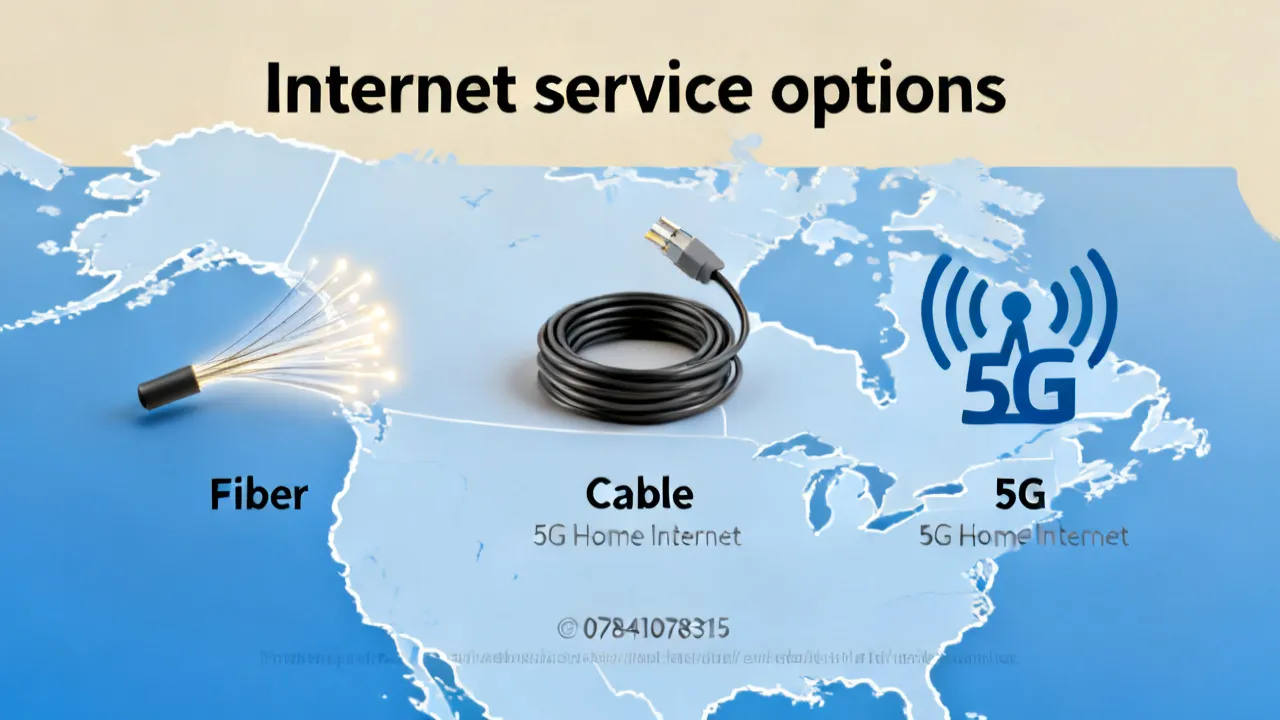
Choosing an internet plan is less about the advertised headline speed and more about the total monthly cost, network reliability, equipment terms, and upload needs. If your household regularly uploads files, video calls multiple streams, or runs online backups, fiber options like AT&T Fiber or Verizon Fios are often the very consistent choice due to symmetrical performance. If your priority is predictable budgeting with fewer good commitments, cable providers such as Xfinity Internet and Spectrum Internet may fit well—especially where no-contract policies are available. For customers in areas where wired fiber or cable coverage is limited, fixed wireless via T-Mobile 5G Home Internet can be a practical alternative.
Below is a structured comparison of major providers, followed by expert guidance on lowering your effective internet bill without sacrificing stability. Instead of focusing on a single number (like 1,000 Mbps), the goal is to help you evaluate the plan that delivers the best real-world experience for your home at the lowest “all-in” monthly price.
Think of internet selection as a blend of economics and engineering. The economics part is what you pay after promotions, equipment charges, and autopay assumptions. The engineering part is how your household actually uses bandwidth: whether you have heavy upload needs, how many devices are active during peak hours, how sensitive your work is to latency and jitter, and whether your Wi‑Fi setup can deliver reliable performance across the rooms where you live and work.
Quick comparison of major Internet service provider packages (US focus)
| Provider | Typical packages & pricing signals |
|---|---|
| Xfinity Internet | Entry offers are often priced for lower tiers (e.g., Connect around $19.99/month for up to 50 Mbps) with higher-speed upgrades (e.g., Connect More around $39.99/month for up to 100 Mbps). Some plans may include rental-style equipment terms depending on configuration. |
| AT&T Fiber | Fiber tiers commonly scale from 300 Mbps to 1 Gig. Example price points shown by AT&T include roughly $55/month (300), $65/month (500), and $80/month (1 Gig), with autopay discounts and a Wi‑Fi gateway typically included. |
| Spectrum Internet | Introductory pricing may be used for mid-tier cable speeds (e.g., about $50/month for up to 500 Mbps) with an additional higher tier (e.g., about $70/month for up to 1,000 Mbps). Plans commonly emphasize no contracts and unlimited data, and may include a modem. |
| T-Mobile 5G Home Internet | Pricing frequently ranges (for example about $35–$70/month), with typical reported performance in the tens to a couple hundred Mbps range depending on local 5G coverage. Fixed wireless can be attractive for eligible areas, including nearby rural settings. |
| Astound Broadband | Regional cable service often begins with low-cost introductory tiers (e.g., starting near $20/month for up to 300 Mbps) and may include price-structure guarantees on select plans. |
| Verizon Fios | Fiber packages are commonly presented with stated bandwidth tiers, such as around $49.99/month for 300 Mbps with autopay, and roughly $89.99/month for a 1 Gig connection, often with router inclusion. |
source: https://www.xfinity.com/ | https://www.att.com/internet/fiber/ | https://www.spectrum.com/ | https://www.t-mobile.com/isp | https://www.astound.com/ | https://www.verizon.com/home/fios/ (source of the information used above)
How pricing really works: what to verify before signing
From an industry perspective, internet billing outcomes typically depend on the interaction between plan structure, promotion length, autopay eligibility, equipment charges, and location-based network availability. Even if two households both “choose 500 Mbps,” their real experience can differ based on congestion, installation quality, and Wi‑Fi coverage.
To make cost comparisons meaningful, you want to translate each provider’s offer into a “true monthly rate” for the next 12 months. That usually means capturing: the promo price, the post-promo price, whether the price is conditional on autopay, whether equipment is included or rented, and any mandatory add-ons (like managed Wi‑Fi or security suites) that may not be obvious at checkout.
- Promotional rate duration: Many providers use an introductory price that changes after the promotional term. If you’re doing good planning, compare the likely post-promo price to alternatives.
- Autopay conditions: AT&T Fiber and Verizon Fios pricing examples often reference autopay discounts. If autopay is not desired, your effective monthly cost may be higher.
- Equipment rental or inclusion: Xfinity may offer equipment rental terms (often priced separately, depending on configuration), while some providers include a Wi‑Fi gateway/router. Total cost can shift by $10–$20+ per month.
- No-contract policies: Spectrum and several cable offerings emphasize no contracts, which can reduce commitment risk if you anticipate moving. However, promotional terms may still apply.
- Upload and reliability: Fiber providers like AT&T Fiber and Verizon Fios are positioned for symmetrical speeds, which tends to matter for video calls, streaming from a home studio, or cloud backups.
One of the most common “surprise costs” is not a fee at all, but a difference in included hardware. For example, a plan that looks cheaper on paper may require you to rent equipment or may include a less capable gateway that struggles in multi-story homes. If you must buy a mesh system to fix Wi‑Fi, your real monthly cost becomes the internet bill plus the amortized cost of the Wi‑Fi equipment over its useful life.
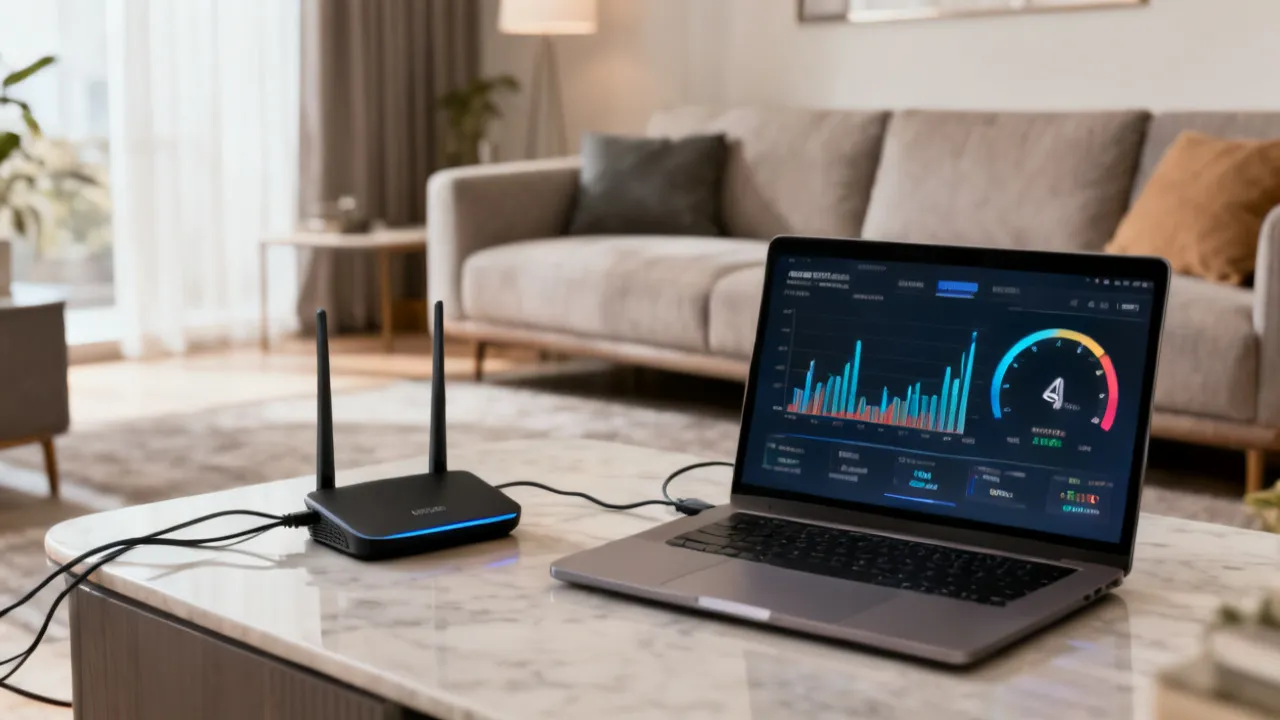
Another hidden factor is that “up to” speed is a theoretical maximum under ideal conditions. Even with a fiber plan, your devices and Wi‑Fi environment still determine real throughput. So cost comparisons should be paired with a plan for testing and optimizing your connection immediately after installation.
Where each provider tends to fit top (expert matching guide)
Use the following “fit” framework rather than speed chasing alone:
Xfinity Internet: balance of tiers and hotspot access
Xfinity Internet is commonly structured around tiered offerings (for example, Connect up to 50 Mbps and Connect More up to 100 Mbps). If you value no-contract flexibility and benefit from access to Xfinity Wi‑Fi hotspots, it can be a convenient option—particularly for households that travel or rely on hotspot coverage. Consider equipment terms carefully if equipment rental applies.
Beyond the headline tier, cable performance can vary during peak hours because many cable systems share bandwidth in a neighborhood. That doesn’t mean cable is always “bad”—it means that in busy areas, the same 100 Mbps plan may feel more consistent on wired Ethernet but less consistent on Wi‑Fi. If most of your household is using Wi‑Fi, you should consider how many simultaneous users you have and whether you have a strong Wi‑Fi layout.
To decide if Xfinity is a cost-effective fit, ask:
- Will you connect your main workstation via Ethernet at least part of the time?
- Do you stream 4K video at peak evening hours, or is usage spread out?
- Do you need frequent uploads (for example, large file transfers)?
- What are your equipment charges, and is a gateway included?
If you mainly download and your household usage is moderate, Xfinity’s tiered approach and possible promotional value can be attractive. If you heavily upload or require ultra-reliable latency (for example, some live collaboration or interactive gaming), fiber may still be the better economic choice over time.
AT&T Fiber: strong choice for upload-heavy households
AT&T Fiber packages commonly include tiers such as Fiber Internet 300, Fiber Internet 500, and Fiber 1 Gig. A defining attribute is symmetrical upload/download speeds, which is often a differentiator for remote work, live-streaming, or frequent file uploads. If you prefer straightforward billing and a Wi‑Fi gateway included with the service, it can reduce the “hidden” cost of setup.
Fiber is often the easiest path to stable performance because the access technology is designed for consistent throughput and lower variability. Upload matters in real life more often than people expect. For example:
- Video calls with multiple participants can bottleneck on upload when everyone is sending video.
- Cloud backups and device syncing can become slow and disruptive.
- Photos and media transfers (especially if you run a creator workflow) can take much longer with asymmetric speeds.
- Virtual private networks (VPNs) can feel sluggish when upload and latency are inconsistent.
When comparing AT&T Fiber to a cable plan, also consider “session quality,” not just maximum speed. If your work depends on real-time traffic (like VoIP or interactive video), your best experience comes from consistent low jitter and low packet loss—both typically helped by fiber.
Finally, AT&T Fiber can be cost-effective even if the monthly base price looks higher than cable, because you may need fewer workarounds. If your household doesn’t have to upgrade Wi‑Fi hardware immediately or doesn’t suffer from peak-hour slowdowns, the overall value is better than a plan that only wins on promotional cost.
Spectrum Internet: straightforward unlimited data approach
Spectrum Internet often emphasizes unlimited data and no contracts, paired with a modem included in the package. Pricing frequently uses promotional entry points for mid-tier and gig-capable offerings. If the main goal is avoiding complex data caps and keeping budgeting stable (while still watching potential price adjustments after introductory periods), Spectrum may match your needs.
For many households, the big appeal of unlimited data is psychological and practical. It simplifies planning for families, households with children, and anyone who works from home and streams simultaneously. In cost terms, unlimited data can reduce the chance you feel pressured to reduce usage, which otherwise can lead to frustration or lower quality experiences.
However, “unlimited” doesn’t always mean “unlimited at full speed in every circumstance.” Performance can still be affected by network congestion. So if you’re choosing Spectrum, evaluate:
- Your typical evenings and weekends usage (peak demand times).
- How many households share the same node in your area.
- Whether you can wire your router to key devices.
- Whether you can use the included modem or must rent additional equipment.
Also watch out for promotional length. If your budget planning is strict, you may want to avoid plans that have low introductory pricing followed by steep increases after the promotion expires.
T-Mobile 5G Home Internet: consider for coverage gaps and convenience
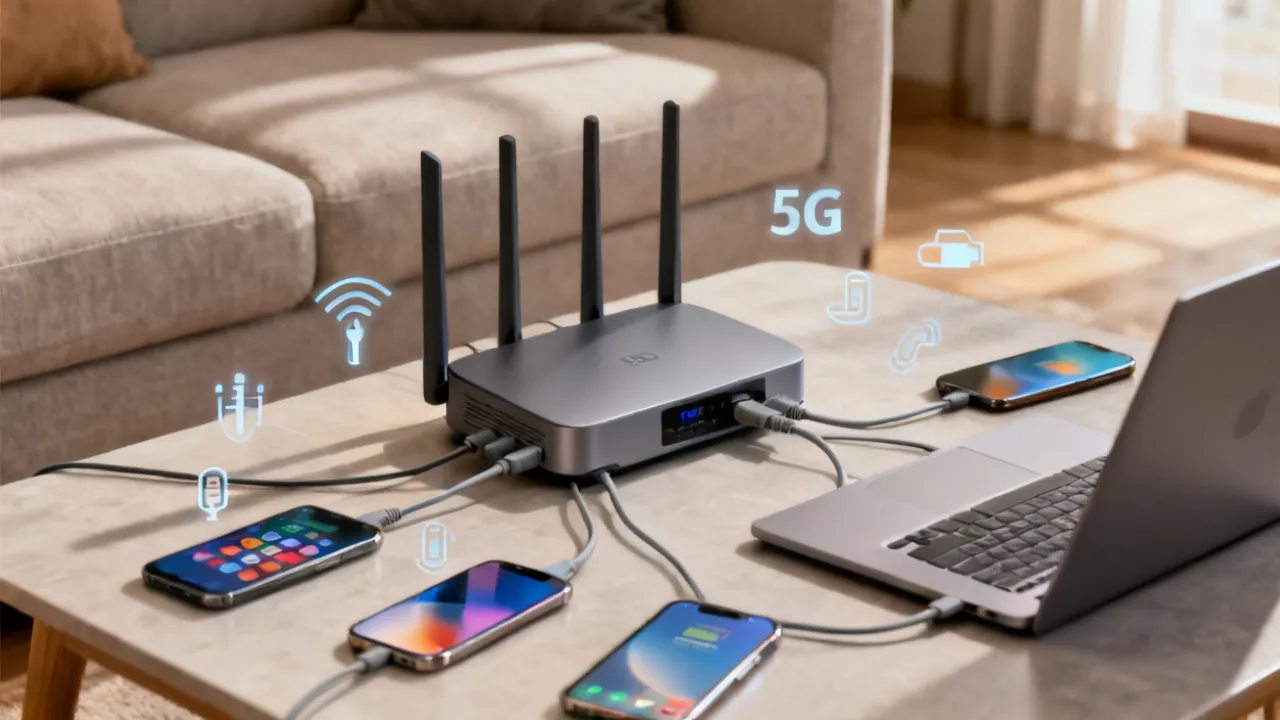
T-Mobile 5G Home Internet uses fixed wireless 5G rather than wired infrastructure. That matters: performance can be highly dependent on local tower capacity, building materials, and the quality of the signal at your installation location. It can be well-suited for customers in “nearby rural” or suburban areas where wired options are limited, or for those who want an alternative when cable installation timelines are less predictable.
Fixed wireless can be an excellent “cost-to-setup” option. You can often install faster than wired services, and you may avoid long installation appointments. But because it’s wireless, you should treat it as performance that is probabilistic, not deterministic.
How to evaluate T-Mobile 5G Home Internet realistically:
- Signal quality at your specific address: If possible, ask about test results or try setup and run speed tests at different times of day.
- Installation placement: The gateway location inside your home can strongly affect signal strength.
- Peak hour effects: If the tower is busy, throughput can drop in the evenings.
- Device needs: If your household uses multiple video streams, you may want to ensure consistent throughput and low latency.
Unlike fiber, which gives you a stable wired path to the provider network, fixed wireless rides on cellular capacity. So it can be cheaper and more convenient, but it can also fluctuate. If your household is sensitive to real-time performance, it’s important to run verification tests after installation.
Astound Broadband: regional cable options with intro offers
Astound Broadband availability is regional, so your eligibility will depend on the address. Where offered, it can provide low introductory pricing for cable speeds such as up to 300 Mbps. Some plans may provide a two-year price guarantee, which can be valuable if you want predictable budgeting rather than reevaluating rates annually.
For people who live in the regions where Astound operates, the cost advantage is often driven by promotional structure and price guarantees. In practice, you should still validate the full cost picture:
- Are there equipment rental fees?
- Is the guarantee conditional on autopay or bundling?
- Does the guarantee cover taxes and fees, or only base service?
- Is the plan truly “no contract,” or does it include an early termination fee?
Because Astound is a cable provider in many markets, you may see similar variability patterns as other cable services. If congestion is a concern in your particular neighborhood, your real performance could vary more than a fiber connection. That said, if your household mostly downloads and you’re looking for a stable price for a defined term, Astound can be a strong match.
Verizon Fios: fiber stability and symmetrical speeds
Verizon Fios positions itself around fiber connectivity and includes a Wi‑Fi router at no extra cost (based on the plan descriptions provided). If you prioritize consistent performance and symmetrical speeds, Fios often aligns with that goal. Compare autopay-based pricing to your intended payment setup and account for any additional fees or taxes depending on your locale.
Verizon Fios can be particularly compelling for households that:
- Have remote workers who need stable uploads for video calls, document sync, and screen sharing.
- Use cloud services heavily (backups, photo sync, device management).
- Host devices (game servers, media servers) or run security camera uploads.
- Want fewer “peak hour” performance complaints.
As with any provider, you should also consider Wi‑Fi quality. A plan can include a router, but router performance depends on your home size, wall materials, and interference. If you have a multi-story house or a lot of thick walls, you may still benefit from adding a mesh system or an access point—but this is often less urgent on fiber because you’re not trying to overcome a shaky upstream connection.
Also confirm autopay eligibility and what happens if you stop using autopay later. Some discounts disappear when autopay is not active, affecting your effective monthly rate.
Price range context: what you can expect beyond individual brands
Because internet markets vary by country and by neighborhood density, you should treat brand-specific prices as illustrative rather than universal. Still, cross-market ranges help set expectations when you’re planning a budget. Below is a rephrased overview (not tied to one provider):
| Region | Typical price range (approx.) & notes |
|---|---|
| United States | About $30–$100+. Many areas offer both fiber and cable broadband; some locations support very high tiers (often 100 Mbps up to 1 Gbps), which can push prices upward. |
| United Kingdom | About £25–£60+. Common options include fiber or broadband, with typical speeds spanning roughly 30 Mbps–100 Mbps in many regions. |
| Canada | About CAD 50–CAD 100+. Fiber and broadband packages can vary widely, with speeds often ranging from around 25 Mbps to 1 Gbps. |
| New Zealand | About NZD 60–NZD 100+. Many users choose fiber or VDSL, frequently reaching 100 Mbps or higher depending on local availability. |
| Australia | About AUD 60–AUD 110+. Fiber coverage is expanding, and common tier speeds often fall between 50 Mbps and 100 Mbps. |
| Singapore | About SGD 30–SGD 60+. High-speed fiber is widely offered, sometimes up to 1 Gbps, with competitive pricing driven by market intensity. |
Why keep these broad ranges in mind? Because if you know what a “normal” price band looks like, you can spot deals that are too good to be true. Some offers look cheap because they rely on a strict condition (autopay, bundling, or short promo periods). Others look expensive because the “included router” is actually modest and you’ll need to spend extra to get whole-home performance.
Detailed, step-by-step ways to access the internet at a low cost
Below is a practical checklist you can follow to reduce monthly spend while still protecting the quality of your connection. The goal is cost control through verification and planning—not through assumptions.
When you’re trying to lower costs, resist the instinct to buy the cheapest plan instantly. Most households can lower their bill through better timing (promotion windows) and better matching (choosing the right tier for real usage). Once you know what you actually need, you can avoid paying for speed you won’t use, and you can avoid paying for “premium reliability” if your household usage doesn’t justify it.
-
Audit your actual usage first (1–2 days)
List what you do online: video streaming, gaming, remote work, cloud backups, or large file uploads. If you rarely upload, the advantage of symmetrical fiber may matter less than stable download speeds and low total cost. -
Check whether fiber is available at your address
In many markets, fiber is priced higher than the lowest cable tiers, but can be comparable over time when equipment and reliability are included. If AT&T Fiber or Verizon Fios are available nearby, compare total cost after equipment charges and autopay assumptions. -
Compare “promo price” vs “regular price”
Some providers advertise a first-year or introductory rate. Confirm what happens after the promotion ends. Choose the option with the lowest blended monthly cost over the time you expect to stay. -
Confirm equipment fees before you order
If a plan includes a Wi‑Fi gateway/router, you may avoid monthly equipment rental. If equipment rental applies (for example, some Xfinity configurations), ask whether you can bring your own compatible equipment or whether rental is required. -
Use billing-eligibility discounts strategically
If AT&T Fiber or Verizon Fios pricing assumes autopay, evaluate whether autopay is acceptable for your household. If not, recalculate the real monthly cost based on non-autopay pricing. -
For fixed wireless, optimize installation conditions
With T-Mobile 5G Home Internet, the signal location matters. During installation, place the modem/router where signal quality is top (often near a window or interior location with stronger reception). This can reduce the risk of congestion-related slowdowns. -
Negotiate within policy and compare competing offers
If you’re already a customer, some providers may match or improve pricing. Present competing offers, especially those with lower equipment charges or stronger good rate guarantees. -
Reduce Wi‑Fi dead zones with a measured approach
A “cheap plan” that performs poorly in certain rooms can be more frustrating than a slightly higher tier. Consider router placement and—if needed—adding a wired access point or mesh system (if the ISP allows) to improve whole-home coverage. -
Test performance and align tier to needs
If you pay for 1 Gig but your household needs are modest, scale down. Conversely, if you frequently exceed plan capacity during peak hours, a higher tier can prevent repeated buffering and lag. -
Recheck annually before promotions expire
Many customers miss renewal price changes. Set a reminder 30–60 days before the promo ends to re-compare providers like Xfinity Internet, Spectrum Internet, and regional alternatives such as Astound Broadband.
To make this checklist more actionable, here is a concrete example. Suppose you pay $45/month for a mid-tier cable plan that drops to $30/month for a 12-month promo. If the promo ends and the price jumps to $55/month, your blended cost for the first year might be about $38–$45 depending on fees and taxes. If you compare that to a fiber plan that is $60/month but doesn’t change as drastically, fiber might be the cheaper “effective” option even if the first-month cost is higher.
Another cost-control lever is “hardware strategy.” If your provider includes a gateway or router, you can often reduce costs by using it correctly rather than immediately buying third-party equipment. However, if your home layout is challenging, spending $150–$300 on a mesh system can prevent poor experience that leads you to pay for a higher tier or switch providers prematurely. Treat Wi‑Fi improvements as part of total cost-of-ownership, not as an optional hobby.
Finally, remember that discounts have trade-offs. Autopay discounts reduce cost but require consistent account management. No-contract flexibility can help if you plan to move, but you still need to watch for promo expiration.
Conditions and requirements you should confirm (before ordering)
Internet availability and final pricing depend on address eligibility, technical requirements, and plan terms. Use the checklist below to reduce surprises.
It helps to gather answers before you click “order.” Many providers have chat support, phone support, and sometimes an online “requirements” page. If you’re switching from one ISP to another, confirm whether there is a required appointment time window and whether any new equipment is mandatory.
| Category | What to confirm |
|---|---|
| Service availability | Whether wired options (fiber or cable) exist at your address; if not, whether fixed wireless (5G home internet) is offered in your area. |
| Speed tier meaning | Whether “up to” speed is realistic during peak usage, and whether your household’s upload needs justify symmetrical fiber. |
| Equipment terms | Whether a modem/router or Wi‑Fi gateway is included, rented, or requires separate purchase; also whether you can use your own hardware. |
| Billing discounts | Whether prices depend on autopay or bundle conditions, and what happens if those conditions change. |
| Promotion duration | How long intro pricing lasts and the expected post-promo rate. |
| Contract vs no-contract | Whether early termination fees apply and whether “no contracts” refers to the plan’s primary term only. |
Another requirement to consider is “installation complexity.” Some fiber installations require running new lines, while cable upgrades might require a technician or coaxial line improvements. If you’re dealing with time-sensitive schedules, ask about expected installation time, and check whether you need to arrange access to the property (for example, basement access or exterior line access).
Also, verify what services you rely on and whether there are dependencies. If you use a particular email address, phone service, or home security system that depends on the ISP, you may need to plan for transition timing. Most providers offer a straightforward switch, but in certain setups (especially those that use custom gateways or older equipment), you may need an adapter or a configuration adjustment.
Methodical plan selection: an expert’s decision flow
When comparing options such as Xfinity Internet, AT&T Fiber, Spectrum Internet, T-Mobile 5G Home Internet, Astound Broadband, and Verizon Fios, use this inverted approach: begin with the constraints, then narrow to speed and price.
In other words, start with what could make a plan fail in your household, then eliminate those options before you compare “top speed.” This prevents the common mistake of selecting the biggest number you can afford, only to discover that Wi‑Fi coverage or upload needs make the experience frustrating.
- Constraint 1: Is fiber available?
If yes, fiber providers (AT&T Fiber or Verizon Fios) usually offer consistent performance characteristics and symmetrical upload/download. If not, evaluate cable (Xfinity or Spectrum, where available) or fixed wireless (T-Mobile 5G). - Constraint 2: Are you optimizing for upload?
If your work or household activity requires frequent uploads, prioritize fiber tiers. - Constraint 3: Do you want no-contract flexibility?
Spectrum and some cable offers emphasize no contracts; verify promotional term conditions. - Constraint 4: Are you budget-sensitive after the first year?
Focus on good rate behavior and equipment charges; confirm whether price increases apply post-promo. - Constraint 5: Is signal quality a concern?
For T-Mobile 5G Home Internet, evaluate placement and consider signal strength at installation.
To make this more concrete, imagine three households with different priorities:
- Household A: Remote work with constant video meetings, plus cloud backups and frequent file uploads. They benefit from symmetrical fiber and stability.
- Household B: Streaming primarily, light remote work, and a desire to minimize commitment risk. Cable with unlimited data and no-contract terms may be the best cost fit.
- Household C: In an area where fiber isn’t available and installation timelines for cable are uncertain. Fixed wireless becomes the practical option even if speeds vary.
The right provider is the one that meets your constraints. Once you pass that stage, then you choose the tier that fits your realistic usage level.
FAQs
Which is usually better for remote work: cable or fiber?
Fiber is often preferable for remote work that involves stable video calls and frequent uploads because fiber commonly supports symmetrical upload/download speeds. Cable can still work well for many households, but performance consistency may vary more during peak hours depending on local network conditions.
Remote work is not only about raw speed. It’s also about stability: steady packet delivery, stable latency, and fewer hiccups during peak times. Fiber’s architecture tends to make those issues less common. That doesn’t mean cable will be unusable, but if your livelihood depends on it, fiber can reduce risk and stress.
Does “up to 1,000 Mbps” mean I will always get that speed?
In very cases, advertised speeds are “up to” limits. Actual throughput depends on device capabilities, Wi‑Fi signal quality, network congestion, and whether you’re testing over wired Ethernet or via Wi‑Fi. For planning, treat headline numbers as maximums and verify with speed tests after installation.
A helpful tip is to separate tests by path:
- Test via Ethernet from a computer connected directly to the router (or gateway) to evaluate maximum throughput.
- Test via Wi‑Fi on the same device in the same spot you actually use daily.
- Test multiple times during the day (for example, midday and evening) to see whether congestion changes performance.
This approach tells you whether the plan is insufficient or whether your Wi‑Fi environment is the limiting factor.
Are there equipment fees or rental costs to watch for?
Yes. Some providers include a Wi‑Fi gateway/router in the package, while others may have equipment rental terms depending on the plan. Check whether a monthly equipment fee applies and confirm whether you can use your own compatible modem or gateway.
Also watch for “bundled” equipment services that sound like convenience but add recurring charges. Even if you don’t have to pay for them, sometimes the plan checkout defaults to adding them. Look closely at the monthly recurring charge breakdown before confirming your order.
Is T-Mobile 5G Home Internet a good choice for rural or “nearby rural” areas?
It can be. Fixed wireless is designed to serve areas where wired alternatives are limited, but performance can depend on 5G coverage and local tower capacity. Installation placement (near windows or better-reception areas) can improve results.
If you go fixed wireless, consider your household “tolerance for variability.” If your work is time-sensitive, you might want redundancy (for example, a mobile hotspot) during the initial trial period. Many households use fixed wireless successfully for years, but the first weeks after installation are when you confirm your real-world performance.
How can I lower my internet cost without reducing reliability?
Start by choosing the lowest tier that matches your needs, verify promotion end dates, confirm equipment and discount eligibility (such as autopay where required), and optimize Wi‑Fi coverage. For many households, the “top value” plan is the one with the lowest blended monthly cost over time and stable performance in the rooms you use very.
To preserve reliability while lowering costs, focus on matching performance to actual use rather than trying to buy the smallest plan number. For example, paying for too low an upload speed can degrade video calls and remote work even if streaming still looks “fast.”
You can also improve perceived reliability by:
- Using Ethernet for your main work device when possible.
- Placing the gateway/router in a central location.
- Reducing interference (for example, switching Wi‑Fi channels if you have advanced router settings).
- Using a mesh system only if you confirm that Wi‑Fi coverage is the limiting factor.
What should I check before switching providers?
Confirm installation feasibility at your address, measure your household’s speed requirements (including upload), review contract or no-contract terms, and verify any early termination fees. Also ensure your existing account billing cycle won’t lead to overlapping charges during the transition.
Before you switch, also consider timing. If you switch too late in a billing cycle, you could end up paying for two services at once. Some households coordinate installation dates so the old connection ends the same day the new connection is active. If you need the internet during the switch (for work or school), schedule installations accordingly.
Finally, confirm whether your new provider requires you to activate a device or gateway in a specific time window. Some installations are straightforward, but others require you to log in to complete provisioning after technician setup.
Conclusion: choose the plan that matches your household, not just the headline speed
Internet selection is a trade-off among reliability, speed symmetry, equipment costs, and the good structure of pricing. In many US neighborhoods, fiber options from AT&T Fiber or Verizon Fios are strong for upload-heavy use and stable experiences, while Xfinity Internet and Spectrum Internet can be compelling for customers who prioritize no-contract flexibility and clear tiering. If wired access is limited, T-Mobile 5G Home Internet offers a practical fixed wireless alternative in eligible areas, and Astound Broadband may provide cost-structured regional cable plans. Use the comparison and the low-cost checklist above to select a plan that fits your real usage and your budget horizon.
When you make a decision, try to think in “lifetime value” rather than first-month value. The lowest promo rate is rarely the cheapest plan over multiple years once equipment and post-promo pricing are included. By calculating your blended cost, validating upload needs, and ensuring your Wi‑Fi can deliver the plan’s performance, you avoid the most common internet buyer mistakes.
If you want a final practical rule: choose a provider that meets your household’s critical needs (upload, stability, and coverage) first, then select a tier that fits your usage. That’s how you get the lowest effective bill without living with daily performance frustrations.
Disclaimer
1) The above information comes from online resources, and the data is as of October 2023. 2) The specific access requirements and methods are subject to the official requirements of the Internet service provider. This website will not be updated in real time.
Reference links
-
1

A Guide to Cost-Efficient Small Electric Cars for Seniors
-
2
Mastering Debt Consolidation: Boost Your Credit Score and Manage Interest Rates
-
3
Your Guide to Loans, Credit Checks, and Interest Rates
-
4
Affordable Independent Living: Finding the Right Senior Housing
-
5
Guide to Senior Living Apartments: Affordable and Comfortable Environments