Understanding 123456 Keywords and Supplier Context
This guide explains how the keyword set “123456” and the surrounding terms can be used to evaluate sourcing, supplier fit, and documentation readiness. Objectively, “123456” commonly functions as an internal identifier, while the other placeholder terms often represent classifications used in procurement workflows, audits, and catalog systems. The article outlines practical decision criteria and risks to check before selecting suppliers.
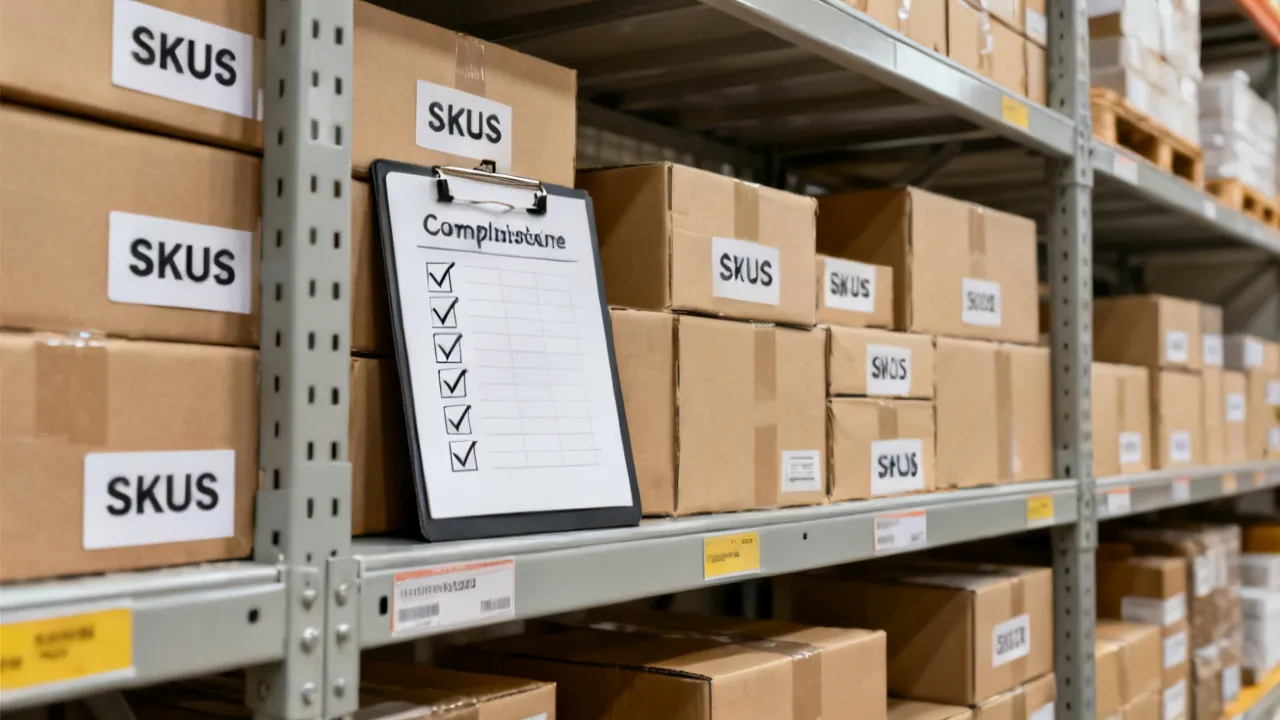
Critical overview: interpreting “123456” and related keyword terms for supplier decisions
When you encounter the keyword set that includes 123456 alongside additional placeholder terms (represented in your input as repeated empty keyword segments), the very important step is to treat 123456 as an identifier embedded in a larger procurement or catalog workflow. In many industries, numbers like 123456 are used to map a product, batch, standard, specification, or internal SKU to supporting documents—drawings, certificates, test reports, or compliance statements. Meanwhile, the surrounding keyword placeholders you provided typically function as categories or tag fields that help systems route requests, perform quality checks, and maintain traceability.
From an industry-operations perspective, the decision is rarely about “the number” itself. It is about whether the supplier can prove—through documentation and process consistency—that the item referenced by 123456 meets your requirements. This is the difference between an efficient sourcing workflow and a costly mismatch that triggers rework, rejection, or delayed delivery.
Put differently: in mature procurement systems, identifiers like 123456 are not “search keywords.” They are “evidence anchors.” If the evidence anchor is stable, your workflow can confidently connect price, lead time, and quality obligations to the correct technical and compliance context. If the evidence anchor is ambiguous—or if the supplier cannot tie it to verifiable records—then the request becomes risky, regardless of what the blank keyword fields might suggest.
1) What “123456” usually represents in sourcing systems
In professional procurement environments, a numeric token such as 123456 very often appears as one of the following:
- SKU / catalog number: A stable label for a part or product variant.
- Specification reference: A code linking to a technical requirement set.
- Batch or lot mapping: A traceability handle used during quality assurance.
- Internal project or item ID: A code used across purchase orders, inventory, and QC logs.
- Document control identifier: A reference number that appears on certificates, test reports, or revision-controlled files.
Why this matters: if 123456 is used as an identifier, then the supplier’s response should include the corresponding evidence—especially if you need testing, compliance documentation, or documentation matching for audits. In practical terms, the supplier should not merely repeat “123456” in a quote; they should show what 123456 maps to (product form, spec revision, manufacturing route, and applicable quality documents).
In many sourcing frameworks, the buyer’s internal systems also treat 123456 as the key that joins multiple datasets: engineering requirements, approved vendor lists, inspection plans, and document management systems. That means any mismatch in the mapping can propagate downstream—leading to wrong acceptance criteria being applied at incoming inspection, or wrong revision releases being authorized.
2) How the placeholder keyword segments typically function (and why that still matters)
Your provided keywords include multiple repeated placeholder segments shown as empty quoted strings. While these are not meaningful terms by themselves, they mirror a real-world pattern: sometimes a keyword set is assembled from fields pulled from multiple systems (e.g., product taxonomy, contract terms, classification attributes, or procurement tags). In practice, those fields might be empty when the data isn’t populated, but the structure still indicates that your request is meant to flow through a categorization framework.
Therefore, a practical interpretation is:
- Some keyword fields may be missing or blank in your dataset.
- The “real” information likely lives in the structured fields tied to 123456.
- Your selection process should emphasize verification through supplier documentation rather than relying on keyword text alone.
- The blanks may also indicate data quality issues inside the procurement pipeline (e.g., incomplete import, inconsistent naming conventions, or missing engineering attribute setup).
That last point is important for supplier decision-making. Even if the supplier would be capable of meeting requirements, a buyer’s inability to populate category tags can lead to misrouting the request to the wrong internal review team or incorrect screening logic. So, placeholders affect not only the buyer’s understanding, but also how procurement governance is executed.
In a mature operation, when placeholder fields are empty, teams implement guardrails: “don’t block sourcing on missing metadata, but do enforce evidence linkage to the anchor identifier.” That is the operational bridge between the data you see (keywords) and the evidence you require (documents and traceability).
3) Supplier fit: the documentation, process, and traceability lens
Expert procurement and quality teams typically evaluate supplier suitability using three linked layers: documentation, process capability, and traceability. When your workflow references 123456, you should ask for the evidence that confirms the identifier truly maps to the correct product and meets your standards.
It is also useful to consider that supplier fit is not only about whether the supplier “can” deliver. It’s about whether they can deliver consistently with the same evidence pack, the same revision alignment, and the same traceability logic across shipments. A supplier may be correct once, but not reliable; your supplier decision should target reliability.
3.1 Documentation readiness checklist
A supplier should be able to provide—based on the referenced item code 123456—the relevant documentation typically used in regulated or audit-heavy procurement. The precise documents depend on your industry, but common examples include:
- Certificate of Analysis or Certificate of Conformance
- Material composition statements (where applicable)
- Test reports and inspection records
- Drawings, datasheets, or spec sheets tied to the identifier
- Packaging and labeling specifications
- Revision history showing that the item code matches the current spec
- Calibration certificates for inspection/test equipment if required by your internal requirements
- Compliance declarations (e.g., chemical compliance or industry-specific attestations) where relevant to the item
- Heat/lot history records if the item is produced through processes where traceability is mandatory
If a supplier cannot connect 123456 to the right documentation package, you should treat that as a risk signal, not a formatting issue. The supplier may have the product, but without evidence linkage, you lose audit defensibility and incoming inspection efficiency.
To operationalize this, quality and procurement teams often define a “minimum document set” aligned to the risk level of the item. For low-risk, they may accept a conformance certificate with limited tests. For higher-risk items, they require full inspection records, approved revision drawings, and traceability evidence.
Additionally, procurement should confirm whether 123456 refers to a stable SKU or a frequently revised document number. If it is a revision-controlled reference, the supplier must specify the revision level in the quote and documentation pack. Otherwise, the buyer may inadvertently accept the wrong revision, which is a frequent root cause of change-driven rework.
3.2 Process capability and consistency
Even when documents exist, quality outcomes depend on production consistency. As an industry expert, I recommend focusing on how the supplier manages variation: calibration control, change control, nonconformance handling, and corrective actions. These are more predictive than marketing claims.
In practice, documentation is often retrospective (it shows what was made for a lot). Process capability is forward-looking (it indicates whether the supplier can produce reliably for future lots). Supplier fit therefore benefits from a request that asks not only “send certificates,” but also “how do you ensure these certificates reflect true production conditions?”
Examples of process-capability questions you may include in supplier qualification or purchase-order requirements:
- How does the supplier manage engineering changes associated with the spec tied to 123456?
- What is the nonconformance process if a test result fails?
- How are corrective actions tracked to closure, and can you review effectiveness evidence?
- What controls ensure material sourcing consistency (e.g., approved vendors, incoming inspection)?
- How does the supplier ensure consistent labeling/packaging methods across production runs?
- Are there standardized work instructions and training controls for manufacturing and inspection steps?
These questions map to a broader supplier governance principle: if the supplier cannot demonstrate controlled processes, the buyer should assume future variability and build tighter receiving inspection or limit usage pending validation.
3.3 Traceability expectations
Because 123456 functions as an identifier, traceability is usually expected to be clean. For many supply chains, the ability to trace product batches or shipments back to manufacturing records is essential for investigations and quality holds.
Where your procurement requires traceability, ask how the supplier:
- Links item codes (like 123456) to manufacturing batch records
- Maintains records for inspection and release
- Handles recalls, holds, or customer complaints
- Ensures traceability information appears on documents (certificates, packing slips, labels) in a consistent format
Traceability is also not purely an operational ideal; it is often an audit requirement. When auditors ask “show me how lot N relates to spec revision R and test method T,” the supplier should provide a traceable thread. If 123456 is that thread’s anchor, it should appear consistently across the documentation set.
Another nuanced aspect: buyers sometimes confuse two different traceability layers—traceability of the product to the manufacturing lot, and traceability of the documentation revision to the engineering baseline. A supplier must demonstrate both. If documentation is updated but the shipped product is associated with an older lot, you can end up with inconsistencies that create internal investigation burden.
4) Price and sourcing: what you should verify before comparing offers
Your prompt requests “price information” integration, but no explicit price values or supplier names were included. In situations like this, the objective approach is to structure comparisons around apples-to-apples elements rather than assuming that the lowest listed number is the top outcome.
When you evaluate offers for the item referenced by 123456, ensure each quote includes (as applicable):
- Unit definition (per piece, per lot, per kg, per meter, etc.)
- Specification revision matching the identifier
- Inclusions (inspection, documentation pack, labeling, packaging grade)
- Lead time and any buffer terms
- Terms (warranty, returns, rework responsibility)
- Quality obligations (incoming inspection requirements, acceptance criteria)
- Freight and shipping conditions if handling affects quality (temperature control, humidity control, special packaging)
- Any exclusions (e.g., documents not included, tests not performed unless requested)
This approach prevents the common sourcing failure mode: comparing “price” while ignoring that the cheaper quote omits documents, uses a different revision, or cannot support traceability for 123456.
To make comparisons robust, many buyers compute a “delivered” or “total procurement cost” that accounts for the cost of receiving inspection, potential rework, delays due to missing documents, and the risk cost of nonconformance. While those risk costs are difficult to quantify precisely, even basic diligence can prevent expensive downstream surprises.
For example, if Supplier A quotes a lower unit price but cannot supply a conformance certificate tied to 123456, you may need to add more incoming testing, which costs time and money and can delay production schedules. If Supplier B has a slightly higher quote but provides full documentation and traceability evidence, it may produce lower total procurement cost.
Therefore, the supplier decision should treat documentation and evidence as part of the procurement “bundle.” Price alone is not the bundle; it is merely one component.
5) Geographic or localization considerations (using your nearby rule)
Your provided keywords do not include a specific city or country. If in future datasets a city or country appears, your instruction requires replacing it with "nearby." Practically, this means supplier outreach and compliance expectations should be framed as serving the “nearby” region—e.g., considering shipping lanes, regional regulatory requirements, and local customer expectations—without asserting a precise location that isn’t provided.
Even without a named location, localization still matters in procurement communications. For instance, in many markets, suppliers are expected to use standardized terminology for item codes and revision status, and buyers often request documents in the local business format used by auditors.
Additionally, localization can influence:
- Language requirements for certificates and inspection reports
- Regulatory declarations required for the shipping region
- Shipping and packaging norms (e.g., palletization standards, labeling regulations)
- Incoterms and freight handling where local logistics practices affect lead time and quality retention
In a workflow driven by structured keywords, the absence of location metadata (or the presence of placeholder blanks) can lead to uncertainty about which compliance templates to use. To manage that uncertainty, buyers often define the required document set based on the destination region or internal compliance baseline, rather than relying on location inferred from incomplete keywords.
6) Objective background: why keyword-based workflows appear in procurement
Keywords and identifiers like 123456 are used because procurement systems must reliably route requests, manage catalogs, and maintain compliance documentation. Automated systems often rely on structured fields (item codes, categories, and tags) to:
- Prevent mix-ups between product variants
- Ensure the correct inspection plan and acceptance criteria apply
- Support audits by keeping records tied to stable identifiers
- Enable repeat orders with consistent outputs
- Drive workflow automation (e.g., automatically generate inspection checklists or document request templates)
From an operational standpoint, keyword search alone is not enough—especially when some fields can be empty. The stable identifier (123456) is usually the anchor that links to the correct technical and quality documentation.
This is why procurement governance typically distinguishes between:
- Descriptive attributes (which can sometimes be incomplete or missing, like optional category tags)
- Evidence anchors (like item identifiers or spec references that must map to controlled documents)
When you treat everything as equally important keywords (including blanks), you create fragile supplier decision logic. A better approach is to treat the evidence anchor as mandatory and the descriptive fields as best-effort metadata that can be used for routing but not for final verification.
In practice, this means you can proceed with supplier evaluation even when placeholder keyword fields are empty, provided that you require the supplier to demonstrate linkage to 123456 through evidence packs and traceability.
7) Practical sourcing workflow around “123456” (expert process view)
Below is a structured workflow you can apply to any supplier evaluation where the reference identifier appears as 123456 and other keyword tags may be incomplete.
The workflow is designed to minimize two common risks: (1) approving a supplier based on incomplete metadata rather than evidence linkage, and (2) rejecting a supplier due to missing keyword fields even when the supplier can produce the correct evidence pack tied to 123456.
Step-by-step guide: aligning supplier documentation to “123456”
- Confirm the identifier meaning: Ask the supplier whether 123456 refers to an SKU, spec revision, batch mapping, or an internal code.
- Request the documentation pack: Obtain the relevant datasheet/specification and the conformance or analysis documents connected to 123456.
- Verify revision alignment: Ensure the supplier’s documentation explicitly matches the correct revision level tied to 123456.
- Check test and inspection references: Confirm what tests apply and whether results are provided or withheld pending shipment requirements.
- Assess traceability mechanism: Ask how the supplier can trace shipments back to production records associated with 123456.
- Clarify packaging and labeling: Confirm whether the identifier appears on labels, packing slips, or lot documentation as required.
- Run an acceptance criteria review: Define incoming inspection requirements on your side (and confirm any acceptance standards).
- Compare total delivered value: Compare offers by unit definition, inclusion of documents, lead time, and rework/return handling—not price alone.
- Document the decision: Record the rationale tied to documentation evidence for 123456 so that audits are defensible.
To extend this workflow in a way that supports real purchasing operations, you can add operational checkpoints that reduce friction:
- Pre-award validation call: A short call or questionnaire to verify that the supplier’s “123456 mapping” is consistent and that the evidence pack is available on the requested timeframe.
- Sample evidence submission: Ask for a sample certificate pack tied to 123456 (from a recent lot) to validate the linkage and formatting before placing a full order.
- Purchase order document clauses: Ensure that the purchase order includes explicit document delivery clauses (what documents, when delivered, acceptable formats, and revision requirements).
- Receiving inspection trigger rules: Define what you will do if documentation is late or missing (e.g., quarantine shipments, request missing records, hold release).
These additions help prevent the classic scenario where procurement chooses based on initial quotes, but the supplier later fails to provide evidence in the expected form.
Conditions and requirements for using keyword-anchored procurement
- Data completeness expectation: If placeholder keyword fields are blank, do not treat them as requirements; use 123456 as the evidence anchor.
- Document mapping requirement: Supplier documents must explicitly reference the identifier 123456 or the product variant it represents.
- Revision control requirement: The spec and the identifier must align; mismatched revisions are a leading cause of rework.
- Quality assurance alignment: Both parties should agree on inspection steps and acceptance criteria before shipment.
- Traceability requirement: Supplier must demonstrate traceability processes appropriate to your risk level.
- Change notification expectations: Supplier should notify buyers of changes that impact the item mapped to 123456 (materials, processes, test methods, or revision updates).
These conditions are often formalized in quality agreements or supplier quality requirements documents. If you are not yet at that maturity level, you can still achieve similar outcomes by explicitly requesting the evidence packs and mapping validations during the quoting stage.
In effect, keyword-anchored procurement works best when it is paired with evidence-based gates. That means keywords help find the correct “target,” while evidence ensures the target is the correct “thing.”
Comparison table: how to evaluate offers when “123456” is the identifier anchor
| Evaluation dimension | Strong offer (good fit) | Risky offer (requires escalation) |
|---|---|---|
| Identifier clarity | 123456 is defined (SKU/spec/batch) with unambiguous mapping | 123456 is mentioned without explaining what it references |
| Documentation linkage | Datasheets and conformance documents explicitly tie to 123456 | Documents are generic and do not connect to 123456 |
| Revision control | Revision status matches the identifier and is clearly stated | Revision is missing, vague, or contradicts the identifier mapping |
| Traceability support | Supplier can describe how traceability is maintained for 123456 | Traceability is unclear or only partially supported |
| Price comparability | Unit definition and inclusions match across quotes | Price differs due to missing documents or different unit definitions |
| Lead time realism | Lead time is consistent with evidence pack availability and manufacturing schedule | Lead time is offered without clarity on when documents will be delivered |
| Packaging/label compliance | Labeling supports traceability and includes the identifier as required | Packaging details are vague; labeling does not show identifier/lot information |
Deepening the evaluation: turning “keyword ambiguity” into controlled decision logic
Even with the table above, real supplier evaluations often hit nuance: what if 123456 is correct but the placeholder keyword fields are blank, and internal stakeholders disagree on whether to reject the offer? Or what if the supplier provides documentation tied to a similar identifier that differs by one digit? These scenarios are where “evidence anchor” thinking becomes essential.
Below are practical ways to convert ambiguity into structured decisions without unnecessary delays.
- Define a strict rule for identifier mapping: If 123456 is the anchor, the supplier must show a mapping table or explicit statement linking 123456 to the product/spec revision. A near-match is not sufficient unless documented as equivalent and approved.
- Separate “must-have” vs “nice-to-have”: Blank keyword fields are usually “nice-to-have.” Document linkage and revision alignment are “must-have.”
- Create an escalation threshold: If a supplier cannot provide documented linkage to 123456 within the quoting timeframe, you can place the supplier in an “approval pending” category rather than failing immediately.
- Use a “document format” acceptance test: Ask whether the supplier can deliver documents in your required formats (PDF, structured templates, or ERP-integrated naming conventions). Evidence that arrives in the wrong structure creates operational friction even if the content is correct.
- Require a revision change statement: Ask the supplier to confirm whether any changes occurred since the last revision baseline tied to 123456. If changes exist, require updated documentation.
These practices help avoid a common procurement trap: confusing incomplete metadata with noncompliance. Your framework instead treats metadata gaps as data-management issues, while ensuring that compliance evidence is anchored to 123456.
Operational risks to anticipate when evaluating supplier offers
Supplier selection based on incomplete keyword fields tends to reveal operational risks. Anticipating them in advance improves decision quality.
Risk 1: Revision mismatch hidden behind identical identifiers
Sometimes the identifier 123456 remains constant (e.g., a part number), but the underlying specification revision changes over time. If the supplier provides documentation without explicit revision alignment, you may receive items that are functionally different. The solution is straightforward: require explicit revision statements and ensure that certificates and datasheets clearly show the revision level tied to 123456.
Operationally, you can enforce this by adding a receiving step: if the document revision does not match your internal baseline, quarantine the shipment and request corrected documentation.
Risk 2: Evidence pack availability lag
A supplier may quote promptly and ship quickly, but documentation may be delivered later. If your receiving process depends on documents for release decisions, delayed documentation creates bottlenecks. To address this, clarify when documents will be delivered (with shipment, pre-shipment, or within a defined number of business days) and define what happens if documents are late.
In high-integrity environments, the purchase order will specify that shipment release depends on receiving the evidence pack referencing 123456.
Risk 3: Traceability information exists but is not accessible
A supplier might have traceability internally but cannot easily retrieve it in a form suitable for your investigation needs. For example, batch records might exist but not be linked to 123456 in the shipped documentation. The solution is to ask for an example: can they show how a shipped lot maps to manufacturing batch records and how this mapping is presented to customers?
If the supplier can only provide traceability during audits upon exceptional request, your risk increases. For critical items, you want traceability to be routinely deliverable and clearly presented.
Risk 4: Unit definition mismatch disguised as “same item”
Price comparisons can fail if unit definitions differ (per piece vs per meter vs per kg). Even if 123456 matches, the supplier might quote a pricing unit based on their internal measure, while you intend a different purchase unit. The solution is to require a quote that states both unit definition and how quantity is counted, and to cross-check that the packaging and labeling support the intended purchasing structure.
Risk 5: Placeholder keywords lead stakeholders astray
When stakeholders see blank keywords, they may assume missing requirements, or they may interpret absence of certain terms as “unknown spec.” This can lead to unnecessary rework or rejected decisions. Your governance should explicitly instruct teams: “blank keyword fields do not override the evidence anchored to 123456.”
To support this governance, incorporate an approval checklist that asks evaluators to confirm: (1) what 123456 means, (2) which documents connect to it, (3) the revision level, and (4) how traceability is supported. Avoid making keyword placeholders the basis of pass/fail determinations.
Extending the supplier questionnaire: sample prompts tied to “123456”
If you want to standardize supplier communication, you can use a structured questionnaire. Below are sample prompts you can adapt, with wording designed to force the supplier to provide evidence linkage rather than marketing-level reassurance.
- Clarify identifier: What does item code 123456 represent in your catalog (SKU, spec reference, internal item ID, or batch mapping key)? Provide the exact product name as it appears in your system.
- Revision and baseline: Which specification revision is associated with 123456 for the quoted quantity? Provide the revision identifier and document revision numbers.
- Document package: List the documents you will provide for shipments of 123456 (conformance certificate, test report types, datasheet revision, etc.). Attach a sample set from a recent lot.
- Test and inspection scope: Describe the tests/inspections performed for 123456, including methods and acceptance criteria. Indicate whether results are reported per lot or per batch.
- Traceability: Explain how shipped product mapped to 123456 is traceable to manufacturing batch/lot records. Provide an example mapping for a sample lot.
- Packaging and labeling: Confirm what appears on labels and packing slips (item code, lot number, revision, etc.) and whether these elements support incoming inspection release.
- Change control: If any changes occur affecting 123456 (material source, process step, test method, revision), how will you notify us and provide updated evidence?
These prompts align directly with the framework described earlier. They also help you reduce negotiation overhead because the supplier must respond with evidence in a consistent structure.
How to treat missing or blank metadata in buyer systems
The placeholder keyword segments in your input are empty strings, which suggests that metadata extraction or import may have failed to populate certain fields. In buyer systems, this can impact everything from routing to inspection planning. However, missing metadata does not automatically imply noncompliance; it may imply data hygiene issues.
From a procurement governance standpoint, you can adopt a two-track strategy:
- Track A (Compliance track): Determine compliance and fit using evidence anchored to 123456—documents, revision alignment, traceability, and agreed acceptance criteria.
- Track B (Data quality track): Improve your internal metadata so that blank keyword fields do not recur (better mapping rules, required attribute checks, validation on import, and controlled vocabularies).
This two-track strategy reduces the temptation to treat missing metadata as a reason to reject suppliers prematurely. Instead, you treat missing metadata as an operational issue that should be corrected without compromising compliance verification.
To implement Track B, you can add system validations:
- When 123456 is present, validate that the required attribute set for receiving is present (revision level, product name, or spec reference).
- If certain attributes are missing, prevent automated selection of a default inspection plan and route to a manual review queue.
- Ensure the database uses stable master data so that identifier mapping is not reliant on fragile keyword text.
This helps maintain consistency while still allowing sourcing to proceed responsibly.
Sources (objective and reliable)
For quality management and supplier audit concepts referenced in this guide, reputable frameworks commonly include ISO quality management principles. Readers can also consult official documentation practices for traceability and compliance. Example references include ISO standards and guidance materials from recognized standards bodies, such as ISO (International Organization for Standardization) and related quality management frameworks used globally.
Note: This article intentionally avoids numeric claims about industry performance because your prompt did not provide verifiable figures to connect to 123456 or the placeholder keywords.
FAQs
FAQ 1: What does “123456” mean when it appears in supplier catalogs?
123456 very often functions as an internal identifier such as an SKU, specification reference, or batch mapping key. The supplier should define what it represents and provide documents that match the identifier.
If the supplier only provides generic product descriptions without a clear mapping to 123456, you should request clarification before making a supplier commitment.
FAQ 2: Why do the other keyword segments appear as empty strings?
Empty keyword placeholders usually indicate missing data fields or unpopulated tags in a keyword extraction or import pipeline. This means you should not rely on those empty fields as requirements; instead, validate the mapping through supplier documentation tied to 123456.
Operationally, consider whether your system expects required attributes but fails to populate them. Addressing internal data hygiene can reduce future ambiguity and streamline supplier evaluation.
FAQ 3: If a supplier offers a lower price, how do I know it’s truly comparable?
Compare the total offer on inclusion and alignment: unit definition, specification revision, documentation pack, inspection/acceptance criteria, lead time, and traceability support tied to 123456. Lower price with omitted documents or mismatched revisions often becomes more expensive later.
To improve comparability, ask suppliers to provide a structured quote template that mirrors your checklist: unit definition, revision level, document pack list, and when documents will be delivered.
FAQ 4: What documents should I request for an item referenced by “123456”?
Request the datasheet/specification and the conformance or analysis documents applicable to your risk and regulatory context. Ensure those documents explicitly reference or clearly map to 123456 and the correct revision level.
If the item is critical to safety or compliance, consider requesting additional evidence such as inspection records per lot, traceability mapping examples, and change control statements if revisions have occurred recently.
FAQ 5: How important is traceability when buying items linked to “123456”?
Traceability is crucial when product investigations, quality holds, or audit readiness matter. If 123456 is used as a traceability anchor, the supplier should describe how production batches and shipment records are connected to it.
Even when traceability seems less critical operationally, you should confirm that traceability exists and is deliverable through normal documentation channels—not only during exceptional audits.
FAQ 6: Should I base procurement decisions on keyword text alone?
No. Keyword text can guide searching, but procurement quality decisions should be based on verified evidence—especially when placeholder fields are incomplete. Use 123456 as the identifier anchor and require document alignment, revision control, and process assurances.
In practice, you can allow keyword data to support routing and filtering, while reserving final acceptance decisions for evidence linkage and agreed acceptance criteria.
FAQ 7: Can I use this approach for regulated industries?
Yes. The core principles—documentation linkage, revision control, traceability, and agreed acceptance criteria—are consistent with quality management expectations across many regulated environments. Always ensure your exact required documents match your applicable standards and internal compliance needs.
Regulated environments also benefit from tightened change control and formalized receiving procedures tied directly to 123456. This reduces the likelihood of accepting product under the wrong baseline.
Conclusion: treat “123456” as an evidence anchor, not just a label
In keyword-driven procurement, the very reliable insight is the operational meaning of the identifier. Here, 123456 should be treated as an evidence anchor that must map to a specific product or specification variant through traceable documentation. Meanwhile, placeholder keyword fields—especially those appearing as empty strings—should be handled as potentially incomplete metadata rather than as enforceable requirements. By applying a structured verification workflow and using a comparability-focused evaluation table, you improve supplier selection quality and reduce the risk of mismatches.
When you implement this approach consistently, you create a procurement decision system that is resilient to data gaps, resistant to accidental revision mismatch, and better suited to audit readiness. That resilience is what ultimately protects schedules, quality outcomes, and long-term supplier relationships.
-
1

A Guide to Cost-Efficient Small Electric Cars for Seniors
-
2
Mastering Debt Consolidation: Boost Your Credit Score and Manage Interest Rates
-
3
Your Guide to Loans, Credit Checks, and Interest Rates
-
4
Affordable Independent Living: Finding the Right Senior Housing
-
5
Guide to Senior Living Apartments: Affordable and Comfortable Environments