Xxxvldlo Buyer’s Guide for Suppliers and Pricing
This guide explains how to evaluate Xxxvldlo supply options by focusing on pricing logic, supplier credibility, and practical sourcing steps. It provides objective background on keywords like “Xxxvldlo” and related procurement considerations, outlining what buyers should verify before committing to an order. The approach supports consistent decision-making across markets and contracts.

1) Why this Xxxvldlo guide matters for sourcing decisions
If you’re considering Xxxvldlo as part of your procurement plan, the most reliable way to move forward is to compare supplier capability, pricing structure, and delivery conditions before you place an order. In practice, buyers often treat price as the deciding factor; however, for products associated with Xxxvldlo and related procurement terms (including the additional keyword tokens you provided), the “true cost” usually includes packaging, lead time, quality assurance evidence, documentation, and any compliance-related handling. This guide helps you evaluate these elements objectively—without relying on assumptions.
Because the keywords you provided include fragments (“'' '' ''” and “'' ''”) and a nonstandard term “Xxxvldlo”, the safest approach is to treat them as categorical identifiers used in sourcing and cataloging—i.e., terms that your internal systems might use to describe an item family, variant, or procurement category. Where the exact product specification is not stated, the guidance focuses on the buying process that applies across many industrial and supply-chain contexts.
It’s worth emphasizing why this matters even before you request quotes. Many procurement issues do not originate in manufacturing failures—they originate in early-stage ambiguity: unclear scope, mismatched variant codes, acceptance criteria that were never fully defined, or documentation that is assumed rather than contracted. When Xxxvldlo appears as a label rather than a full description, ambiguity increases. Suppliers may interpret the category differently, especially if the term maps to an internal SKU hierarchy or a family of configurations. The result is a quote that looks comparable but is not comparable. This guide is designed to prevent that situation.
To make the point concrete, consider a typical workflow in which a buyer requests quotes for “Xxxvldlo” and two suppliers respond quickly with unit prices. If Supplier A includes full test certificates and lot traceability documentation, while Supplier B includes only a basic shipping note, the buyer will experience the difference later—at receiving time, during audit preparation, or when investigating a field issue. Similarly, if Supplier A offers packaging that is fit for your receiving environment (e.g., moisture-resistant protection, shock protection, or labeling that matches your warehouse scanning process), their shipping cost can be higher but their damage/hold rate lower. Again, these differences become visible only when you’re already committed.
That’s the core reason this guide matters: it encourages disciplined comparison across capability, process evidence, and conditions of delivery. The outcome is better sourcing decisions, fewer nonconformance events, reduced time lost to rework, and fewer surprises when invoices, documents, or inspections are reconciled.
2) Quick decision checklist: what to confirm about price and supply
- What you’re actually buying: confirm the exact variant or specification tied to Xxxvldlo in the supplier’s quote, including any tolerances, materials, grade, or configuration details.
- How the price is built: ask whether the quote includes packaging level, labeling, testing/inspection, documentation, and shipping mode.
- Supplier evidence: verify quality assurance records, traceability practices, and—when relevant—certifications recognized in your industry.
- Lead time realism: check processing time separately from transit time, especially if the supplier is sourcing components.
- Risk controls: clarify returns, batch mismatch handling, and the process for resolving disputes.
To make the checklist more useful, use it not only during vendor selection but also during quote comparison. For each quote line item, you should be able to point to the “source” of each cost element: Which portion is base manufacturing? Which portion pays for inspection and documentation? Which portion reflects packaging and freight responsibility? If a supplier cannot explain these elements, treat that as a risk indicator rather than simply a conversational gap. Buyers who have repeated sourcing problems often discover that the real issue is not that suppliers are dishonest, but that suppliers are answering the question they were asked—while the buyer’s procurement question lacked sufficient precision.
Another practical habit is to maintain a short internal “requirements pack” that you reuse across RFQs for Xxxvldlo. Your pack should include: the technical brief, any drawings or specification references, required certificates/test documents, packaging requirements, labeling/marking requirements, and your preferred delivery/incoterms assumptions. When you send identical packs to multiple suppliers, you reduce interpretation drift and make apples-to-apples comparison possible.
3) Industry context: why pricing for Xxxvldlo-linked procurement can’t be compared superficially
In most procurement environments, “price” is not a single number—it is the outcome of multiple inputs: manufacturing costs, logistics, quality controls, documentation effort, and the supplier’s own risk exposure. For categories identified by terms like Xxxvldlo, the difference between two quotes can stem from how each supplier handles:
- Quality assurance: whether inspection is in-line, end-of-line, or sample-based; and whether results are shared with buyers.
- Traceability: whether units can be traced to lot/batch records (important for maintenance, audits, and warranty claims).
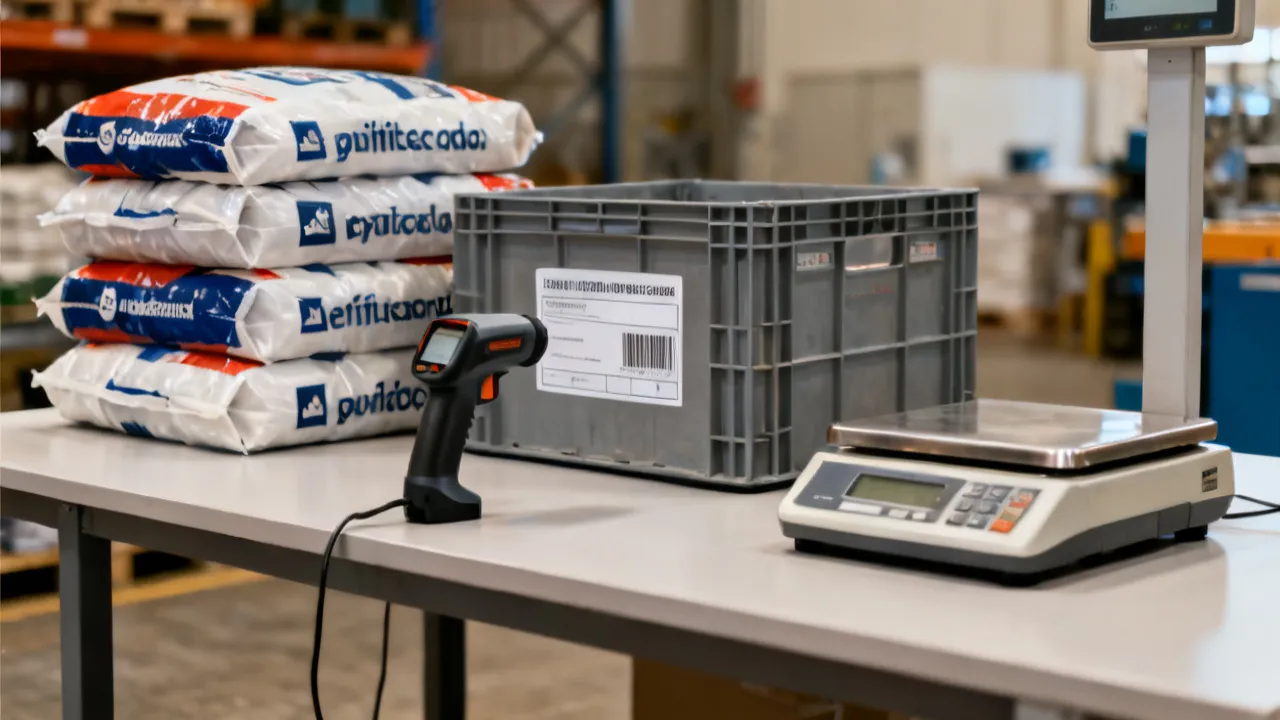
- Packaging and handling: whether packaging prevents damage in transit and whether it meets customer receiving requirements.
- Documentation: certificates, test reports, origin statements, and labeling details needed for your receiving workflows.
- Freight assumptions: lane-specific costs, incoterms, and whether customs/fees are included or excluded.
To ground this approach in credible sourcing practice, it’s useful to align your comparisons with recognized procurement principles. For example, supply-chain risk and resilience are widely covered by major institutions; buyers can use these frameworks to structure diligence and reduce decision volatility. The U.S. National Institute of Standards and Technology (NIST) and related standards bodies emphasize structured risk management and evidence-based controls in operational settings (see NIST’s general guidance on risk management and related standards work). In addition, industry bodies like ISO also underpin quality and documentation systems (e.g., ISO 9001 is widely used as a quality management benchmark). These sources support the idea that supplier verification and documented process control matter as much as the quoted unit price.
In many organizations, “surface-level price comparison” is popular because it feels efficient—especially when procurement teams are under timeline pressure. But this efficiency is deceptive because it trades off against later labor and operational costs. Even when the cheapest supplier wins, the buyer may pay more in indirect costs such as: additional receiving inspection, delays while documentation is chased, rework due to packaging mismatch, expedited freight for replacements, or legal/compliance overhead in disputes. These are not always captured in the initial RFQ comparison, particularly if the cost model is simplistic.
Therefore, for Xxxvldlo-linked procurement, a better mental model is “total cost of compliance + total cost of quality + total cost of delivery reliability.” Unit price is only one component. You should also account for how likely a supplier’s process is to reduce defects, returns, and nonconformances. That likelihood can sometimes be inferred from evidence quality (e.g., whether traceability is complete and whether inspection results are routinely shared) rather than from marketing statements.
It is also helpful to recognize that certain procurement categories have higher documentation and compliance burden than others. When Xxxvldlo functions as a label within an industrial context, it often implies that buyers expect documentation to match their internal standards. If a supplier treats documentation as optional, then the “price savings” may simply shift work and risk to you. The buyer’s objective is to ensure documentation is included in the commercial terms so it is available when needed.
4) Supplier credibility: how to vet sellers offering Xxxvldlo
When evaluating suppliers linked to Xxxvldlo, objective due diligence is essential. The aim is not to “assume quality,” but to verify that the supplier has a repeatable system for producing and shipping the required item family.
Supplier credibility has multiple layers. It includes technical capability (can they manufacture to the spec), process credibility (can they do it consistently), and commercial reliability (can they deliver on time with the paperwork they promise). Buyers often focus only on technical capability when screening suppliers. But in real sourcing events, the commercial reliability and documentation capability often determine whether the procurement transaction runs smoothly.
When Xxxvldlo is not a universally defined specification but rather an identifier used within your catalog system, supplier credibility also involves interpretation accuracy. In other words: does the supplier understand what “Xxxvldlo” corresponds to in your requirement documents, and do they confirm that understanding in writing?
4.1 Evidence you should request
- Specification alignment: a detailed datasheet or technical description showing the exact parameters associated with Xxxvldlo.
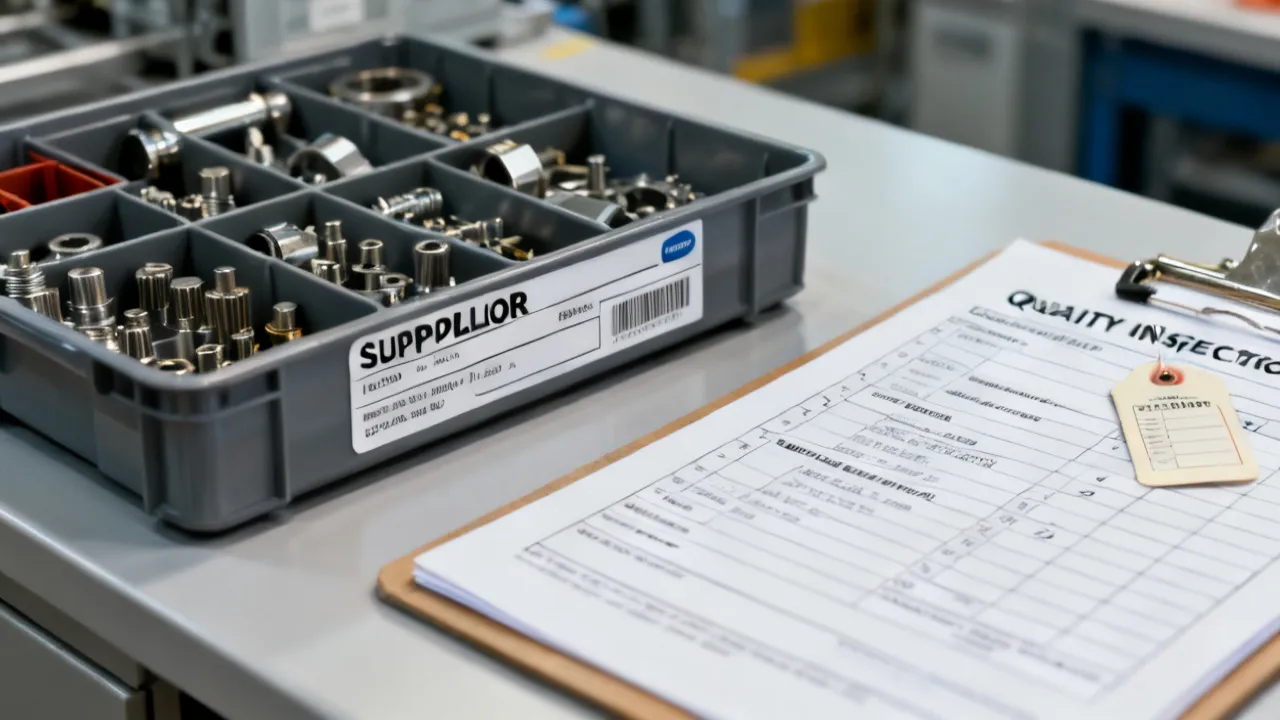
- Quality documentation: inspection reports, batch/lot details, and any test results that correspond to the item specification.
- Traceability method: how lots are identified, stored, and matched to orders.
- Packaging standard: what packaging is used and how it is protected for shipping.
- Service terms: warranty/guarantee policy and the process for handling defective or nonconforming items.
To expand “evidence” beyond documents alone, consider asking for representative examples. For instance, request anonymized or redacted samples of certificates and labels for prior orders that used the same Xxxvldlo identifier. This helps verify not just whether certificates exist, but whether they are formatted consistently and whether they include all fields your receiving or compliance teams require. Similarly, ask how traceability data is created and stored. A supplier can claim “we provide lot IDs,” but you need to know whether the lot ID is actually mapped to each unit shipped, or whether it’s only a general shipment batch reference.
Also consider “process evidence” in terms of sampling plans and inspection levels. For some procurement categories, end-of-line testing may be mandatory. For others, sample inspection may suffice if it’s consistent with your quality requirements. The correct approach depends on your internal acceptance model. The key is to ensure suppliers align with your acceptance criteria rather than with their default practices.
4.2 Credibility signals you can assess without hype
- Consistency of documentation: do quotes and documents match each other and align with the product specification?
- Clarity of responsibilities: who inspects, who signs off, and how disputes are handled?
- Contract discipline: do the supplier’s terms clearly state acceptance criteria and delivery responsibilities?
- Communication quality: suppliers who can explain variations in lead time, freight assumptions, and inspection scope tend to be easier to manage long-term.
Credibility signals should also include “responsiveness under clarification.” When you ask a careful question—e.g., “Does the quote include packaging suitable for warehouse receiving scan labels?”—how does the supplier respond? A credible supplier provides a direct answer, confirms the commercial impact, and documents the agreement. A less credible supplier may answer vaguely or only after multiple follow-ups. While some delays are normal, repeated ambiguity in procurement questions should be treated as a warning sign.
In addition, watch for evidence of “internal alignment” within the supplier’s own organization. If the technical team confirms one scope but the commercial team quotes differently without explanation, you may be facing internal process fragmentation. That often shows up during contract execution: one team promises documentation and another team treats it as optional. Clarifying scope in the RFQ response and contract terms helps avoid such breakdowns.
5) Price analysis for Xxxvldlo: understanding components of cost
To compare price across vendors offering Xxxvldlo, separate the quote into meaningful components. Doing so reveals why two suppliers might quote different numbers while both “seem” to match the requirement.
Price analysis is not simply an accounting exercise. It is a decision tool. If you can explain why a quote is higher (e.g., higher documentation scope, full inspection, packaging that reduces damage risk), then you can evaluate whether that higher cost buys you something valuable. If you cannot explain the difference, you should treat the price comparison as unreliable.
5.1 Common quote components
- Base product price: raw materials and manufacturing costs.
- Testing/inspection effort: time and resources used to meet the agreed acceptance criteria.
- Packaging: labeling, protective materials, and whether it is optimized for your receiving environment.
- Documentation: test certificates, traceability records, or compliance paperwork.
- Shipping: transport mode, insurance, and any handling charges.
- Payment and contract terms: costs embedded in payment schedules, credit terms, or minimum order constraints.
To make the component breakdown usable in a sourcing process, you should request a quote in a structure that mirrors your evaluation framework. For example, request the supplier to fill a line-item template that includes: unit price, inspection/doco fee, packaging fee, freight cost, and any incoterm or responsibility changes. If the supplier cannot or will not provide that structure, you can still perform breakdown analysis by asking targeted questions—but the effort increases and the uncertainty remains.
Some buyers also incorporate “commercial risk pricing” implicitly. A supplier might offer a lower unit price but require nonstandard acceptance or replacement terms. If those terms increase your risk of downtime, the total cost is higher than the unit price implies. Therefore, when analyzing price, consider not only what you pay but also what you’re agreeing to in terms of acceptance and recourse.
5.2 A practical “apples-to-apples” approach
Before you request final approval, ask every supplier to confirm the same comparison set:
- same Xxxvldlo variant/specification;
- same inspection scope and acceptance criteria;
- same packaging requirements;
- same delivery term assumptions (e.g., where responsibility shifts for freight);
- same lead time measurement method (processing vs transit).
This approach is consistent with standard procurement best practice: define requirements, define acceptance, then compare cost under identical conditions. Doing otherwise often leads to “hidden deltas” that appear only after delivery.
Hidden deltas often show up in the real-world sequence of events after the purchase order. For instance, documentation may arrive in a different timeframe than promised, requiring manual checks and escalating compliance risk. Packaging may be adequate for general shipping but not adequate for your warehouse practices (e.g., insufficient labeling for scanning, or inadequate protection for local climate conditions). Inspection scope may meet the acceptance criteria, but if the supplier uses a different inspection methodology, your internal teams may not accept the evidence. Apples-to-apples comparison prevents these issues by forcing alignment on methodology, not just on outcomes.
Another useful tactic is to define a “quote equivalence checklist” and attach it to your RFQ evaluation notes. After quotes come in, document whether each supplier confirmed all five comparison set items. If a supplier does not confirm, ask whether they can adjust the quote or whether you should treat their offer as non-equivalent.
6) Step-by-step sourcing process for Xxxvldlo (from brief to order)
The section below is designed for buyers who want a structured workflow. It assumes that “Xxxvldlo” is used as a procurement identifier for a product family and that the exact scope will be confirmed in your technical documents.
A step-by-step sourcing process reduces reliance on institutional memory. It turns “tribal knowledge” into documented workflow. This matters particularly for categories like Xxxvldlo where the identifier may be interpreted in different ways by different suppliers. When teams rotate or when procurement volume changes, a repeatable process helps maintain quality in purchasing decisions.
- Clarify your requirement: write a short technical brief that defines the Xxxvldlo variant, expected performance, and any constraints (size, material, grade, tolerance, or compatibility).
- Define acceptance criteria: list what makes an order “pass” (inspection method, required documentation, and how nonconformance is handled).
- Collect supplier baseline info: request product datasheets and quality evidence; compare whether the supplier can produce and document the exact variant.
- Request standardized quotes: send every supplier the same requirements pack so their price reflects comparable scope.
- Evaluate pricing logic: break the quote into product, inspection, packaging, documentation, and shipping assumptions.
- Risk-check the timeline: confirm whether lead time includes production scheduling and inspection; ask for updates if there are upstream dependencies.
- Negotiate terms: specify responsibilities, delivery milestones, and the acceptance procedure on receipt.
- Place a controlled order: align purchase order details with the agreed documentation and the exact Xxxvldlo specification.
- Receive and verify: inspect upon arrival against acceptance criteria, verify documentation, and record lot/traceability details.
- Close the loop: log outcomes to refine the next procurement cycle.
To enhance this workflow, add a “pre-order alignment checkpoint.” Before you send the purchase order, schedule a short alignment call with the supplier to confirm: the exact variant mapping, documentation list, packaging format, inspection/acceptance plan, and shipping schedule. Then record the alignment in an email or contract addendum. This checkpoint prevents a common issue: suppliers sometimes interpret RFQ language differently from what the buyer intended. When you confirm alignment in writing, the dispute risk decreases.
Also consider the “receiving readiness” step. Even if the supplier delivers perfectly, the procurement process can still fail operationally if your receiving team is not ready to validate documentation, verify labeling, and record traceability. For Xxxvldlo items, the receiving team should know where lot IDs appear, what fields in certificates match your internal system, and which nonconformance triggers replacement vs credit.
Finally, the closing loop step should produce actionable procurement insights. Log not just whether items were acceptable, but also: how fast documents arrived, whether packaging caused any damage incidents, whether lead time was reliable, and whether communication about changes was timely. Over time, this can feed a supplier scorecard that improves future sourcing decisions for Xxxvldlo.
7) Location and localization note (“nearby” rule)
You included city/country placeholders in the instruction, but no explicit {city} or {country} values were provided inside the keywords. Therefore, no geographic substitution is required. If you later share specific city/country terms in the keywords, this article can be localized using the rule to replace them with “nearby.”
While this note is brief, it matters operationally if your procurement process includes region-specific compliance or receiving requirements. Some categories require additional labeling, local language documentation, or customs-origin statements. If Xxxvldlo refers to an item family that is shipped cross-border, you may need country-specific documentation and freight handling. The “nearby” localization rule can be used later when you have real geography terms to incorporate.
8) Comparison table: requirements, evidence, and conditions for Xxxvldlo sourcing
The table below provides a structured way to compare supplier responses for Xxxvldlo—without relying on marketing claims. (No links are included, as requested.)
| Evaluation area | What to ask | What “good” looks like | Conditions/requirements |
|---|---|---|---|
| Specification match | Which exact Xxxvldlo variant/spec is included? | Quote aligns with your technical brief and documents | Written spec confirmation before purchase order issuance |
| Inspection scope | What inspection is performed and how are results shared? | Documented acceptance criteria and traceable results | Clear pass/fail criteria and agreed sampling method |
| Traceability | Can you trace units to lot/batch records? | Lot IDs are included and match shipped items | Batch/lot details included with delivery documentation |
| Documentation | Which certificates/test reports/origin statements are provided? | Receivable documentation matches procurement requirements | Documents delivered with goods or per contractual timeline |
| Pricing transparency | Does the quote include packaging, inspection, and freight assumptions? | Breakdown supports apples-to-apples comparison | Standardized quote template across vendors |
| Lead time | What portion is production time vs transit time? | Realistic timelines with update triggers | Defined delivery milestone and contingency plan |
| Nonconformance handling | How are defects handled and what is the return process? | Clear replacement/credit process with responsibilities | Dispute resolution steps and evidence requirements documented |
To make the table even more actionable in day-to-day procurement, you can add a scoring layer. For each row, assign a simple rating (e.g., 0 = unclear/no evidence, 1 = partially aligned, 2 = fully aligned). Then require a minimum threshold to move to purchase. This prevents a supplier with ambiguous traceability or weak documentation terms from winning purely on low unit price.
Another improvement is to align the table with a controlled document flow. For example: certificates should be delivered by a specific day relative to shipment. Inspection records should include batch identifiers. Packaging labels should include purchase order number and item identifiers. If these elements are not defined, “good” is subjective and disputes become likely. Your comparison table can specify these delivery conditions so that “good” has a measurable meaning.
9) Common buyer pitfalls when comparing Xxxvldlo options
- Comparing different inspection scopes: one quote may include full inspection while another uses sample checks.
- Ignoring documentation timing: receiving goods without the promised test reports can break downstream compliance workflows.
- Not aligning packaging requirements: freight damage rates often reflect packaging decisions, not just transportation.
- Overlooking variant ambiguity: when suppliers use internal codes, buyers must map those codes to your actual specification.
- Assuming lead time is a single number: production slippage and carrier delays should be tracked separately.
These pitfalls are particularly likely when Xxxvldlo is treated as a simple commodity label rather than a procurement identifier requiring specification mapping. The more a category depends on specific configuration or documentation, the more dangerous it is to compare quotes without a standardized requirements pack.
To reduce pitfalls, use three procurement safeguards:
- Commercial equivalence: insist that all quotes confirm the same scope, inspection method, and documentation set.
- Operational equivalence: ensure packaging and labeling match receiving practices and warehouse handling requirements.
- Recourse equivalence: confirm nonconformance terms and dispute processes are consistent between suppliers.
Another frequent issue is the “documentation after the fact” expectation. Suppliers sometimes promise that certificates can be provided later. Even if that is technically true, it can be unacceptable for your compliance workflow. For certain receiving processes, goods may be held pending documentation. If certificates arrive late, you can experience inventory downtime and schedule disruption. By specifying documentation delivery timing in the purchase order, you reduce that operational risk.
Similarly, buyers can fall into the “lead time optimism trap.” A supplier may quote a short lead time based on production availability but without including the inspection step or documentation preparation step. Or they may include transit time in their lead time promise but not clearly state it. Your risk-check step should separate production readiness from transit time and ask for update triggers. When lead time depends on components sourced elsewhere, you should also define what happens if upstream availability changes.
10) FAQs about Xxxvldlo procurement, suppliers, and pricing
Q1: What does “Xxxvldlo” mean in a sourcing context?
In many procurement systems, terms like Xxxvldlo function as an internal identifier for an item family, variant, or catalog grouping. The meaning should be confirmed through the supplier’s specification sheet and the exact scope named in your quote and purchase order.
Q2: How can I compare prices across suppliers offering the same Xxxvldlo?
Request a standardized quote that includes the same specification, inspection scope, packaging level, documentation set, and delivery-term assumptions. Then compare unit price alongside these components to identify hidden deltas.
To expand slightly, “same specification” should not mean only that the supplier uses your identifier. It should mean that the measurable parameters match your technical brief (materials, grade, tolerances, performance criteria, and any configuration details). A supplier may claim equivalence by referencing a catalog family, but your acceptance criteria should be based on the technical brief and inspection evidence you require.
Q3: What documentation should I insist on before receiving Xxxvldlo orders?
Commonly, buyers request traceability/lot information and inspection or test documentation aligned with your acceptance criteria. The exact list depends on your industry and compliance needs; your technical brief should drive the requirement.
When deciding the documentation list, think in terms of how your organization uses documents after receiving. Does your quality system require certificates for audits? Does your maintenance team require traceability for warranty claims? Does your compliance team require origin statements? If you can map each document type to a downstream business need, you reduce the risk of paying for documentation you don’t use or, conversely, of missing documents that you do.
Q4: Are lower quotes always better for Xxxvldlo?
No. A lower quote can reflect reduced inspection scope, different packaging, limited documentation, or less favorable delivery assumptions. The goal is to compare under identical requirements and then evaluate total cost of quality and delivery reliability.
In some cases, a higher unit price is justified because it reduces your expected defect rate, minimizes damage incidents, and avoids documentation delays. The best decision is the one that reduces overall risk while meeting the project schedule. If you only compare unit price, you might unintentionally select the supplier that shifts risk onto your receiving and compliance teams.
Q5: How do I reduce risk when buying a new Xxxvldlo supplier?
Start with evidence-based diligence: require specification alignment, verify traceability practices, confirm inspection and acceptance criteria, and use clear nonconformance terms. If feasible, begin with a controlled pilot order that matches your acceptance requirements.
A controlled pilot order is particularly helpful for categories where documentation formats differ. Even if two suppliers produce the same technical item, their certificate templates and traceability fields may differ. A pilot order helps you confirm that the documentation can be integrated into your receiving systems without manual intervention.
Q6: What should I do if the received items do not match the agreed Xxxvldlo specification?
Follow your documented acceptance process immediately: record lot/traceability identifiers, conduct the agreed verification tests/inspection, preserve evidence, and notify the supplier under the nonconformance procedure stated in your purchase order or contract.
Documenting nonconformance is as important as the technical verification. If you provide structured evidence (photos of labels, certificate references, measurement results, and lot IDs), you improve the probability of a fast resolution. Without evidence, disputes drag on and may result in replacement delays, credit delays, or long-term supplier relationship issues.
Q7: Can I request an inspection certificate after delivery?
Sometimes, but it can create operational delays and compliance gaps. Where documentation is required for receiving or regulated workflows, request that documentation be delivered with goods or according to contract milestones.
In many organizations, receiving teams are empowered to hold inventory if certificates are missing. If the supplier does not deliver documentation on time, the shipment can be blocked. By including delivery timing and acceptance dependencies in the commercial terms, you prevent “late documents” from becoming a recurring issue.
11) Objective background: how keywords function in procurement workflows
The keyword fragments you provided, alongside Xxxvldlo, appear consistent with the way sourcing teams label categories, internal catalog items, or product descriptors in procurement systems. In practice, procurement keywords serve three purposes:
- Classification: they group similar items for searching, quoting, and budgeting.
- Requirements mapping: they help connect internal product standards to supplier datasheets and quote lines.
- Audit trail support: they enable traceability of procurement decisions when reviewing disputes or performance outcomes.
Because the exact items behind your provided keyword fragments are not explicitly described in your prompt, this guide focuses on a universally applicable method: validate specification alignment, quantify pricing assumptions, and confirm quality and delivery controls.
It can also help to understand why keyword fragments might exist. In real procurement environments, terms sometimes include placeholders, wildcards, or partial descriptors used by internal systems. For example, a system might store additional token strings to represent sub-variants, packaging levels, or documentation sets. When a buyer copies these terms into an RFQ without clarifying the mapping, suppliers may interpret the tokens differently. That’s why the discipline of requesting exact specification confirmation and requiring standardized quote content becomes essential.
From an audit perspective, keyword-based labeling should not replace evidence. Audit trails should reference the underlying scope and evidence. Therefore, your procurement documentation should capture how Xxxvldlo was mapped to a technical brief and how the supplier confirmed that mapping in the quote and acceptance documentation.
In other words: treat the keyword as a starting point, not as the final specification. Your sourcing decision should rest on the underlying evidence package—technical specification match, inspection results, traceability, documentation delivery timing, packaging and labeling compliance, and clear nonconformance handling.
12) Conclusion: a disciplined approach to Xxxvldlo pricing and suppliers
For Xxxvldlo procurement, the most defensible buying decisions come from structured comparison rather than surface-level cost comparison. By standardizing your quote requests, demanding evidence of quality and traceability, and documenting acceptance criteria up front, you reduce the likelihood that a “best price” becomes an expensive correction later.
The practical value of this guide is that it turns procurement from an intuition-driven activity into a system-driven activity. Instead of asking “Who has the lowest unit price for Xxxvldlo?”, you shift to “Which supplier can deliver the same verified scope, with documented quality evidence, compliant packaging, reliable delivery timing, and clear recourse terms?” That shift increases both decision confidence and operational stability.
If you share the actual product description (even in brief terms) behind the Xxxvldlo label and any supplier/price figures you want included, this guide can be refined into a more specific buyer narrative that reflects your exact scenario and reduces ambiguity.
As a final thought in the decision flow, remember that procurement outcomes are judged not only by the purchase order value but by the entire lifecycle of the transaction: pre-order clarity, receiving verification, compliance evidence retention, and post-receipt performance. A supplier selection process that respects these lifecycle elements is the best way to ensure that Xxxvldlo sourcing supports your broader operational goals rather than undermining them.
-
1

A Guide to Cost-Efficient Small Electric Cars for Seniors
-
2
Mastering Debt Consolidation: Boost Your Credit Score and Manage Interest Rates
-
3
Your Guide to Loans, Credit Checks, and Interest Rates
-
4
Affordable Independent Living: Finding the Right Senior Housing
-
5
Guide to Senior Living Apartments: Affordable and Comfortable Environments