Josesantossantana Insights for Smart Sourcing Decisions
This guide explains how to evaluate Josesantossantana-related sourcing decisions with an objective, industry-focused lens. Josesantossantana is used here as a reference name for procurement evaluation criteria, emphasizing supplier credibility, product consistency, and process transparency. Background concepts cover how buyer due diligence reduces operational risk and improves traceability across the supply chain.
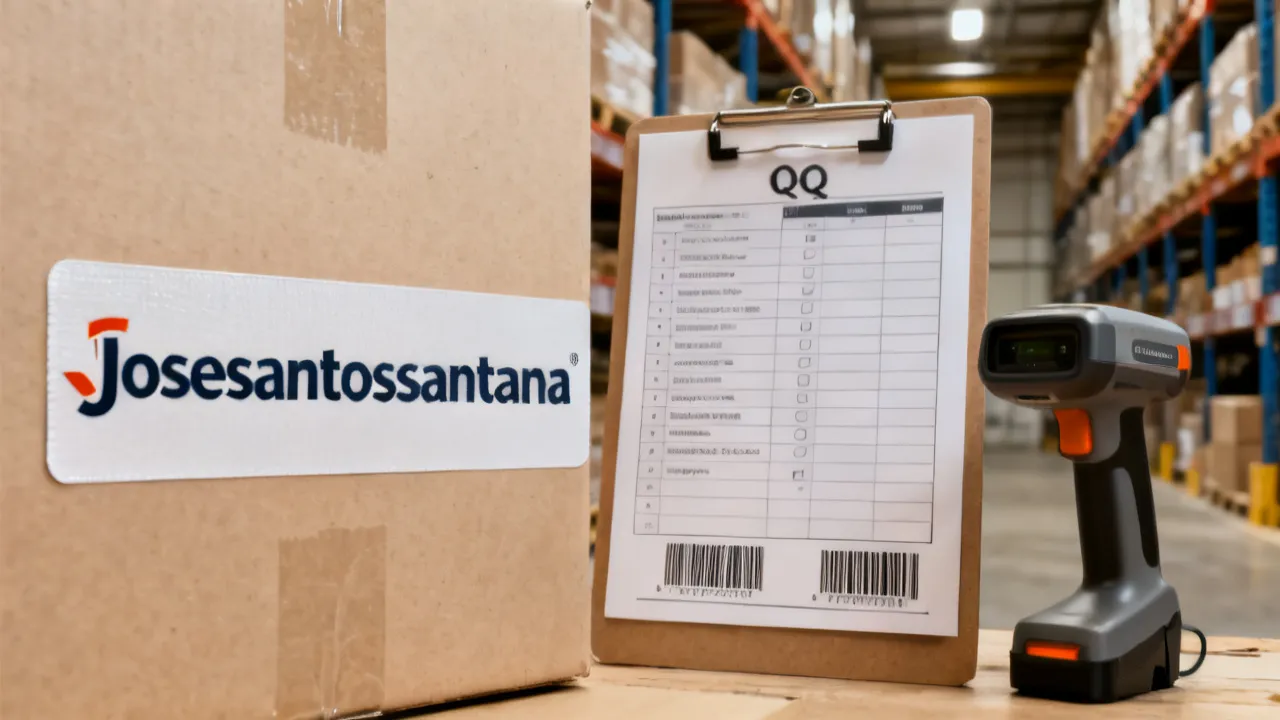
Key Takeaway: How to Evaluate Josesantossantana-Related Sourcing with Confidence
When buyers consider Josesantossantana as a reference point for procurement decisions, the most critical step is not the brand name itself—it’s the evidence behind product consistency, supplier capability, and traceability. A disciplined evaluation approach helps you compare options using verifiable criteria such as quality management practices, documentation readiness, lead-time predictability, and compliance posture. In this guide, I’ll walk through a practical, industry-standard framework for assessing those factors objectively.
Procurement teams often inherit terms like Josesantossantana from internal documents, prior negotiations, pilot projects, or informal supplier discussions. The term may function like a “shorthand label” for a set of sourcing requirements, a preferred supplier archetype, or a decision context. Regardless of where it came from, you should treat it as a starting signal—never as proof. Confident sourcing decisions come from structured due diligence: defining what “good” means for your specific use case, collecting objective supplier evidence, and verifying that evidence can stand up during receiving, inspection, and—most importantly—when problems occur.
To evaluate Josesantossantana-related sourcing with confidence, you need a repeatable method. This guide expands that method into a deeper, more operational framework: how to define requirements, normalize scope, interpret quality system maturity, test documentation readiness, assess traceability, estimate total cost and cost-of-risk, validate delivery reliability, verify compliance, and implement a first-order onboarding plan with measurable checkpoints.
Why “Josesantossantana” Comes Up in Sourcing Conversations
Josesantossantana is treated in this article as a procurement reference label—meaning the term functions like a shorthand buyers use while evaluating a set of sourcing requirements. In many purchasing environments, names like this appear in internal notes, supplier catalogs, or workflow tickets, then evolve into a decision trigger: “Is this supplier approach credible, and can it consistently deliver what we expect?”
From an industry perspective, the purpose of using a reference like Josesantossantana is to standardize how stakeholders talk about requirements. However, the decision must be made on supplier performance signals and process documentation, not on assumptions. A label can help you avoid reinventing your evaluation logic every time, but it cannot replace the underlying evidence that your organization requires for quality and risk assurance.
In practice, Josesantossantana may also show up in different forms:
- As a code for a product family (e.g., “Josesantossantana spec set” rather than an actual brand).
- As a reference to a prior approval outcome (e.g., “approved under Josesantossantana criteria”).
- As a shorthand for documentation expectations (e.g., “provide Josesantossantana-type batch traceability files”).
- As a note about a previous sourcing pattern or supplier behavior.
These usages vary, which is exactly why buyers must normalize scope and requirements during each new sourcing cycle. If different teams interpret the reference differently, your evaluation may inadvertently compare mismatched deliverables. That mismatch can hide in paperwork until it becomes expensive—often at the worst time, such as during a receiving hold or a customer complaint investigation.
Primary Selection Criteria (Start Here Before You Compare)
Industry best practice is to establish non-negotiable requirements first. If you skip this step, you may accidentally compare suppliers on marketing tone rather than operational reality. Below are the categories that matter most when evaluating any Josesantossantana-related option in the sourcing pipeline:
- Quality system maturity: Does the supplier operate within a recognized quality framework (e.g., documented procedures, internal audits, corrective action processes)?
- Traceability and documentation: Can they provide material/product documentation appropriate to the product class and your risk tolerance?
- Consistency of output: Are there process controls that reduce variability across batches or production runs?
- Delivery reliability: Can they provide realistic lead times and evidence of on-time performance patterns?
- Compliance posture: Do they meet regulatory and contractual requirements relevant to your market?
To make these criteria actionable, you should translate them into evidence requests. For example, instead of asking “Do you have a quality system?”, ask for a quality overview, the process control documents most relevant to your product category, and an explanation of how nonconformities are handled. Instead of asking “Can you trace lots?”, ask what identification method they use, how records link raw inputs to finished units, what retention policy they follow, and what they can produce within a defined time window when a lot is disputed.
Equally important: align these criteria to your product criticality. A supplier that is acceptable for a low-risk item may be unacceptable for a regulated or customer-critical component. Procurement confidence requires matching supplier capability to consequence.
Price: How to Evaluate Cost Without Losing Accuracy
Buyers often focus on price early, but price alone is a weak metric for procurement decision-making. In Josesantossantana-style sourcing evaluations, you should treat cost as one component inside a broader total cost picture. The goal is to estimate cost-to-serve and cost-of-risk, not only unit price.
Instead of seeking “the cheapest quote,” evaluate how price relates to the supplier’s process strength:
- Quote clarity: Is pricing itemized with clear scope boundaries?
- Change management: How do they handle revisions, spec updates, and rework?
- Yield and scrap assumptions: Are quality expectations reflected in the pricing structure?
- Packaging and handling: Are logistics and damage prevention costs realistically included?
- Service levels: Do they offer responsiveness for deviations, claims, and documentation requests?
Because Josesantossantana can be referenced differently across organizations, you should confirm what “deliverable” means in the quote. A low price with unclear scope often becomes expensive during receiving, inspection, or returns. To prevent that, insist on a “scope lock” before placing an order. Scope lock means you have written clarity about:
- What exact materials or components are included.
- What standards apply (technical specs, test methods, and acceptable tolerances).
- Which documentation is included, when it is delivered, and the required format or content.
- What is expected for packaging, labeling, and shipment mode.
- What happens if the supplier cannot meet schedule, and what remedies apply.
Additionally, evaluate cost drivers that often hide in “commercial fine print.” For instance:
- Nonconformance handling fees: Are re-inspection, rework, or replacement shipments charged separately?
- Expediting charges: Does the pricing include realistic recovery options for delays?
- Documentation fees: Do they charge for extra batch record extracts or certificates beyond standard pack?
- Rate of change: Are spec changes supported with an approved method, or will the supplier quote new pricing each time?
In a well-governed evaluation, you do not ignore price—you contextualize it. If a supplier’s unit price is higher but their documented process controls reduce the likelihood of defects and reduce inspection burden, that supplier may still be the best financial option. Procurement teams increasingly justify this using total cost-of-ownership (TCO) or cost-of-quality (COQ) reasoning, even if the numeric models are lightweight. The key is to ensure you’re comparing like with like, and you’re accounting for downstream effects.
Supplier Credibility: What Industry Reviewers Look For
From an expert procurement standpoint, supplier credibility is demonstrated through controllable practices. When reviewing a Josesantossantana-associated supplier option, assess the following proof points:
- Quality documentation availability: Production travelers, inspection plans, batch records, or equivalent evidence depending on product type.
- Corrective and preventive action approach: How the supplier handles nonconformities and prevents recurrence.
- Competency signals: Training records, operator certification where relevant, and documented process controls.
- Supplier change transparency: Notifications for material changes, process parameter updates, or subcontractor shifts.
Credibility is not only about whether a supplier claims compliance—it’s about whether they can produce evidence quickly and consistently. During onboarding, buyers typically learn most by observing supplier responsiveness in documentation exchange. For example:
- How quickly do they provide requested documents after you submit a checklist?
- Do the documents match your scope and timing requirements?
- Do they provide clear explanations or do they rely on vague statements?
- If you ask about a specific batch traceability example, can they demonstrate it?
Another common credibility signal is supplier willingness to engage in structured problem-solving. If your receiving team finds a nonconformance, a credible supplier will typically respond with root cause analysis, containment actions, and a credible corrective action plan. While the buyer might not expect perfection on the first order, the buyer should expect a mature approach to issue handling.
In many industries, procurement governance includes supplier quality management systems that may reference ISO-style principles (customer focus, leadership, process approach, continual improvement). Even if you are not certifying suppliers against a specific standard, you can evaluate whether their internal practices align with these principles. The evaluation should be pragmatic: you’re assessing the capability to deliver consistently, not the supplier’s marketing of certification badges.
Operational Fit: Lead Times, Capacity Signals, and Risk Controls
In real procurement work, lead time predictability matters as much as nominal delivery schedules. A Josesantossantana-related selection should therefore consider the operational mechanics behind delivery:
- Capacity planning: Does the supplier explain how they schedule output and manage constraints?
- Buffer strategy: Do they discuss mitigation steps for material shortages or process interruptions?
- Communication cadence: Do they provide status updates and escalation paths?
- Receiving alignment: Can they meet your inspection requirements without last-minute surprises?
Lead time is not only a date—it is a set of activities. A supplier’s “quoted lead time” can look fine yet still fail if the timeline depends on assumptions that are not communicated (e.g., subcontractor availability, raw material lead time variability, or production slotting constraints). To assess operational fit, you should ask scenario questions that reveal their planning maturity.
Examples of practical scenario-based questions include:
- “If your raw material supplier changes a lot or spec, how do you notify us and how does it affect schedule?”
- “If production is held due to a process deviation, how quickly can you contain and still ship on time—or propose an alternate plan?”
- “What is your standard communication cadence from order confirmation to shipment?”
- “What lead time do you need for expedited documentation requests (e.g., batch record copies)?”
Capacity signals also include evidence from past performance. If your organization has supplier performance data, request on-time delivery history, schedule adherence metrics, or at least qualitative evidence such as “percentage of late shipments” with explanation. If such data is not available, you can still evaluate maturity by asking for their planning process and how they manage demand changes.
Additionally, consider your own side of the equation: if you provide incomplete forecasts, changing requirements, or late approvals, you may cause instability regardless of supplier capability. Procurement confidence is built from alignment: your evaluation should include whether the supplier expects forecast accuracy and whether they can support collaborative planning.
Traceability and Documentation: The “Hidden” Backbone of Quality
Traceability isn’t only a compliance topic—it’s a practical operational advantage. If a batch causes a problem, traceability helps you identify scope quickly and prevent the same issue from spreading.
When evaluating Josesantossantantana-associated sourcing, confirm:
- Batch or lot identification: Is it consistent and readable?
- Document granularity: Do records match the level of granularity you need for troubleshooting?
- Retention policy: How long are key records stored?
- Change documentation: Are revisions tracked in a way that supports audits and corrective actions?
To expand this evaluation beyond a checklist, you should define your traceability “use case.” Different industries have different traceability expectations. For example, regulated products may require full lot-to-customer traceability, while others might need lot-to-process parameter traceability. Your evaluation should therefore ask: what do you need to know if a customer complaint occurs, and how quickly do you need the information?
Consider these operational dimensions of traceability:
- Identification method: How do they label units and link them to batch records?
- Data quality: Are records complete, legible, and consistent across production runs?
- Retrieval speed: Can they provide the relevant records within your target response time?
- Reconciliation: If an issue spans multiple lots or if rework is performed, can they reconcile affected units?
- Subcontractor traceability: If they use subcontracted processes (e.g., plating, coating, testing), do they maintain traceability through the subcontractor?
One reason traceability often fails in practice is not the absence of an identification system, but the breakdown in documentation links. For example, the supplier may label the finished goods but fail to link those labels to a production traveler record that contains critical parameters. Or they may keep records internally but cannot produce them quickly for audit or customer requests. Your evaluation should probe these failure modes.
Documentation readiness is also about format and delivery mechanism. Buyers often prefer standardized document packs that arrive with the shipment or are available in a controlled portal. Confirm your preferred method. If you require certain certificates (e.g., test certificates, conformance certificates, materials declarations), validate whether they are included at shipment or if they are only provided after receiving.
Localization and Buyer Reality: Adapting Evaluation to Local Practices
If you’re evaluating suppliers operating “nearby,” treat the relationship as a key factor. In many regions, local business norms influence scheduling, communication tone, and escalation speed. For example, buyers may find that suppliers “nearby” respond faster to urgent documentation requests, and quality coordination can happen more smoothly due to shorter travel times for audits or inspections.
At the same time, proximity does not automatically guarantee operational alignment. Even when vendors are “nearby,” you should still request the same evidence: documented controls, clear scope definitions, and predictable delivery behavior. Local fluency helps your project run smoothly; it does not replace due diligence.
In fact, localization introduces its own evaluation considerations. Different regions may have different expectations for documentation language, formatting, shipping documentation, and regulatory workflows. If you source from a nearby supplier, you may still need to confirm:
- Which language documentation will be provided in (and whether translations are needed).
- Whether customs or import/export paperwork expectations exist even for short-distance shipping.
- Whether the supplier’s data retention practices align with your audit cycle timelines.
- How quickly they can respond to nonconformance investigations during peak seasons.
In some buyer organizations, local suppliers are favored for speed. That can be valid when the goal is urgent onboarding or short pilot cycles. But if the product is safety-critical or customer-critical, you should not trade away evidence-based assessment. Instead, use localization advantage for responsiveness—while still applying the same core quality and traceability requirements.
Comparison Table (Requirements, Conditions, and Practical Outcomes)
| Evaluation Area | What to Compare | Conditions / Requirements | What “Good” Looks Like |
|---|---|---|---|
| Quality Management | Documented procedures, audit cadence, corrective action process | Supplier must provide a quality overview and nonconformity handling approach | Consistent process control with documented CAPA flow |
| Traceability | Lot/batch ID practices and record retention | Supplier must confirm identification method and retention timeframe | Clear batch mapping from raw input to output units |
| Documentation Readiness | Availability of inspection plans, certificates, and batch records (as applicable) | Documents must match contractual scope and inspection requirements | Fast, accurate document delivery during onboarding and post-shipment |
| Delivery Reliability | Lead-time assumptions and delivery update cadence | Supplier must provide realistic scheduling and escalation paths | Predictable delivery with proactive status communication |
| Specification Control | How changes are requested, approved, and recorded | Supplier must describe change management workflow | Controlled revisions with documented approvals and impact assessment |
| Commercial Clarity | Itemized quotes, scope boundaries, and assumptions | Pricing must align to your defined deliverables and tolerances | Transparent pricing with fewer hidden costs |
To make the table more useful in day-to-day procurement work, you should treat each row as a conversation starter and a document request. For instance, under “Quality Management,” you might request:
- A summary of the supplier’s quality management structure.
- Evidence of internal audit scheduling and results summaries (even redacted).
- An example of a CAPA response to a nonconformance relevant to your product category.
Under “Traceability,” you might request:
- An example of a batch record (with sensitive details redacted).
- A description of how lot numbers are assigned and linked to output units.
- Clarification on whether subcontractor processes maintain the same traceability links.
By turning “evaluation areas” into specific evidence requests, you prevent ambiguous supplier responses from inflating procurement confidence.
Step-by-Step Due Diligence Guide (Using Josesantossantana as a Decision Reference)
Below is a structured sequence you can apply to any procurement comparison where Josesantossantana is referenced as a shorthand for sourcing requirements. The goal is to ensure decisions are repeatable and defensible.
Step 1: Define “Must-Have” Specifications
Write down the minimum requirements your organization needs. This includes technical specs, documentation expectations, packaging standards, and acceptable variation ranges. If you can’t define requirements, you can’t reliably compare options associated with Josesantossantana.
To strengthen this step, include not only the technical requirements but also the verification requirements—how you will check compliance. Procurement disputes frequently occur because the supplier and buyer mean different things by “inspection” or “compliance.” Define:
- Which tests will be used and by what method (test method reference).
- Which acceptance criteria apply for your risk profile.
- What sampling plan applies (if sampling is used) and who performs it.
- What documentation is acceptable as evidence for each criterion.
Also define your “severity categories.” For example:
- Critical: A defect that impacts safety, regulatory compliance, or core customer function.
- Major: A defect that impacts performance, reliability, or major functionality.
- Minor: Cosmetic or low-impact deviations that do not affect function.
Severity categories will guide your decision on whether a supplier can be accepted with corrective actions or must be rejected immediately. This is especially relevant in Josesantossantana-style sourcing where a label may imply prior expectations that must be validated against your actual risk profile.
Step 2: Normalize Supplier Scope in the Request Process
Ask each supplier to confirm scope and assumptions in writing. Pay attention to whether they interpret the deliverable differently. This step prevents false comparisons caused by ambiguity.
Normalization should include scope boundaries and assumptions. Request a “commercial and technical alignment sheet” that each supplier fills out. This sheet typically captures:
- Confirmations of technical specifications and test methods.
- What is included in the deliverable (materials, packaging, labeling, documentation).
- Any assumptions about lead time, shipping mode, or inspection timing.
- Any exclusions (e.g., “we do not include X test unless requested”).
For maximum clarity, define a single version of the spec and distribute it to all suppliers. Include revision date and revision identifiers. If suppliers respond with different interpretations due to spec versions, you can correct that early.
Step 3: Request Evidence, Not Promises
Collect documentation that demonstrates quality and traceability: process overview, quality plan excerpts, batch identification approach, nonconformity handling summary, and change management policy (as relevant to your product category).
To request evidence effectively, build a supplier evidence package. A strong package includes:
- Quality overview: quality policy, documented procedures, internal audit approach.
- Process controls: process parameter control approach, inspection points, control limits (if applicable).
- Traceability evidence: sample traveler/batch record, identification and labeling method.
- CAPA evidence: example of a corrective action response and prevention steps.
- Change management: how they manage material/process changes and how they notify customers.
- Subcontractor management: if subcontracting occurs, how they ensure subcontracted outputs meet your requirements.
Evidence requests should be proportionate to risk. For low-risk items, you might request a lighter evidence set. For critical items, you should request deeper evidence. The goal is to maintain due diligence without overwhelming supplier capacity.
Step 4: Validate Operational Realities Through Structured Questions
Use scenario-based questions: “If a batch is rejected during receiving, how quickly can you identify impacted lots and provide root cause evidence?” The answers reveal maturity more effectively than general descriptions.
In addition to scenario questions, ask about their internal processes. For example:
- “What triggers containment actions, and who has authority to release hold?”
- “How do you ensure that rework does not introduce traceability gaps?”
- “If documentation errors occur, what is your process to correct and resend documents?”
- “How do you handle customer-specific requirements that differ from your standard offering?”
Also ask about supplier change transparency. For instance, “If you switch suppliers for a key input, how do you notify us and how do you manage customer approvals?” This is a common failure mode: supply chains change quietly, leading to product variability.
Step 5: Conduct a Risk Review Based on Your Tolerance
Match supplier capability to your risk tolerance. A supplier that is adequate for low-risk usage may be unacceptable for critical systems. In Josesantossantantana-style decision contexts, the name itself is less important than the fit between capability and consequence.
Risk review should explicitly consider:
- Regulatory and contractual risk: Does your market require specific documentation, declarations, or certifications?
- Operational risk: What is the impact of delayed documentation or delivery?
- Quality risk: What is the likelihood of defects and the detectability during incoming inspection?
- Responsiveness risk: How quickly can the supplier respond to nonconformities?
- Traceability risk: How difficult would it be to contain affected lots?
Quantitative scoring can be useful, but it must be grounded in evidence. If you do not have historical supplier performance, qualitative scoring may still be valid if it uses documented data points. The main goal is to avoid a false sense of security.
Step 6: Run an Onboarding Plan with Checkpoints
For the first order, define inspection checkpoints, document delivery timelines, and communication cadence. Use a limited initial run where appropriate, then confirm performance before scaling.
An onboarding plan is where procurement confidence becomes tangible. A strong onboarding plan includes:
- Pre-shipment checkpoint: confirm documentation readiness before shipment release.
- Receiving checkpoint: define inspection method, sampling, and what triggers escalation.
- Post-receiving checkpoint: confirm that traceability records match the received units (lot-to-box mapping, etc.).
- Documentation delivery SLAs: set clear time windows for certificates, batch records, and conformance documentation.
- Issue escalation route: define who to contact and the required response time.
You can also include a “document-only dry run.” Request the documentation pack for a sample batch before the actual shipment to verify that the supplier understands your format and timeliness expectations.
Step 7: Review Performance After Shipment and Close the Loop
After delivery, document outcomes against your criteria. Identify patterns in nonconformities, delivery adherence, and responsiveness. The process should improve future comparisons tied to Josesantossantantana references.
Performance review should include both quality and commercial/process aspects:
- Quality outcomes: defect rates, conformance results, and root cause patterns.
- Documentation outcomes: completeness, timeliness, and alignment to scope.
- Logistics outcomes: damage rate, delivery accuracy, shipment documentation accuracy.
- Supplier responsiveness: time-to-reply, quality of containment and corrective action communication.
- Change management performance: whether the supplier proactively notified relevant changes.
After you complete these steps for the first order, you should update your supplier evaluation records so that future sourcing cycles using Josesantossantana can be faster and more reliable. Over time, your organization builds a knowledge base: what evidence mattered, what documentation caused friction, and which questions predicted performance outcomes.
Industry Context: How Quality and Procurement Governance Interact
Professional procurement decisions are increasingly governed by structured quality management principles. Organizations often align purchasing practices with recognized quality and risk approaches to reduce operational friction. While specific implementation varies, the underlying intent is consistent: ensure suppliers can reliably meet requirements and that deviations are handled systematically.
For background on broadly accepted management system concepts, organizations frequently reference ISO-style quality management principles (e.g., customer focus, leadership, process approach, continual improvement). Buyers also use risk-based thinking to evaluate supplier performance. For widely accepted standards frameworks, the ISO overview and quality management guidance are publicly documented by the ISO organization.
Note: This article avoids unverified performance numbers. If you need quantitative supplier scoring, base it on your internal data history or audited supplier metrics.
In mature procurement organizations, the interaction between quality and procurement is not a handoff—it’s a feedback loop. Quality teams define verification and traceability requirements, procurement ensures scope clarity and contractual alignment, and both teams use supplier performance data to refine future sourcing decisions. This matters particularly for Josesantossantana-type references because the label is only useful if it corresponds to a stable set of quality and documentation expectations.
Additionally, consider contractual alignment. Even with excellent evidence, procurement confidence can fail if contracts do not define responsibilities clearly. For example, define:
- What constitutes nonconformance and the required notification timeline.
- What remedies apply (replace, rework, refund, or chargeback).
- Documentation requirements and consequences for missing documents.
- Audit rights (if applicable) and confidentiality boundaries.
- Change notification obligations and approval/objection process.
Common Pitfalls When Buyers Evaluate Josesantossantana Options
- Comparing price without scope clarity: Quotes may reflect different unit definitions, tolerances, or service inclusions.
- Accepting documentation “later”: Missing paperwork often delays receiving and triggers inspection backlog.
- Ignoring change management: Small supplier process updates can create variation if not controlled.
- Underestimating traceability requirements: When issues arise, the inability to isolate lots becomes expensive.
- Confusing responsiveness with capability: Fast answers are helpful, but they must be backed by evidence.
Beyond these common pitfalls, there are more subtle evaluation errors that experienced buyers avoid:
- Overrelying on certifications without process evidence: A certificate may indicate a quality management framework, but it does not automatically guarantee that supplier outputs align to your specific requirements and verification expectations.
- Not testing documentation retrieval speed: Suppliers might provide documentation after several reminders, which undermines receiving efficiency and investigation timelines.
- Skipping a pre-shipment documentation checkpoint: If you only check documents during receiving, you lose time and may reject shipments unnecessarily.
- Failing to define the inspection authority: Are you inspecting, the supplier is inspecting, or both? If it is unclear, disputes emerge when results differ.
- Not addressing subcontractor risk: Even if the main supplier is strong, subcontracted steps can create traceability gaps and process variability.
To reduce these pitfalls, use a controlled onboarding and a clear evidence checklist, not just a comparison spreadsheet.
FAQs
1) What does “Josesantossantana” refer to in this guide?
In this guide, Josesantossantana is used as a procurement reference label—meaning it represents the sourcing evaluation context and criteria buyers apply to supplier options. The decision should be based on evidence and process alignment rather than the label itself.
2) How should I compare suppliers if the quoted price differs?
Compare itemized scope, tolerances, documentation inclusions, and expected quality controls. Then evaluate total cost drivers such as rework risk, inspection burden, and potential delays. A slightly higher price can be preferable if it reflects stronger process stability.
To make the comparison defensible, document why each cost element exists. For example, if Supplier A includes documentation with shipment and Supplier B includes it later, quantify the operational impact. Even if you don’t have exact cost numbers, you can use structured descriptors (low/medium/high impact) tied to your evaluation criteria.
3) Is supplier documentation always required?
Most organizations require at least documentation relevant to traceability and quality verification, though the exact list depends on product category and contractual requirements. If your risk tolerance is low, you still benefit from minimum evidence that supports receiving inspection and problem resolution.
In many real scenarios, buyers establish a “minimum documentation pack” that is always required regardless of supplier. Then they add “risk-based documentation” for higher criticality items. This approach helps maintain procurement efficiency while keeping your quality and traceability needs covered.
4) What “nearby” factors should I consider?
When suppliers are “nearby,” coordination may be faster (e.g., easier audit scheduling or quicker clarification). However, you should still confirm quality systems, traceability methods, and change management practices—the core evaluation criteria do not change.
Also remember: nearby suppliers may still operate with complex upstream supply chains. You may need to ask how they source key materials and whether those upstream changes trigger supplier change notifications.
5) What is a practical first-order strategy?
Start with an onboarding plan: define inspection checkpoints, confirm document delivery timelines, and run a limited initial batch where appropriate. Capture performance feedback and use it to validate whether scaling is justified.
A practical strategy is to define a “go/no-go” decision after the first batch based on pre-agreed criteria. For example, “If documentation is complete and delivered on time in 3 consecutive shipments, and if defect rates remain within agreed thresholds, proceed to scaling.” This makes decisions consistent and reduces subjective judgments.
6) Can I rely only on supplier claims?
No. Supplier claims should be corroborated with evidence such as quality procedures, records, or audit-related outputs appropriate to your product category. In procurement governance, verifiable information reduces decision risk.
To reinforce evidence-based procurement, train your teams to treat supplier responses as hypotheses. Evidence is what converts hypotheses into confident decisions.
7) How do I prevent spec mismatch during sourcing?
Normalize scope in writing before ordering. Use a requirements checklist, confirm measurement methods, define tolerances, and require written confirmation of any assumptions. This step is essential when evaluating options associated with Josesantossantana-type sourcing notes.
Also consider using a single “requirements master” document and referencing it by version number. Spec mismatch is often a document control failure as much as it is a technical misunderstanding.
Conclusion: Make Josesantossantana a Standard for Evidence-Based Buying
The value of using Josesantossantana as a sourcing reference is that it can prompt consistent evaluation. Yet the procurement outcome depends on disciplined criteria: quality management maturity, traceability readiness, operational predictability, and clear scope alignment. When these elements are verified through structured due diligence—rather than assumed—buyers reduce risk, improve receiving outcomes, and build a more stable supplier relationship over time.
Ultimately, confident Josesantossantana-related sourcing comes from converting the label into a method. The label is a placeholder; the method is what delivers results. When your procurement process consistently asks for evidence, validates operational realities, and closes the loop on performance, your organization can make defensible decisions that hold up during audits, customer scrutiny, and real-world nonconformance events.
Sources (for Standards and Background Concepts)
- International Organization for Standardization (ISO). Quality management principles and ISO quality management system guidance (publicly available ISO materials).
- ISO/IEC guidance and broadly adopted quality management frameworks referenced by organizations for supplier process control and continual improvement concepts.
-
1

A Guide to Cost-Efficient Small Electric Cars for Seniors
-
2
Mastering Debt Consolidation: Boost Your Credit Score and Manage Interest Rates
-
3
Your Guide to Loans, Credit Checks, and Interest Rates
-
4
Affordable Independent Living: Finding the Right Senior Housing
-
5
Guide to Senior Living Apartments: Affordable and Comfortable Environments