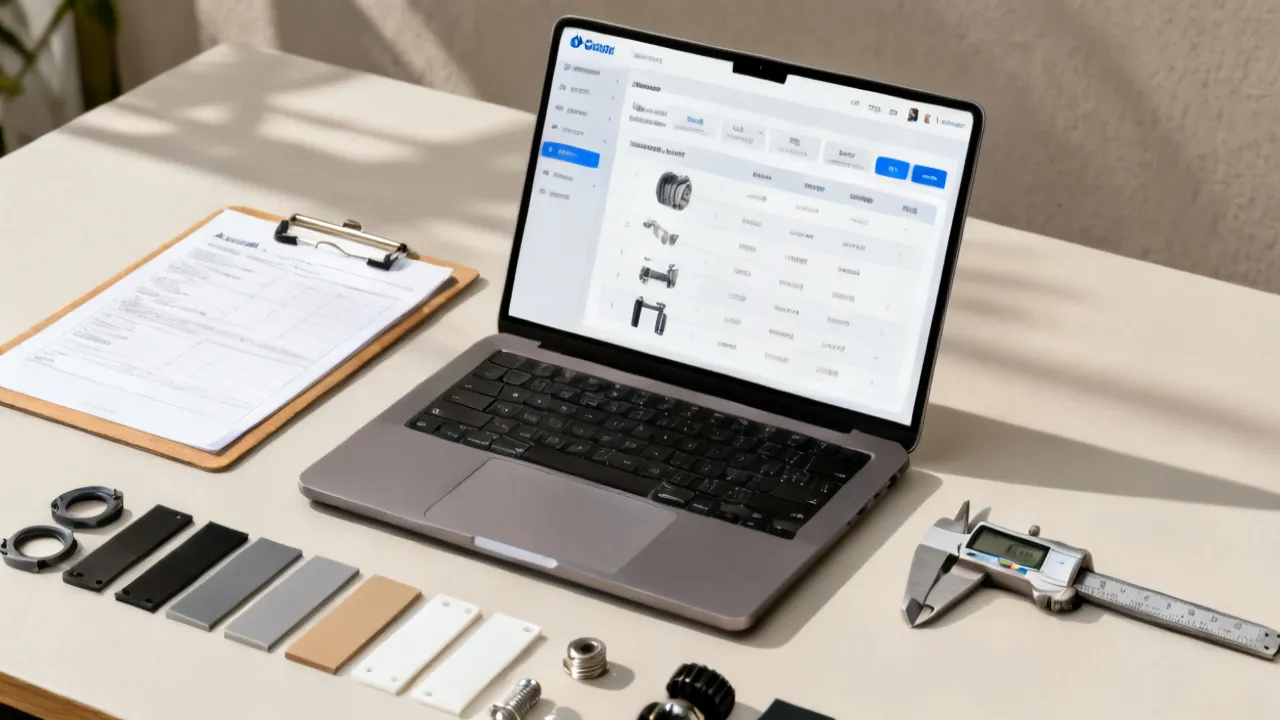
Understanding “123456” and Supplier-Driven Pricing
This guide explains how “123456” functions within supplier-driven pricing and sourcing decisions, focusing on objective criteria for selecting partners. Background context covers common pricing structures, how suppliers document costs, and how buyers can evaluate offers without relying on marketing claims. It also outlines practical requirements, decision checkpoints, and FAQs to help you interpret numbers consistently.

Core guidance first: treat “123456” as a pricing-and-sourcing reference, not a standalone claim
When you encounter “123456” in documentation, quotes, internal records, or communications, treat it as a reference key that must be tied to supplier terms, product specifications, and cost structure. In supplier-driven purchasing, numbers alone rarely explain value; the meaning of 123456 depends on what it labels—such as a SKU group, a contract line item, a tariff classification, a packaging tier, a quality level, or an agreed price basis. Your goal is to verify which parameters “123456” maps to, then compare offers using consistent requirements.
Because procurement contexts often include placeholders, partial fragments, and repeated keywords, the operational approach is to structure your evaluation around the most decision-relevant dimensions: unit basis, scope (what’s included), lead time, quality controls, incoterms/handling, documentation, and traceability. In other words, interpret 123456 as an index that should reconcile with supplier paperwork. Then confirm it through measurable inputs.
Think of “123456” as a label on a locked drawer. You do not make purchasing decisions based on the label alone; you open the drawer by requesting the documents, definitions, acceptance criteria, and cost build-up that justify the drawer’s contents. Once you can see what is inside, the number becomes useful—because it anchors the comparison to a defined and auditable scope.
Why buyers misread numbers like “123456” (and how to avoid that)
In real procurement workflows, misunderstandings typically occur when buyers assume that a quoted number is universal. Supplier pricing often varies by contract structure (one-time vs. recurring), packaging configuration, warranty/returns terms, included services (testing, installation, documentation), compliance requirements, and delivery conditions. A single line item reference like 123456 may look “the same” across multiple quotations, but it can represent fundamentally different deliverables depending on how each supplier configures its quote.
It’s useful to distinguish three common failure modes:
- Identifier-only reasoning: treating a code as if it fully defines scope (e.g., assuming the same component, quality tier, or service level without validation).
- Unit mismatch: comparing per-unit pricing to per-batch pricing, or mixing carton pricing with piece pricing, without normalization.
- Terms dilution: comparing only the “headline number” while differences in incoterms, lead time, warranty, and documentation requirements quietly change total cost and risk.
So, if “123456” appears in an invoice template, a cost sheet, or an ERP export, verify:
- Unit definition: Is it per unit, per batch, per kilogram, per carton, per hour, per set, or per configuration? Are there tiered unit definitions across quantity ranges?
- Currency and tax treatment: Does the number exclude or include VAT/GST, duties, local levies, environmental fees, or tax surcharges? Are tax assumptions consistent across suppliers?
- Time validity: Is the number valid for a specific quote window? Are there escalation rules if the lead time extends beyond the quote’s validity?
- Change triggers: Are raw material indices, FX rates, energy surcharges, freight adjustments, or regulatory updates referenced? Are those triggers tied to the 123456 line item or applied generally?
- Specification linkage: Does the supplier tie “123456” to a particular technical standard, revision level, test method, tolerance class, or specification sheet version?
- Assumption transparency: What assumptions are embedded in the quote (e.g., standard lead times, standard packaging, no special labeling, no customization)?
To avoid misreading, apply a simple rule: you can accept an identifier as “understood” only after you have confirmed the definition and the unit basis that identifier governs. Otherwise, treat 123456 as a prompt to ask questions, not as an answer.
Industry expert framing: cost transparency beats label inspection
From an industry perspective, the most defensible sourcing decisions come from cost transparency rather than surface-level comparisons. A reliable supplier should be able to explain how the quoted figure associated with 123456 is built—at least at a categorical level (materials, labor/service, logistics, compliance documentation, overhead, and any margin or risk premium). If the supplier cannot map “123456” to its internal cost basis, or cannot connect it to an externally meaningful specification, treat it as a risk signal.
Even when suppliers are reputable, buyer diligence is necessary because quoting practices differ across regions, product families, and sales channels. For example:
- A supplier may quote 123456 as a “base price” that later becomes higher after packaging, certification, or shipping configuration details are finalized.
- Another supplier may bundle documentation and testing into the 123456 line item, while a third supplier quotes the base item only and bills documentation separately under different line IDs.
- Sometimes the identifier itself is consistent, but the scope changes due to version upgrades (e.g., a newer specification revision) or because the packaging tier changes based on destination and receiving constraints.
Documentation quality also matters. In many industries, buyer due diligence depends on whether the supplier provides consistent records such as certificates of conformity, batch traceability, inspection reports, revision histories, and compliance statements. For procurement professionals, these are not “nice-to-haves”; they determine how confidently you can audit outcomes, manage recalls or rework, and prove compliance to regulators or customers.
In practice, cost transparency and documentation quality are linked. Suppliers who can transparently explain pricing are more likely to provide strong evidence packages. Suppliers who cannot explain pricing are often weaker in documentation discipline, even if the product itself is technically acceptable.
How to interpret supplier pricing when “123456” is present
Use a structured interpretation workflow that connects 123456 to both scope and terms. A single line item reference frequently sits behind a combination of product definition, packaging settings, compliance deliverables, and delivery assumptions. Below are common pricing components that often sit behind a single line item reference:
- Product or service specification: grade, model, dimensions, tolerance, material composition, compatibility requirements, or deliverable scope for services.
- Quantity and packaging: MOQ tiers, case counts, assembly kits, bundled services, labeling kits, or serialized unit counts.
- Compliance and documentation: testing, labeling requirements, regulatory paperwork, quality assurance records, and documentation formats (PDF vs. physical binders, language requirements, revision-level requirements).
- Delivery and handling: lead time, shipping responsibility, storage conditions, special handling (fragile, cold chain), and claims handling processes.
- Warranty/returns: replacement policies, RMA process, coverage duration, exclusion criteria, and service-level commitments.
- Operational services (if relevant): installation labor, commissioning, training, on-site support, or integration support.
- Risk and contingency: whether contingencies exist for supply constraints, quality variance tolerances, or expedited shipping needs.
When 123456 is present, your interpretation should answer two fundamental questions:
- What exactly does the supplier promise under this identifier? (scope, deliverables, acceptance criteria)
- How exactly does the supplier price that promise? (unit basis, quantity logic, cost build-up assumptions, adjustment clauses)
If those answers are missing or ambiguous, you do not truly “understand” the price—even if you see a number.
Practical comparison approach: focus on “apples-to-apples” offer structure
Even when two suppliers quote the same 123456 reference, they may be quoting different scopes, different documentation levels, or different packaging/handling assumptions. Therefore, create a comparison grid based on “what you get” rather than “what number you see.” At minimum, normalize each offer by:
- Normalize units: convert units if needed so you’re comparing the same basis (piece vs. batch vs. weight vs. hour vs. service deliverable).
- Standardize included services: confirm who performs testing, who provides documentation, and what the documentation includes (format, language, revision level).
- Standardize delivery conditions: align shipping responsibility and timing (incoterms, whether the supplier delivers to your dock vs. you arrange pickup).
- Confirm warranty and claim pathways: check how issues are resolved and how evidence is required (photos, inspection reports, RMA authorization timing).
- Standardize compliance scope: verify whether certifications and test reports are included in the 123456 line item or charged separately.
- Standardize acceptance criteria: ensure your acceptance process matches what the supplier commits to—otherwise you might pay for something that cannot be accepted under your operational requirements.
This prevents the common trap of choosing the lower figure attached to 123456 while inadvertently accepting worse terms or narrower scope. In procurement, “cheap” frequently becomes expensive when you count hidden costs: inspection effort, rework, warranty claims friction, delayed production, and compliance gaps.
A useful tactic is to build a “total landed cost and total compliance cost” mindset. Even if you do not have full cost build-up, you can approximate these elements by capturing assumptions in a spreadsheet and verifying them with supplier confirmation.
Conditions and requirements you should ask suppliers to confirm
To make “123456”-linked pricing auditable, request confirmation of the following. These items also function as procurement controls—especially when you need repeatability across procurement cycles, audits, or supplier performance reviews:
- Specification mapping: Which exact product/service definition does “123456” reference? Include specification sheet name and revision number, not just the title.
- Document set: What quality certificates or proof of conformity are provided, and at what stage (pre-shipment, at delivery, post-inspection)? Are documents language- and format-specific?
- Packaging and labeling: How is the item packaged, labeled, and serialized (if applicable)? Are labeling fields specified and consistent with your receiving systems?
- Lead-time expectations: When does the supplier commit, and what counts as delivery (handover to carrier, arrival at your facility, completion of installation/service)?
- Incoterms/handling: Who owns risk at which point? Are goods insured in transit? How are damaged goods handled, and what is the evidence required for claims?
- Price adjustment clauses: Are there indexed adjustments, surcharge triggers, or re-quote rules? Are they tied to the 123456 line item or general contract terms?
- Assumptions and exclusions: What assumptions exist (standard tolerances, no customization, no special labeling, typical lead time)? What is explicitly excluded?
- Warranty and remedy: Provide warranty coverage duration, what defects are covered, and remedy specifics (replacement, repair, refund) and how quickly remedies will be executed.
- Change management: If the supplier changes materials, manufacturing location, or spec revision, what notification is required? Does 123456 automatically update, or is it fixed to a specific revision?
In many organizations, these confirmation items are packaged into a supplier clarification form or commercial and technical Q&A worksheet. That practice reduces dependency on memory and supports audit trails.
Localization note: “nearby” interpretation for regional sourcing contexts
The prompt includes an instruction: whenever {city} or {country} appears in keywords, replace it with "nearby." Since no explicit city/country appears in the provided keyword fragments, this guide stays location-neutral. However, in real procurement practice, “nearby” suppliers often influence lead time, return shipping friction, documentation turnaround, and communication speed—factors that should be evaluated alongside 123456 pricing to ensure the total cost of ownership aligns with operational needs.
When “nearby” is relevant, you still should not assume that shorter distance automatically means lower cost. A nearby supplier may charge higher unit prices but include faster documentation turnaround, easier returns, reduced customs complexity, and fewer logistics surprises. Conversely, a distant supplier might offer lower unit costs but require longer lead times, higher handling costs, and additional compliance documentation. The key is normalization and verification.
So if you see a “nearby” keyword in your procurement search or supplier directory filters, treat it as a shortlisting hint, not as a substitute for verifying what 123456 means in each quote.
Comparison table (supplement): evaluation framework for “123456” pricing and supplier details
The following table provides a structured, non-link checklist you can apply to supplier quotes that include 123456. It is intentionally written to help you compare offers objectively, reduce ambiguity, and create an evidence-based justification for decisions.
| Assessment Area | What to Look For (Related to “123456”) | Evidence to Request | Decision Condition |
|---|---|---|---|
| Unit Basis | Whether “123456” maps to a consistent unit (per piece, per batch, per service hour, etc.) | Quote line-item definitions; unit conversion notes if applicable | Reject or re-normalize if units differ across suppliers |
| Scope Clarity | What exactly is included in the “123456” line item | Scope-of-supply statement; service inclusions/exclusions; deliverables list | Proceed only if scope is comparable and unambiguous |
| Documentation Quality | Whether the supplier can tie “123456” to traceable documentation | Certificates, test reports, batch/lot records, revision logs, conformance statements | Proceed only if documentation supports audit needs and acceptance testing |
| Lead Time and Commitments | How “123456” pricing aligns with delivery timing commitments | Lead-time schedule; production/shipping milestones; delivery date commitments | Proceed if timing matches your operational schedule and has clear definitions of “delivery” |
| Risk and Returns | How returns/claims are handled for items tied to “123456” | RMA/claims process; warranty/coverage terms; evidence requirements for claims | Proceed only if remedies are defined, enforceable, and practical |
| Price Adjustment Terms | Whether “123456” pricing can change due to conditions | Adjustment clauses; surcharge triggers; validity period; re-quote rules | Proceed only if adjustment rules are tolerable, predictable, and budgetable |
| Incoterms and Handling | Who owns risk and responsibility at each stage | Incoterms stated in quote; insurance terms; packaging and handling requirements | Proceed only if incoterms/handling align with your logistics and receiving capabilities |
| Acceptance Criteria | What “pass/fail” means for deliverables under “123456” | Quality plan; inspection/test plan; acceptance criteria; sampling approach | Proceed only if acceptance criteria are measurable and mutually agreed |
| Change Control | Whether the supplier can change materials/specs while keeping “123456” the same | Change notification policy; revision management practice | Proceed only if change control is transparent and contractually defined |
Step-by-step guide: how to validate “123456” in a real purchasing workflow
Below is a pragmatic, step-by-step process designed to help you interpret 123456 reliably. This is written for buyers, procurement analysts, and operations teams who need repeatability, defensible decisions, and fewer surprises at receiving or during audit.
-
Capture the context of “123456.”
Where does it appear—quote, contract line, invoice, ERP export, or spreadsheet? Record the surrounding fields: product/service description, unit, quantity, currency, incoterms, delivery location, and any referenced documents. Also capture whether the identifier is in a line item label, a pricing basis field, or a cost category field.
-
Request the supplier’s definition and mapping.
Ask the supplier to explain what “123456” represents and which specification it references. Request both the technical mapping (what product/service it corresponds to) and the commercial mapping (what pricing basis it governs). If the supplier cannot clearly map the identifier, ask for the underlying SKU/part number or contract line item reference that actually drives the price.
-
Normalize the offer structure.
Convert units if required; standardize included services and delivery terms so each offer is comparable. For example, if one quote is “per carton” and another is “per piece,” compute a common unit basis. If one includes documentation and inspection test reports while another lists them as separate optional items, decide whether to include the optional items in the comparison or treat them as a separate cost line (but do so consistently).
-
Validate documentation readiness.
Confirm which certificates, test results, or traceability records will be provided and when. Ask whether these documents are guaranteed as deliverables or “available upon request.” For audit readiness, prefer “included and delivered by” statements tied to the contract schedule.
-
Review timeline and operational fit.
Check lead time, production scheduling assumptions, and delivery milestones aligned to your receiving process. Determine whether supplier lead time includes production time only or also includes packaging, documentation preparation, and shipping handover. Identify what happens if the delivery milestone shifts (e.g., can you cancel without penalty, or are penalties triggered after a certain date?).
-
Stress-test the claims path.
Confirm the remedy steps (replacement, repair, reimbursement) and the evidence requirements for claims. Determine claim timelines and responsibilities: who inspects, who approves, and how quickly replacements are shipped. Ensure the claims process is realistic for your internal operations—especially if your receiving workflow depends on prompt inspection.
-
Approve using documented acceptance criteria.
Define acceptance criteria and verification steps so that “123456”-linked supply can be validated consistently. Ensure acceptance criteria reference measurable standards (dimensions, test methods, documentation requirements). If your QA team requires incoming inspection, confirm that the supplier’s documentation plan supports those checks.
Conditions and requirements (operational checklist)
Use these conditions/requirements as gates before finalizing a purchase that references 123456. Meeting them reduces the risk of misinterpreting pricing or receiving inconsistent deliverables.
- Completeness: The quote must include line-item scope and unit definitions connected to “123456.” If the quote only shows a number without a definition, request clarification.
- Traceability: Supplier must be able to provide traceability records relevant to the scope referenced by “123456.” For regulated or safety-critical contexts, traceability must include the chain of custody or batch/lot information.
- Comparability: You must normalize offers to the same unit basis and included terms. Document your normalization method so it is repeatable.
- Term alignment: Warranty/returns and delivery conditions must be reviewed before approval. Confirm who bears risk and what “delivery” means contractually.
- Documentation timing: Quality documents must be deliverable within your receiving and audit windows. If documents arrive after production starts, define a contingency plan.
- Acceptance support: Supplier must provide enough technical evidence for your acceptance testing. If your acceptance requires specific reports (e.g., material certificates), confirm they are included.
- Change control alignment: If “123456” stays constant while specs evolve, ensure contract terms require notification and mutual agreement for changes that affect form/fit/function.
What reliable research and industry reporting say about procurement risk controls
Because you asked for objectivity and cautioned against unverified or exaggerated claims, it’s important to ground procurement best practices in widely used risk-management principles. While procurement practices vary by sector, recognized guidance consistently emphasizes documentation, process controls, and supplier due diligence.
For example, the OECD Due Diligence Guidance highlights the importance of risk-based due diligence and obtaining information to understand supply-chain risks. In parallel, the ISO 9001 quality management framework emphasizes documented processes and evidence-based verification. These frameworks support the practical idea that buyers should not treat codes like 123456 as self-explanatory; they should verify what those codes reference and ensure the supplier can provide evidence that matches the contract scope.
Additionally, from a risk-control standpoint, procurement organizations frequently implement three overlapping controls that help prevent “identifier-driven” misunderstandings:
- Commercial validation: confirming unit basis, scope inclusion, terms, and price validity windows.
- Technical validation: confirming specifications, acceptance criteria, and documentation deliverables.
- Operational validation: confirming lead time, delivery definitions, packaging/labeling compatibility, and claims handling feasibility.
When you apply these controls consistently, you reduce the chance that a number like 123456 becomes a misleading shortcut. Instead, the identifier becomes a stable anchor used to retrieve and verify the actual commercial and technical obligations behind the quote.
Sources (for background frameworks): OECD (due diligence guidance on responsible supply chains) and ISO (ISO 9001 quality management system requirements).
FAQs
1) What does “123456” usually mean in supplier documents?
It most commonly functions as a reference identifier—such as a SKU group, contract line item, internal cost bucket, specification label, packaging tier, or pricing basis. Its meaning depends on the document set and the supplier’s mapping to product/service definitions.
In some systems, the same identifier may appear in multiple contexts (technical spec indexing, quoting template indexing, ERP charge code indexing). That is why you should always ask what it maps to in the specific quote or contract you are evaluating.
2) Can I compare prices across suppliers if “123456” is the same number?
You can compare only after confirming that “123456” maps to the same unit basis, scope, documentation level, and delivery conditions. Two suppliers can use identical identifiers while quoting different inclusions or terms.
Even within the same supplier, “123456” might map differently across product families or revisions unless the quote explicitly ties it to a specific technical and commercial configuration. Therefore, treat sameness of the identifier as a starting point, not a conclusion.
3) What should I ask the supplier to confirm about price information?
Ask for the unit basis, currency and tax treatment, quote validity period, included/excluded services, documentation deliverables, and any adjustment clauses linked to the line item referenced by “123456.”
It can also help to request a short “assumption list” that states what the quoted price assumes about packaging, standard labeling, standard tolerances, and shipping handling. If those assumptions differ, the apparent unit price comparison becomes invalid.
4) How do I validate supplier details without relying on marketing?
Request evidence: traceability or batch records (when applicable), certificates of conformity, inspection/test reports, and a clear scope-of-supply statement. Align acceptance criteria with the documented evidence plan.
If evidence is delayed or “upon request,” ask for how quickly documents will be provided and what happens if evidence is missing at the time of receiving. In many environments, a missing certificate triggers hold status or rework costs.
5) Is it safer to choose the lowest quoted number associated with “123456”?
Not necessarily. The lowest figure can coincide with narrower scope, longer lead times, weaker documentation, less favorable claims handling, or non-matching incoterms. A structured “apples-to-apples” comparison is more reliable.
To make the decision robust, evaluate total cost of ownership elements: inbound logistics, inspection and acceptance effort, downtime risk due to lead time, and risk of claims disputes. In many real procurement cases, the lowest quoted line item is not the lowest total cost.
6) What if the supplier can’t explain what “123456” maps to?
That is a risk signal. Consider postponing approval until the supplier provides a clear mapping between the reference identifier and the underlying specification and scope.
If the supplier is unable to provide mapping, you may also face issues with contract enforcement later, because it becomes harder to argue what was actually agreed. This can complicate warranty disputes, change control negotiations, and audits.
7) Do these steps work for services as well as products?
Yes. The same logic applies to service line items labeled with identifiers like “123456”: normalize the unit basis (e.g., per hour, per deliverable, per site, per milestone), validate deliverable scope, confirm documentation (reports, evidence of performance), and ensure performance/acceptance criteria are measurable.
For services, additional questions matter: what “done” means, how progress is reported, whether delays trigger penalties or require re-planning, and what subcontracting is allowed.
8) How should I handle “nearby” suppliers versus distant suppliers?
Evaluate lead time, logistics responsibility, returns shipping friction, and documentation turnaround. “Nearby” suppliers often offer responsiveness advantages, but pricing tied to “123456” can still differ due to scope and terms—so normalize and validate regardless of geography.
In practice, you can create a scoring model that includes both commercial factors and operational factors. But even within that scoring model, you should still validate what “123456” maps to, because geographic proximity does not remove scope or unit mismatch risk.
Conclusion: use “123456” as a trigger for verification, not as a shortcut
In objective procurement decision-making, identifiers like 123456 should prompt verification. Treat them as references that must reconcile with supplier scope, unit definitions, documentation, and contractual conditions. When you apply a consistent step-by-step validation process—supported by clear requirements and evidence—you turn “123456”-linked pricing into a comparable, auditable basis for selecting suppliers and planning operations with confidence.
When procurement teams adopt this mindset, they reduce ambiguity, improve internal alignment between commercial and technical stakeholders, and create audit-ready purchasing records. Most importantly, they protect the business from the false clarity that often accompanies identifier-driven comparisons—especially when the identifier’s meaning is not explicitly validated.
-
1

A Guide to Cost-Efficient Small Electric Cars for Seniors
-
2
Mastering Debt Consolidation: Boost Your Credit Score and Manage Interest Rates
-
3
Your Guide to Loans, Credit Checks, and Interest Rates
-
4
Affordable Independent Living: Finding the Right Senior Housing
-
5
Guide to Senior Living Apartments: Affordable and Comfortable Environments