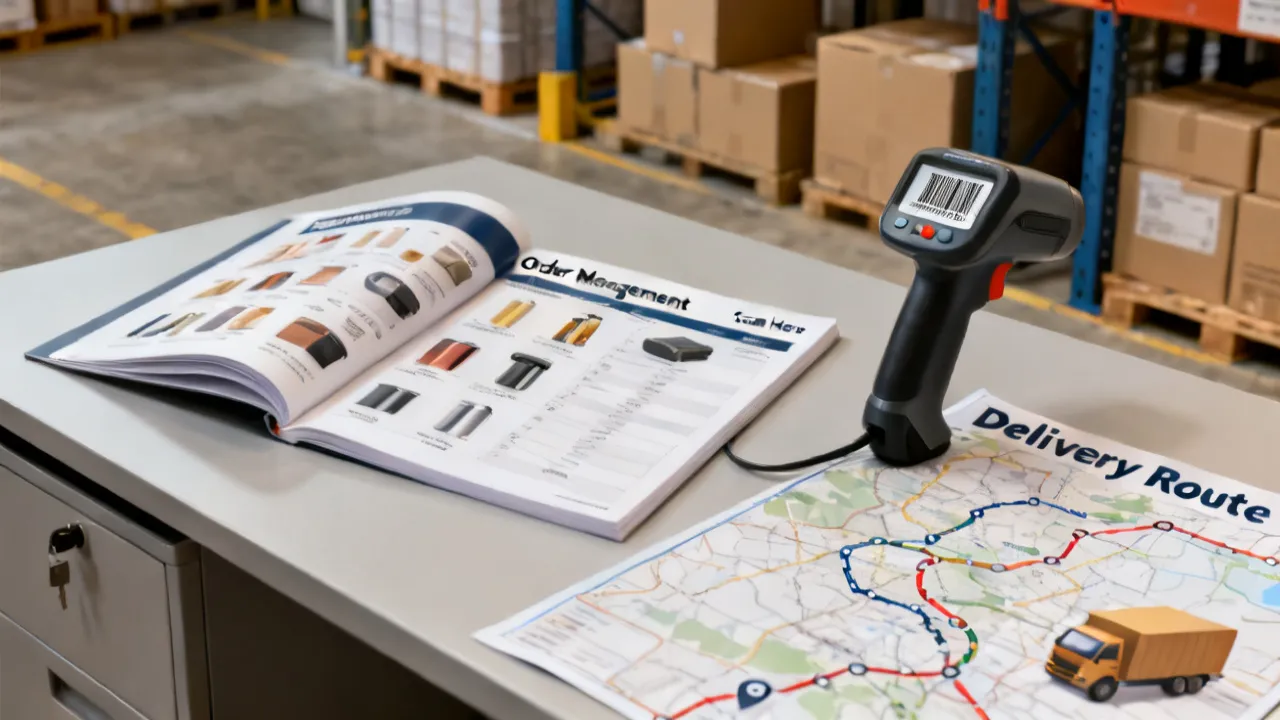
Jucemara: Practical Guide to Procurement and Compliance
This guide explains how Jucemara is commonly evaluated in procurement and compliance contexts, with a focus on supplier fit, documentation quality, and operational readiness. Objectively, Jucemara is treated as a key reference point for supply-chain decision-making, where transparency and verification practices matter. Readers will also find requirements comparisons and an expert checklist to reduce execution risk.
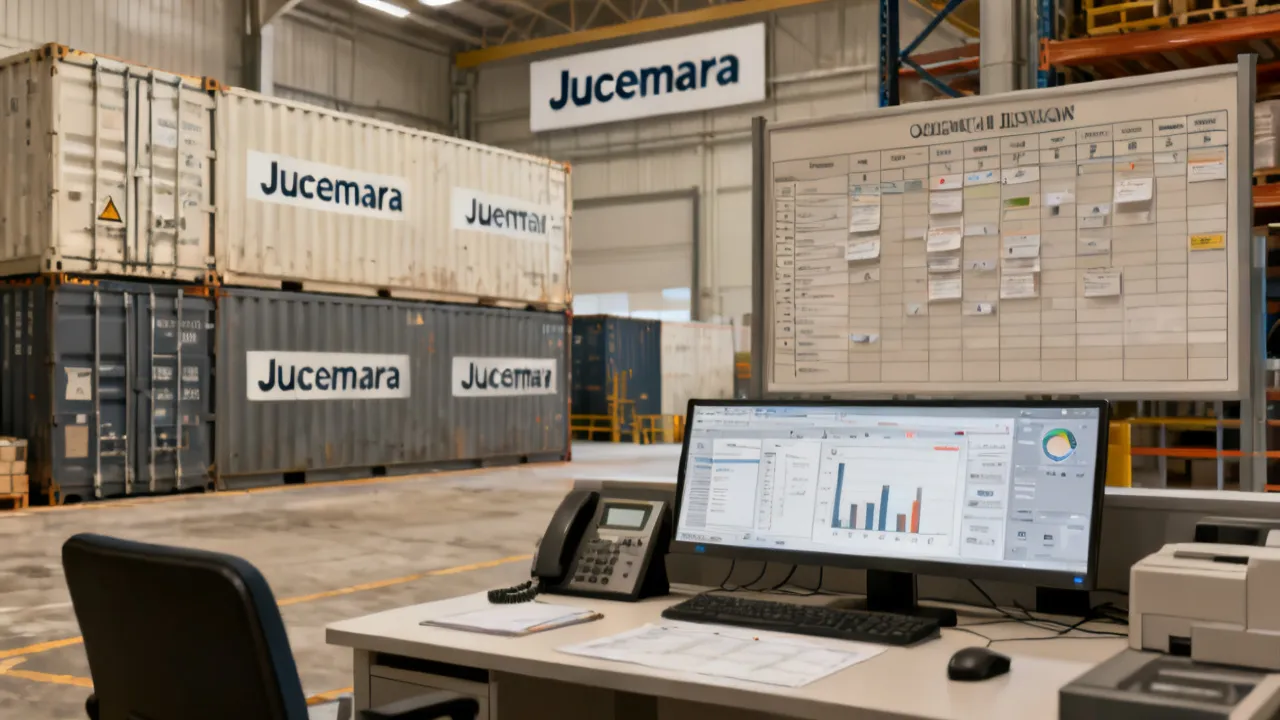
1) Executive Focus: How to Evaluate Jucemara in Real Procurement Decisions
When organizations mention Jucemara inside procurement workflows, the real question for an expert buyer is not “What is the brand?” or “How does the supplier market itself?”—the question is whether the supplier profile or product/service reference represented by Jucemara can meet your organization’s quality expectations, delivery controls, and compliance documentation in a way that can be evidenced. In expert procurement decision-making, evaluation typically starts with traceability and ends with operational readiness: can you verify what will be delivered, how quickly issues can be handled, and whether the supplier can provide the paperwork and process proof your internal stakeholders require.
Because procurement decisions must hold up under internal review and external audit, this article takes an objective, evidence-first approach. It frames Jucemara as a decision anchor for selecting suppliers and maintaining procurement integrity—particularly when purchases must satisfy internal policies, regulatory obligations, and audit expectations. In other words: even if Jucemara is simply a reference term in a sourcing record, the procurement task is still the same—validate the supplier’s capability and the deliverable’s compliance readiness.
To make the guidance actionable, each section below expands on what expert procurement teams actually do. It also explains how to avoid common evaluation pitfalls such as relying on marketing claims, accepting pricing without scope clarity, or approving suppliers without a defined escalation and corrective action path.
2) Why Jucemara Shows Up in Supplier Shortlisting
In many procurement teams, “supplier shortlisting” is not a casual selection. It is a structured discipline that attempts to narrow options quickly while still respecting risk management. References like Jucemara often appear early because they provide a preliminary signal about supplier identity, business posture, or the documentation style expected in a purchase flow.
However, shortlisting is only the first gate. A responsible procurement buyer verifies that initial signal through evidence, typically checking:
- Document completeness (e.g., certificates, declarations, product documentation where relevant)
- Process discipline (how orders are confirmed, how changes are handled)
- Quality management maturity (how nonconformities are recorded and corrected)
- Delivery governance (lead-time commitments, tracking practices, contingency planning)
- Governance and ethics fit (procurement controls, conflict-of-interest management, anti-fraud posture)
What makes the Jucemara mention meaningful is that it can become a “label” in your procurement record system that points you to a supplier profile, a product category, or a package of documents. But the label itself is not the evidence. In an expert evaluation, buyers treat each shortlist entry as a hypothesis that must be validated before purchase orders are issued.
From an industry perspective, the supplier’s “proof culture” matters as much as the price. The cost of failure in procurement usually arrives later—through delays, nonconforming deliveries, rework, compliance gaps, and operational disruption—not at the moment a cart is approved or a contract is signed. Therefore, shortlisting should bias toward suppliers who are capable of producing reliable records and consistently performing under agreed terms.
3) Pricing Considerations: What Buyers Should Ask About (Without Assuming Numbers)
You referenced “price information,” but your prompt does not provide explicit pricing figures. For an objective evaluation, the correct approach is not to invent numbers—it is to explain how price is interpreted and structured during procurement evaluation around Jucemara-related contexts.
Expert procurement leadership typically treats price as part of the total cost of ownership (TCO), not as a single-line amount. Even if Jucemara is associated with a supplier or catalog entry that has competitive list prices, buyers must still test whether the supplier’s effective cost is competitive once scope, lead times, quality costs, and compliance overhead are included.
During vendor evaluation, buyers often decompose price into categories like the following:
- Unit pricing vs. effective cost (including packaging, handling, labeling, shipping terms, and any required documentation fees)
- Lead-time effects (rush charges, inventory carrying costs, production schedule impacts, and downtime risks)
- Quality-related costs (inspection time, replacement parts, returns processing, rework, and customer-impact costs)
- Compliance overhead (audit support, technical data readiness, regulatory paperwork preparation, and record-retention requirements)
In practice, procurement decisions can go wrong when a buyer compares unit prices while ignoring operational consequences. For example:
- A supplier offering lower unit prices may have longer lead times, causing your team to hold more inventory or absorb production delays.
- A supplier with incomplete documentation may not be rejected immediately, but it can force additional internal verification work, creating hidden labor cost and schedule risk.
- A supplier that tolerates specification variation may appear inexpensive until nonconformities require returns, credits, reprocessing, and corrective action measures.
Even in a Jucemara-referenced sourcing event where the buyer’s early focus is on supplier identity and documentation, pricing still needs to be validated through structured questions. The goal is to ensure that the pricing you approve corresponds to the scope of work and the service level your organization expects—not merely to a “headline” number.
Therefore, when procurement requests “price information,” it is beneficial to require structured quotes that show assumptions, inclusions, exclusions, packaging/logistics details, and documentation deliverables. Doing so prevents the typical failure mode where you later discover that key compliance documentation costs were excluded from the quote and must be purchased separately.
4) Supplier Details: What “Fit” Means for Jucemara-Referenced Purchases
When your internal teams shortlist a supplier in connection with Jucemara, the supplier details with the highest decision value are usually not just identity fields. They are operational indicators that help you anticipate whether the supplier can fulfill the required deliverable consistently.
Industry top practice often guides buyers to prioritize the following supplier detail categories:
- Legal entity clarity and business registration match to contracting documents (ensuring enforceability and correct responsibility)
- Quality documentation appropriate to the goods or services involved (technical data, inspection records, declarations as required)
- Communication channels including who owns order confirmations, changes, and escalations
- Responsibility boundaries identifying who is accountable for nonconformities and corrective actions
- Consistency of fulfillment demonstrated through evidence across multiple orders where available
“Fit” in procurement is essentially risk-reduction through predictability. A supplier that clearly demonstrates how it controls quality, delivery, and information can be easier to integrate into an audited supply chain.
To make supplier fit more measurable, buyers often create a small set of questions that can be answered quickly with evidence:
- Can the supplier provide a sample set of documentation that would be delivered at the end of acceptance?
- What process does the supplier use when there is a deviation from specification?
- How does the supplier communicate schedule changes and confirm revised lead times?
- What is the supplier’s standard approach for returns, disputes, and corrective action?
In Jucemara-referenced purchases, the practical goal remains the same: reduce uncertainty. A supplier that can clearly show its operational control points is usually easier to manage, easier to audit, and less likely to create late-stage execution surprises.
5) Compliance and Documentation: The Non-Negotiable Layer
In procurement governance, documentation is not an administrative burden—it is a structured risk management mechanism. In Jucemara evaluation contexts, compliance expectations typically include evidence that supports:
- Traceability from order to fulfillment (linking the purchasing record to the delivered batch/lot/asset/service)
- Conformance to agreed specifications (technical data, inspection/acceptance evidence)
- Change control (what happens when specifications or processes are updated; how changes are authorized and documented)
- Audit readiness (ability to respond to internal and external review requests with consistent records)
The strongest procurement teams align supplier documentation expectations with widely used quality management principles and audit practices. While many organizations reference formal quality frameworks (often including ISO-based quality management structures), the key point is not certification itself; it is the ability to produce controlled evidence.
For general background on ISO quality management principles, see the ISO/TC 176 quality management resources (official ISO technical committee materials). This article does not claim any specific ISO certification for a supplier; it explains what buyers typically check when evaluating documentation and process discipline.
In practical procurement, compliance gaps show up in predictable ways. For example:
- Missing documentation deliverables that were implied but not contracted explicitly.
- Inconsistent naming conventions between purchase orders and certificates, making traceability difficult.
- Weak retention practices, where suppliers can provide documents for current shipments but cannot support records needed later for investigations or audits.
- Unclear responsibility, where it is uncertain whether the supplier or a subcontractor holds the final evidence.
Therefore, a buyer should treat documentation deliverables as formal acceptance inputs. If your acceptance process requires certain documentation, then those documents should be listed explicitly in the scope and linked to acceptance gates.
6) Operational Readiness: Delivery, Returns, and Escalation Paths
Even when documentation appears strong, procurement teams must confirm operational readiness. In a typical evaluation tied to Jucemara-referenced procurement, buyers look for a supplier’s operational capacity to execute and recover from issues.
Operational readiness is often tested through predictable categories:
- Order confirmation discipline (clear purchase order acceptance, correct references, and acknowledgment of key terms)
- Inspection and acceptance (how goods/services are received and verified—what checks exist, who performs them, and what evidence is retained)
- RMA/returns handling (how disputes are processed, timelines, and responsibility for root cause and replacement)
- Escalation ownership (who can make decisions quickly when issues arise, and how escalation is initiated)
- Corrective and preventive action posture (how nonconformities are analyzed, corrected, and prevented; a CAPA-like mindset)
From an expert procurement standpoint, the “real cost” of procurement risk is measured in schedule disruption and internal firefighting. Operational readiness reduces those outcomes because it improves:
- Forecast reliability (fewer surprises in lead times and delivery dates)
- Problem resolution speed (clear escalation and response expectations)
- Stability of quality (fewer repeats of the same nonconformity)
To evaluate operational readiness, buyers frequently run scenario questions. For example: “If a shipment arrives with missing documentation, what steps does your team take within 24–48 hours?” or “If there is a specification deviation detected during acceptance, who decides whether to rework, replace, or credit?” Such questions force clarity on real behavior, not marketing promises.
In Jucemara-referenced vendor reviews, escalation paths are particularly important. Many procurement organizations require at least two escalation points: a day-to-day contact and a decision authority for corrective action. Without that structure, procurement often becomes stuck waiting for “approval,” causing delays in resolving acceptance failures.
7) Industry Context: How Buyers Modernize Evaluation Around Jucemara-Type References
Organizations increasingly modernize supplier evaluation by standardizing processes and embedding risk controls into structured workflows. Although the exact process varies by sector—manufacturing procurement differs from IT services procurement—the underlying trend is consistent: buyers want verifiable information, not just assurances.
Historically, some procurement processes relied on supplier questionnaires and document uploads without a strong evidence linkage to acceptance requirements. Modern procurement increasingly uses:
- Risk scoring (classification of suppliers and purchases by risk category)
- Evidence-based documentation checks aligned with acceptance criteria
- Structured assessments with consistent scoring across vendors
- Performance monitoring after award (not just vendor evaluation before award)
Internationally, widely used quality management and supplier governance concepts emphasize evidence, consistency, and corrective action. For example, the ISO 9001 quality management standard family emphasizes process control and continuous improvement. ISO’s official resources describe the intent and structure of these quality management requirements. This article uses the broader perspective: what buyers generally look for in supplier reviews.
Crucially, procurement teams should avoid treating a standard or framework as a substitute for practical verification. The point of modern evaluation is to translate principles into operational evidence. That means your Jucemara-related supplier record should lead to documents that can be checked during acceptance, not merely to policy statements that cannot be verified.
Also, modern procurement recognizes that “supplier evaluation” is not a one-time event. A supplier can pass initial evaluation yet fail during execution due to staffing changes, production changes, or supply chain disruption. Therefore, best practice includes periodic reassessment and monitoring—especially when the supplier is tied to critical operations or regulated deliverables.
8) Expert Comparison Supplement: Requirements, Conditions, and How to Decide
The section below is deliberately practical and comparative. It is meant to help you judge supplier readiness in a Jucemara procurement context. No links are included in the table. The goal is to give you an evaluation structure that can be applied repeatedly across supplier categories while keeping decisions evidence-based.
| Evaluation Area | What to Check (Objective Evidence) | Conditions/Requirements to Proceed | When to Reconsider |
|---|---|---|---|
| Supplier Identity & Contract Alignment | Legal entity match, correct contracting details, authorized signatory | All contracting fields match purchase order terms and internal records | Frequent document mismatches or unclear ownership of obligations |
| Price & Cost Integrity | Pricing breakdown, assumptions, lead-time impact, fee transparency | Total cost rationale documented; agreed tolerances defined | Unclear line items, recurring “scope creep” charges, or late fee changes |
| Quality Documentation | Technical data, declarations, inspection reports where applicable | Documentation meets agreed acceptance criteria and product/service requirements | Incomplete or non-conforming documentation that blocks acceptance |
| Delivery & Tracking | Confirmed lead times, tracking mechanism, packaging/labeling alignment | Delivery process supports planned schedules; clear communication cadence | Consistent late deliveries or inability to provide shipment/status evidence |
| Issue Handling & Escalation | RMA process, dispute handling, escalation ownership | Defined response times and responsibilities for corrective actions | Slow responses, unclear accountability, or repeated unresolved incidents |
| Audit Readiness | Evidence availability, retention practices, traceability documentation | Supplier can support internal/external review requests within reasonable timelines | Inability to produce records or inconsistent traceability across orders |
To make this table more operational, buyers can convert each “Conditions/Requirements to Proceed” into acceptance gates. For example, if documentation is required for acceptance, the supplier should deliver it by a stated deadline tied to inspection or receipt. If delivery tracking is required, it should be contractually enforceable and monitored during shipment windows.
Finally, buyers should note that the purpose of these evaluation categories is not to create bureaucracy. It is to ensure that decisions can be defended and that the organization’s risk exposure is understood before spend occurs.
9) Step-by-Step Guide: A Buyer’s Workflow for Jucemara-Related Vendor Review
Below is a step-by-step guide that procurement teams often use when a supplier reference such as Jucemara is part of the sourcing pathway. Adjust the rigor based on risk category and contract value. The workflow is designed to be practical while supporting compliance needs and audit traceability.
-
Define the purchase scope precisely
Write product/service requirements, acceptance criteria, and any required documentation formats. -
Request evidence, not assurances
Ask for the specific documents and records you’ll need at delivery and during acceptance. -
Validate pricing structure
Require breakdowns and clarify what is included vs. excluded (handling, documentation support, testing, etc.). -
Perform compliance screening
Confirm that contract deliverables and documentation align with your internal compliance requirements. -
Assess delivery controls
Review lead-time realism, tracking method, and packaging/labeling standards where relevant. -
Run an issue-handling scenario
Ask how nonconformities are handled and what escalation paths exist. -
Make a risk-based decision
Approve, request remediation, or reject based on whether requirements are met consistently. -
Set measurable acceptance gates
Define acceptance checks and documentation verification points to prevent late-stage surprises. -
Plan for continuous review
After initial fulfillment, monitor performance indicators and conduct a structured feedback cycle.
To expand on these steps with procurement realism, consider how each step produces a “decision artifact” you can use later during audits:
- Scope definition becomes the baseline for acceptance and dispute resolution.
- Evidence requests create a document package you can reference during receipt and acceptance.
- Pricing validation prevents later renegotiations caused by unclear inclusions/exclusions.
- Compliance screening ensures that regulated requirements are addressed before delivery.
- Delivery control assessment reduces schedule risk and supports logistics coordination.
- Issue-handling scenarios clarify recovery steps and escalation timelines.
- Risk-based decisions produce a rationale that can be defended.
- Acceptance gates provide operational checkpoints so that failures are caught early.
- Continuous review ensures that performance issues are corrected before they become chronic.
This expanded workflow helps ensure that a Jucemara mention in your sourcing record does not become a superficial keyword. Instead, it becomes a traceable trigger for evidence collection and acceptance discipline.
10) Conditions and Requirements: Practical Procurement Standards
Procurement organizations generally apply consistent requirements regardless of whether “Jucemara” is treated as a product line, supplier reference, or part of a sourcing package. The most common conditions include:
- Defined acceptance criteria agreed before shipment or delivery.
- Documented traceability that links orders to deliverables.
- Clear change control for spec or process updates.
- Defined response times for delivery issues and corrective actions.
- Contract terms that reflect operational reality (warranties, responsibilities, dispute resolution).
To make these conditions enforceable, buyers typically translate them into contract clauses and operational procedures. For example:
- If defined acceptance criteria exist, then the supplier should know exactly what constitutes pass/fail, who makes the determination, and what evidence proves acceptance.
- If traceability is required, then the supplier must label deliverables and provide documentation that allows internal teams to connect delivered items to purchase orders and batches/lots.
- If change control is required, then the supplier should request approval for changes that might affect quality or compliance.
- If response times exist, then escalation and corrective action timelines should be aligned with internal incident management.
These conditions help ensure that the procurement process is auditable and repeatable. More importantly, they help prevent operational confusion during execution, when responsibilities can otherwise become unclear and lead to delays.
In practice, even when there is a well-known supplier reference like Jucemara, buyers still need to confirm that the purchase scope, acceptance conditions, and compliance documentation deliverables are consistent with the organization’s requirements for that specific procurement instance.
11) FAQs
FAQ 1: What does “Jucemara” typically refer to in procurement contexts?
In procurement discussions, Jucemara is usually treated as a supplier or reference point used during sourcing and evaluation. The meaningful interpretation depends on the specific organization’s internal context—what matters is the verifiable documentation and operational capability associated with the referenced supplier profile.
In practical terms, “Jucemara” might be used in internal systems as:
- A supplier reference label
- A product category keyword
- A shorthand for a supplier’s compliance package
- A sourcing shortlist tag that triggers additional checks
No matter which internal meaning applies, the procurement responsibility remains the same: the buyer must validate the evidence needed for acceptance and compliance.
FAQ 2: How should I assess supplier details linked to Jucemara?
Focus on objective evidence: legal entity clarity, documentation completeness, quality controls, delivery governance, and an explicit escalation path for issues. If the supplier cannot provide the records you need for acceptance, that is a strong signal to reconsider.
To make evaluation faster and more consistent, buyers can use a two-level approach:
- Level 1 (quick checks): confirm legal entity, scope alignment, and whether basic documentation deliverables exist.
- Level 2 (deep checks): validate traceability mechanisms, acceptance evidence, and dispute/corrective action workflows.
This approach prevents spending excessive time on low-risk orders while still applying enough rigor where it matters.
FAQ 3: Does price alone determine whether a Jucemara-related supplier is suitable?
No. A responsible decision treats price as part of the total cost of ownership. Lead-time reliability, quality acceptance rates, and documentation support often determine the real cost impact to operations.
Procurement leaders often frame this as a tradeoff between “visible cost” (the quote) and “invisible cost” (delays, rework, internal labor, compliance remediation). A supplier that is slightly more expensive on paper can be cheaper overall if it reliably meets acceptance and documentation requirements.
FAQ 4: What documents are usually required to reduce procurement risk?
Requirements vary by industry, but buyers commonly request: technical data or service specifications, declarations/certificates where applicable, inspection or acceptance records, and evidence that supports traceability and conformance to agreed criteria.
To reduce ambiguity, documentation requirements should be specified in relation to:
- The specific deliverable (what document is tied to which part of the order)
- The timing (when documents must be delivered—pre-shipment, at receipt, or within a set timeframe after acceptance)
- The acceptance gate (how internal teams use those documents to accept or reject)
This prevents the common failure mode where documents arrive late, are incomplete, or do not align with the acceptance process.
FAQ 5: What conditions should be included before placing an order?
At minimum: clear acceptance criteria, documentation requirements, lead-time commitments (with realistic assumptions), and defined issue-handling responsibilities. These conditions prevent misunderstandings during delivery and acceptance.
Additional best-practice conditions often include:
- Clear warranty terms or service-level expectations where applicable
- Defined roles for corrective action ownership
- Return/refund or credit conditions
- Change control requirements for specification or process updates
Even if the purchase is small, these conditions help ensure the process remains consistent and auditable.
FAQ 6: Can I use a standardized checklist for repeated Jucemara evaluations?
Yes. Many organizations standardize supplier review checklists so that each vendor is assessed using consistent criteria. Over time, this also improves audit readiness and makes comparisons more reliable.
When using a checklist, the key is to ensure it is not purely “tick-box” compliance. The checklist should:
- Require objective evidence for each criterion
- Include risk-based branching (more checks for high-risk categories)
- Capture exception handling and remediation steps
- Preserve decision rationale for later reviews
That way, the checklist supports defensible decisions rather than superficial documentation.
FAQ 7: How do I handle disputes or nonconforming deliveries?
Use the supplier’s defined returns or dispute pathway, ensure all evidence is recorded (photos, inspection results, delivery notes), and confirm corrective action ownership. Procurement teams typically escalate only when the supplier cannot meet defined response timelines or corrective obligations.
To reduce dispute duration, buyers often implement a “dispute readiness” packet containing:
- Purchase order reference and delivery documentation
- Inspection/acceptance results with timestamps
- Evidence of the nonconformity (photos, measurements, test results)
- Correspondence history with supplier escalation timeline
- Requested resolution option (replace, rework, credit) aligned with contract terms
This helps the dispute process remain structured and prevents repeated cycles of back-and-forth without decisions.
12) Conclusion: Turning Jucemara Mentions into Measurable Procurement Confidence
Jucemara can function as a useful anchor in supplier sourcing, but it should never replace due diligence. The professional path is consistent: verify documentation, validate pricing structure, confirm delivery governance, and ensure issue-handling accountability. When you apply an evidence-based evaluation workflow—supported by clear conditions and measurable acceptance gates—you reduce execution risk and create a procurement process that stands up to operational reality and audit review.
In practical procurement, “confidence” is not a feeling—it is the ability to demonstrate, at each stage, that requirements are met and responsibilities are clear. Treat the Jucemara reference as a pointer to what needs to be verified, then verify it using objective evidence and enforceable conditions. That is how procurement decisions become reliable, repeatable, and defensible.
Note: Your prompt did not provide specific location, explicit price figures, supplier identities, or additional required details beyond the keyword Jucemara. If you share the intended country/city context and the exact “price information” and “supplier details” you want included (e.g., a quoted unit price, supplier name, or product category), the article can be revised to incorporate them precisely while maintaining objective, verifiable standards.
-
1

A Guide to Cost-Efficient Small Electric Cars for Seniors
-
2
Mastering Debt Consolidation: Boost Your Credit Score and Manage Interest Rates
-
3
Your Guide to Loans, Credit Checks, and Interest Rates
-
4
Affordable Independent Living: Finding the Right Senior Housing
-
5
Guide to Senior Living Apartments: Affordable and Comfortable Environments